- Why the Jaishankar-Araghchi Meeting Matters
- The Strait of Hormuz Is Central to India’s Concerns
- India’s Delicate Balancing Act in West Asia
- Why BRICS Is Becoming Increasingly Important for Iran
- Can BRICS Reach a Common Position on West Asia?
- The Global South Dimension of the Crisis
- Energy Security Is Quietly Driving Diplomacy
- Iran Wants India to Play a Larger Diplomatic Role
- The Broader Strategic Importance of India-Iran Relations
- What Happens Next?
- Conclusion: A Brief Handshake With Major Geopolitical Implications
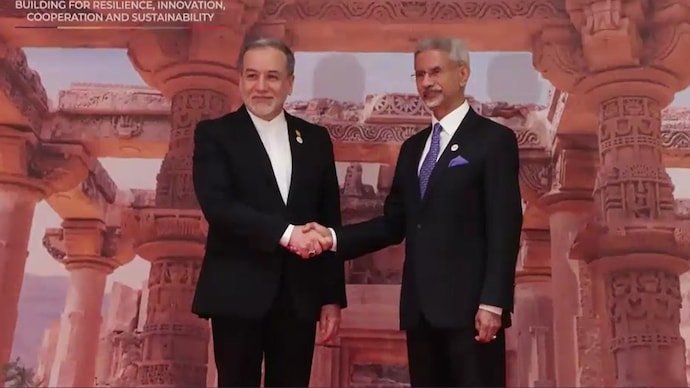
External Affairs Minister S Jaishankar welcomed Iranian Foreign Minister Seyed Abbas Araghchi with a handshake and a brief exchange on the sidelines of the BRICS Foreign Ministers’ meeting in New Delhi, a moment that carried significance far beyond routine diplomatic protocol.
The meeting comes at a highly sensitive geopolitical moment. West Asia remains deeply unstable following months of conflict involving Iran, the United States, and Israel, while concerns over maritime security in the Strait of Hormuz continue to unsettle global energy markets.
Although the public interaction between Jaishankar and Araghchi appeared brief, the broader diplomatic context surrounding the engagement is substantial. India is attempting to carefully balance strategic relations with competing powers in the region while protecting its own economic and energy security interests.
For Tehran, meanwhile, the visit represents an opportunity to maintain close engagement with one of Asia’s largest economies and an influential BRICS member at a time when Iran faces mounting military and diplomatic pressure.
Why the Jaishankar-Araghchi Meeting Matters
The New Delhi interaction marks Iran’s first major high-level diplomatic engagement with India since the outbreak of the ongoing US-Israel-Iran conflict more than two months ago.
That alone makes the meeting strategically important.
India has historically maintained working relationships with both Iran and Israel two rivals whose confrontation has now become one of the most dangerous geopolitical crises in the world.
Unlike many Western nations, India has generally pursued a more balanced and pragmatic West Asia policy focused on:
- Energy security
- Strategic autonomy
- Regional stability
- Trade connectivity
- Protection of Indian maritime interests
Jaishankar’s meeting with Araghchi therefore reflects India’s effort to preserve diplomatic channels with all major regional players despite escalating tensions.
The Strait of Hormuz Is Central to India’s Concerns
One of the most critical topics expected to dominate India-Iran discussions is the Strait of Hormuz.
The narrow maritime corridor is among the world’s most strategically vital shipping routes. Nearly 20% of Global Oil and liquefied natural gas trade passes through the waterway, making it essential not just for Gulf economies, but also for major energy-importing nations like India.
Any disruption in Hormuz immediately affects:
- Global crude oil prices
- LNG shipments
- Shipping insurance costs
- Inflationary pressure
- Energy-importing economies
India, which imports a large share of its energy requirements, remains especially vulnerable to prolonged instability in the region.
That explains why New Delhi is closely monitoring Iranian actions around the Strait and pushing for safe passage of commercial vessels.
Even temporary restrictions or heightened military activity near Hormuz can create ripple effects across global markets within hours.
| Why the Strait of Hormuz Matters to India | Strategic Impact |
|---|---|
| Major oil import route | Critical for India’s energy security |
| LNG transportation corridor | Important for industrial and power sectors |
| Global shipping chokepoint | Disruptions affect worldwide trade costs |
| Regional military hotspot | Raises risks for merchant vessels |
| Oil price sensitivity | Impacts inflation and economic growth |
India’s Delicate Balancing Act in West Asia
India’s diplomatic challenge is unusually complex.
New Delhi maintains strong ties with:
- Iran
- Israel
- The United States
- Saudi Arabia
- The United Arab Emirates
Each relationship carries major economic, strategic, or security importance.
India relies heavily on Gulf energy supplies and remittances from millions of Indian workers living in the region. At the same time, India’s defense and technology cooperation with Israel has expanded significantly over the past two decades.
Meanwhile, India’s broader strategic partnership with the United States continues growing in areas like defense, trade, and Indo-Pacific security.
As a result, India has carefully avoided taking overtly partisan positions during the current conflict.
Instead, New Delhi has consistently emphasized:
- Diplomatic dialogue
- Regional de-escalation
- Protection of maritime trade
- Respect for international law
This balancing strategy is part of India’s larger foreign policy doctrine of “strategic autonomy” maintaining independent relations with multiple competing powers simultaneously.
Why BRICS Is Becoming Increasingly Important for Iran
Iran’s participation in the BRICS meeting also highlights the growing importance of the bloc for Tehran’s geopolitical and economic strategy.
BRICS originally comprising Brazil, Russia, India, China, and South Africa has increasingly positioned itself as a platform representing emerging economies and the broader Global South.
Iran sees BRICS as an opportunity to:
- Reduce dependence on Western financial systems
- Expand trade partnerships
- Bypass sanctions pressure
- Strengthen regional connectivity
- Build alternative banking mechanisms
Iranian officials have repeatedly emphasized the need for “independent trade” and reduced reliance on what they describe as unilateral Western-controlled economic systems.
Deputy Foreign Minister Kazem Gharibabadi’s remarks ahead of the meeting reflected this broader strategy.
For Tehran, BRICS is not just a diplomatic forum it is increasingly viewed as part of a long-term effort to reshape global economic power structures.
Can BRICS Reach a Common Position on West Asia?
One of the biggest questions surrounding the New Delhi ministerial meeting is whether BRICS can produce a unified statement on the ongoing West Asia conflict.
That may prove difficult.
Although BRICS members often emphasize cooperation among developing nations, the bloc is internally diverse and frequently divided on sensitive geopolitical issues.
Recent disagreements reportedly emerged between Iran and the United Arab Emirates over accusations involving attacks on regional energy infrastructure.
These tensions highlight a broader challenge for BRICS:
- Members share economic interests
- But political priorities often differ sharply
India, as the current BRICS chair, appears eager to maintain consensus without allowing the forum to become dominated by internal disputes.
That balancing effort mirrors India’s wider diplomatic style on global conflicts.
The Global South Dimension of the Crisis
Iran’s messaging at the BRICS meeting also reflects the growing geopolitical importance of the “Global South” narrative.
Many emerging economies increasingly argue that global governance systems remain disproportionately shaped by Western powers.
Countries like Iran, Russia, and China often frame BRICS as:
- A counterweight to Western institutions
- A platform for multipolar diplomacy
- A mechanism for alternative trade systems
- A voice for developing economies
India’s position is more nuanced.
New Delhi supports greater representation for emerging economies but generally avoids presenting BRICS as explicitly anti-Western.
This distinction matters because India continues strengthening strategic partnerships with both Western and non-Western powers simultaneously.
Energy Security Is Quietly Driving Diplomacy
Behind the diplomatic language and summit optics lies a more practical concern: energy security.
The ongoing conflict has already triggered volatility in oil and gas markets.
For India, rising energy prices can affect:
- Inflation
- Economic growth
- Industrial production
- Transportation costs
- Consumer spending
That explains why New Delhi is prioritizing stability around maritime trade routes.
Unlike some Western countries with significant domestic energy production, India remains heavily dependent on imported crude oil.
This economic reality shapes much of India’s diplomatic engagement with Gulf states and Iran.
Iran Wants India to Play a Larger Diplomatic Role
Since the escalation of the conflict, Iran has repeatedly encouraged India to use its international influence to help reduce hostilities.
Tehran appears to view India as:
- A relatively independent global actor
- A major Asian power with diplomatic credibility
- A country capable of maintaining dialogue across rival blocs
Iran’s request for India to play an “independent role” reflects growing recognition that middle powers like India may become increasingly important mediators in fragmented global politics.
However, India is likely to remain cautious about becoming directly involved in mediation efforts unless broader international support emerges.
The Broader Strategic Importance of India-Iran Relations
Despite periods of tension caused by sanctions and shifting Geopolitics, India and Iran share long-standing strategic interests.
Key areas of cooperation include:
- Energy trade
- Regional connectivity projects
- Afghanistan-related diplomacy
- Chabahar Port development
- North-South transport corridors
The Chabahar Port project remains especially important because it provides India with connectivity access toward Central Asia while bypassing Pakistan.
Although sanctions and geopolitical tensions have complicated progress, the project still holds long-term strategic value for both sides.
The current diplomatic engagement suggests neither India nor Iran wants the relationship to stagnate despite wider regional instability.
What Happens Next?
The outcome of the BRICS Foreign Ministers’ meeting may provide clues about how emerging powers intend to navigate the intensifying West Asia crisis.
Key developments to watch include:
- Whether BRICS issues a consensus statement
- India’s diplomatic positioning on regional tensions
- Future India-Iran energy cooperation
- Security measures around the Strait of Hormuz
- Potential de-escalation efforts involving major powers
Much will depend on whether the broader US-Iran-Israel confrontation stabilizes or escalates further.
For India, maintaining strategic flexibility while protecting economic interests will likely remain the top priority.
Conclusion: A Brief Handshake With Major Geopolitical Implications
S Jaishankar’s handshake and brief conversation with Iranian Foreign Minister Abbas Araghchi may have lasted only moments, but the diplomatic significance behind the interaction is substantial.
The meeting reflects India’s continuing effort to engage all sides amid one of the world’s most volatile geopolitical crises. With energy security, maritime stability, and regional diplomacy all at stake, India is carefully positioning itself as a pragmatic and independent actor in an increasingly polarized international landscape.
At the same time, Iran’s active participation in the BRICS process signals Tehran’s broader push to strengthen ties with emerging economies and reduce dependence on Western-led systems.
As tensions continue across West Asia, forums like BRICS may become increasingly important spaces for diplomatic coordination even if achieving consensus remains difficult.
For now, the New Delhi meeting underscores one clear reality: in today’s multipolar world, even a simple diplomatic handshake can carry global strategic meaning.
For breaking news and live news updates, like us on Facebook or follow us on Twitter and Instagram. Read more on Latest India on thefoxdaily.com.






COMMENTS 0