- Why Pakistan Imposed Restrictions in the First Place
- What Changed: Talks Collapse Before They Begin
- The Core Issue: Why US-Iran Talks Are Stuck
- Pakistan’s Strategic Role: More Than Just a Host
- Ground Reality: Life Returns, But Uncertainty Lingers
- A Broader Pattern: Diplomacy in the Age of Strategic Signalling
- Regional Implications: Why This Matters Beyond Pakistan
- Comparison: How This Stalemate Differs From Past Negotiations
- What Happens Next? A Likely Scenario
- Conclusion: Calm Streets, Unresolved Conflict
After days of heightened security and restricted movement, Pakistan has begun easing curbs in Islamabad and Rawalpindi following a sudden slowdown in US-Iran peace negotiations. The decision comes at a delicate moment in regional Diplomacy, where expectations of a breakthrough have given way to uncertainty. While traffic is returning to normal and daily life is resuming, the broader geopolitical picture remains far from settled.
The development raises a larger question: is this merely a logistical reset, or a signal that diplomacy between Washington and Tehran has entered a prolonged stalemate?
Why Pakistan Imposed Restrictions in the First Place
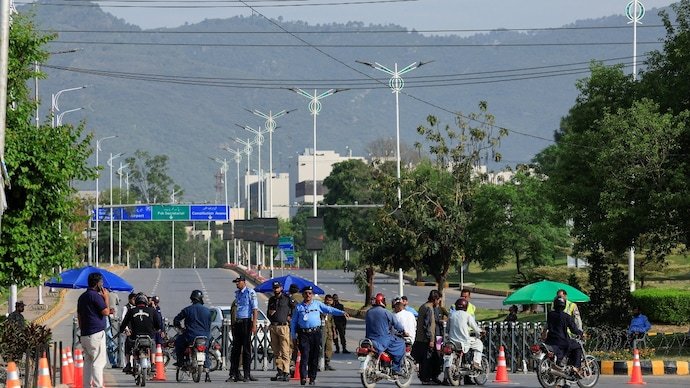
To understand the significance of the rollback, it’s important to revisit why the restrictions were imposed. Islamabad was not just hosting routine diplomatic meetings it was positioning itself as a key mediator in a high-stakes geopolitical Conflict involving the United States, Iran, and indirectly, Israel.
Anticipating a second round of peace talks, Pakistani authorities rolled out an extensive security plan:
- Over 10,000 security personnel deployed across Islamabad and Rawalpindi
- Major roads sealed or diverted
- Heavy vehicle movement restricted
- Educational institutions shifted to online mode
These measures effectively transformed the twin cities into controlled zones, underscoring the sensitivity and importance of the expected negotiations.
What Changed: Talks Collapse Before They Begin
The carefully laid plans began to unravel when diplomatic momentum abruptly stalled. Two key developments triggered the shift:
- Iranian Foreign Minister Abbas Araghchi departed Islamabad without waiting for US negotiators
- US President Donald Trump cancelled plans to send an American delegation
This dual withdrawal effectively froze the negotiation process before it could even restart. With no immediate diplomatic engagement on the horizon, Pakistan recalibrated its security posture.
Restrictions were gradually lifted, allowing essential supply chains especially trucks carrying food and medicines to resume operations. Universities announced a return to offline classes, and traffic began flowing through previously restricted corridors.
The Core Issue: Why US-Iran Talks Are Stuck
At the heart of the deadlock lies a familiar but deeply entrenched set of disagreements. Despite multiple attempts at mediation, neither side appears willing to compromise on its core demands.
| United States Position | Iran’s Position |
|---|---|
| Complete halt to nuclear enrichment | Right to continue enrichment within sovereign limits |
| Transfer of enriched uranium stockpiles | Rejection of permanent restrictions |
| No immediate sanctions relief | Demand for sanctions removal and compensation |
This standoff is not new but what’s different now is the shrinking space for compromise. With both sides hardening their positions, even backchannel diplomacy is struggling to gain traction.
Pakistan’s Strategic Role: More Than Just a Host
Pakistan’s involvement goes beyond Logistics. By hosting talks and facilitating dialogue, Islamabad is attempting to position itself as a credible diplomatic bridge in a volatile region.
This strategy serves multiple objectives:
- Regional relevance: Strengthening its role in Middle Eastern geopolitics
- Global positioning: Demonstrating diplomatic utility to major powers
- Economic stability: Preventing escalation that could disrupt trade routes and energy supplies
However, the sudden halt in talks exposes the limits of this approach. Mediation can only succeed when both sides are willing to engage and currently, that willingness appears constrained.
Ground Reality: Life Returns, But Uncertainty Lingers
On the surface, the easing of restrictions signals a return to normalcy. Commuters are back on the roads, businesses are reopening, and supply chains are stabilising.
But beneath this normalcy lies a more complex reality:
- Security forces remain deployed, albeit at reduced intensity
- Authorities have warned of potential reimposition of restrictions
- Diplomatic channels remain open but inactive
This creates a “wait-and-watch” Environment stable for now, but highly sensitive to geopolitical shifts.
A Broader Pattern: Diplomacy in the Age of Strategic Signalling
One under-discussed aspect of this episode is how modern diplomacy increasingly operates through signals rather than formal announcements.
Consider the sequence:
- Advance security preparations suggested optimism
- Quiet cancellations indicated hesitation
- Rapid rollback reflected recalibration
Each move sends a message not just to the public, but to negotiating counterparts. In this sense, Pakistan’s easing of restrictions is not just administrative it is also diplomatic signalling that the current round of engagement has paused.
Regional Implications: Why This Matters Beyond Pakistan
The US-Iran deadlock has ripple effects across the region, and Pakistan sits at a critical crossroads of these dynamics.
1. Energy Security
Tensions involving Iran often impact Global Oil flows, particularly through strategic chokepoints. Any escalation could disrupt supply chains, affecting countries far beyond the Middle East.
2. Trade and Connectivity
Pakistan’s geographic position makes it a key transit route. Stability is essential for maintaining trade corridors linking Central Asia, the Middle East, and South Asia.
3. Security Environment
Prolonged uncertainty increases the risk of miscalculation, proxy conflicts, or localized escalations.
Comparison: How This Stalemate Differs From Past Negotiations
Unlike previous rounds of US-Iran diplomacy, the current situation is marked by:
- Faster breakdowns: Talks are collapsing before formal engagement begins
- Higher public rhetoric: Leaders are signalling positions more aggressively
- Reduced trust: Even mediation platforms are struggling to sustain dialogue
This suggests a structural shift in how both sides approach negotiation less incremental, more binary.
What Happens Next? A Likely Scenario
While immediate talks appear unlikely, diplomacy rarely disappears entirely. Instead, it often shifts form.
Possible next steps include:
- Renewed backchannel negotiations through third-party mediators
- Incremental confidence-building measures
- Temporary de-escalation without a formal agreement
However, a comprehensive resolution remains distant unless both sides adjust their baseline expectations.
Conclusion: Calm Streets, Unresolved Conflict
Pakistan’s decision to lift restrictions in Islamabad and Rawalpindi reflects a practical response to a stalled diplomatic process. It restores normalcy for citizens and signals a pause in high-level engagement.
But the underlying conflict between the United States and Iran remains unresolved and potentially more complex than before.
The real story is not the lifting of restrictions, but what it represents: a moment where diplomacy hesitates, recalibrates, and waits for the next opening.
For now, the roads in Islamabad may be clear but the path to peace in the region is anything but.
For breaking news and live news updates, like us on Facebook or follow us on Twitter and Instagram. Read more on Latest World on thefoxdaily.com.



COMMENTS 0