- What Triggered the Crisis?
- The Core Conflict: Civilian Authority vs Military Influence
- Why US Talks Are So Contentious
- Expanding Divisions Within the Leadership
- A Unique Insight: This Is a Battle Over “Who Speaks for Iran”
- Implications for Global Politics
- Possible Scenarios Going Forward
- Real-World Impact Inside Iran
- Conclusion: More Than a Leadership Dispute
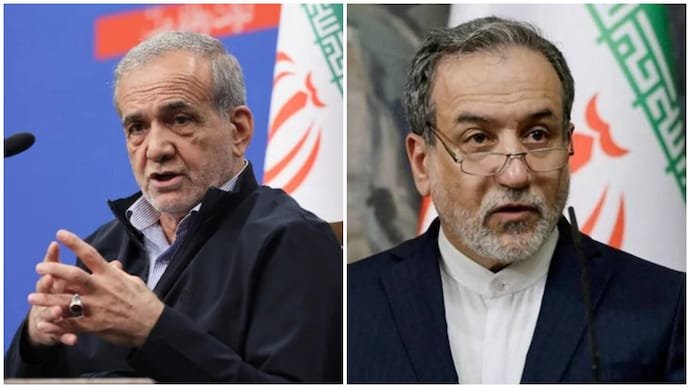
Iran is witnessing a significant internal রাজনৈতিক showdown as reports suggest efforts are underway to remove Foreign Minister Abbas Araghchi over his role in negotiations with the United States. The development points to a deeper power struggle within Iran’s leadership, where competing visions of diplomacy, authority, and National Security are increasingly colliding.
At the heart of the issue is a growing divide between President Masoud Pezeshkian, Parliament Speaker Mohammad Bagher Ghalibaf, and influential figures linked to the Islamic Revolutionary Guard Corps (IRGC). What may appear as a personnel dispute is, in reality, a reflection of a broader institutional conflict shaping Iran’s future.
What Triggered the Crisis?
The current tensions reportedly stem from accusations that Abbas Araghchi has been operating outside the authority of the elected government during sensitive diplomatic engagements.
Key concerns include:
- Alleged coordination with IRGC leadership without informing the president
- Perceived sidelining of the civilian government in negotiations
- Disagreements over the scope and direction of talks with the United States
For President Pezeshkian, the issue is not just about diplomacy it’s about governance. The concern is that decision-making authority is shifting away from elected institutions toward Military-aligned structures.
The Core Conflict: Civilian Authority vs Military Influence
To understand the significance of this moment, it’s essential to look beyond individuals and examine the structural dynamics of power in Iran.
Iran’s political system includes both elected bodies and powerful unelected institutions. Among these, the IRGC plays a critical role not just in Defense, but also in economic and political affairs.
This creates an ongoing tension:
| Power Center | Primary Role | Current Position in Crisis |
|---|---|---|
| Elected Government | Policy-making and diplomacy | Seeking greater control over negotiations |
| IRGC | Security and strategic influence | Accused of expanding role in diplomacy |
The dispute over Araghchi is essentially a manifestation of this long-standing institutional rivalry.
Why US Talks Are So Contentious
Negotiations with the United States have always been politically sensitive in Iran. They involve not just foreign policy decisions, but ideological considerations and internal legitimacy.
The current disagreements reportedly revolve around:
- Whether to include Iran’s nuclear programme in discussions
- How far to go in compromising for sanctions relief or ceasefire arrangements
- Who should control the negotiation process
These are not technical disagreements they are strategic choices that define Iran’s position in the global order.
Expanding Divisions Within the Leadership
The tensions are not limited to the executive branch. Signs of division have emerged across multiple levels of governance.
Within Parliament
Not all lawmakers are aligned on the negotiation strategy. While a majority supported the diplomatic approach, a faction of hardline politicians refused to back it highlighting ideological splits.
Within the Negotiation Team
Reports suggest leadership changes and disagreements over negotiation priorities, including whether nuclear issues should be part of the discussions.
Within the Executive
Frustration has reportedly grown within the president’s office over perceived loss of control, particularly during a period of heightened national pressure.
These overlapping tensions create a complex রাজনৈতিক landscape where decisions are shaped by competing interests rather than unified strategy.
A Unique Insight: This Is a Battle Over “Who Speaks for Iran”
One of the most important and often overlooked aspects of this crisis is that it’s fundamentally about representation.
In international negotiations, the question is not just what a country says, but who has the authority to say it.
In Iran’s case, that authority appears contested:
- The elected government seeks to lead diplomacy
- The IRGC seeks to influence strategic outcomes
- Political factions attempt to shape both narratives
This creates a situation where externalفاوض partners may face uncertainty about who truly represents Iran’s final position.
And in diplomacy, uncertainty can be as impactful as disagreement.
Implications for Global Politics
The internal divisions in Iran have consequences far beyond its borders.
1. Impact on US-Iran Relations
Negotiations become more unpredictable when internal consensus is lacking. This can slow progress or derail talks entirely.
2. Regional Stability
Iran’s decisions influence broader Middle East dynamics. Internal uncertainty can translate into external volatility.
3. Energy Markets
Any disruption in diplomatic progress can affect global energy expectations, particularly if tensions escalate.
Possible Scenarios Going Forward
Scenario 1: Araghchi Is Removed
This would signal a shift toward greater civilian control or at least an attempt to assert it.
Scenario 2: Status Quo Continues
Araghchi remains in position, but tensions persist, leading to fragmented decision-making.
Scenario 3: Power Consolidation by IRGC
The military establishment gains further influence over strategic decisions, reducing the role of elected officials.
Real-World Impact Inside Iran
While the dispute may seem like high-level politics, its effects are felt domestically.
- Economic uncertainty tied to sanctions and negotiations
- Public perception of الحكومة effectiveness
- Institutional trust in leadership structures
In times of crisis, internal cohesion often determines external success and that cohesion currently appears under strain.
Conclusion: More Than a Leadership Dispute
The reported push to remove Abbas Araghchi is not just about one official it’s a window into the evolving power dynamics within Iran.
It highlights a key question:who ultimately controls the country’s strategic direction?
As Iran navigates complex negotiations and internal pressures, the answer to that question will shape not only its foreign policy, but also its political future.
Whether this moment leads to resolution or further fragmentation remains uncertain. But one thing is clear the stakes extend far beyond a single diplomatic role.
For breaking news and live news updates, like us on Facebook or follow us on Twitter and Instagram. Read more on Latest World on thefoxdaily.com.




COMMENTS 0