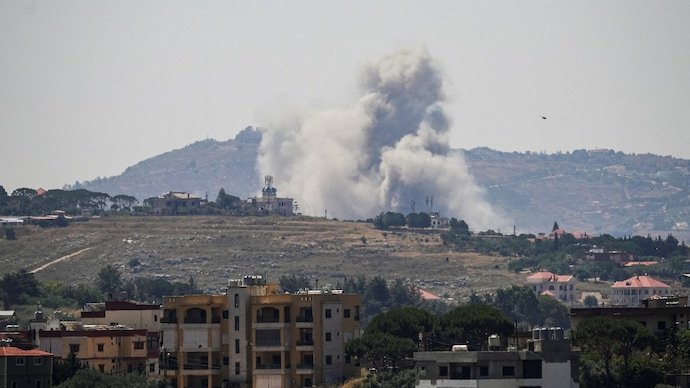
For nearly 60 days, the Middle East experienced an uneasy calm after one of the most dangerous confrontations in recent history between Iran and Israel. While the ceasefire helped reduce direct military exchanges, it never addressed the deeper issues that had fueled the conflict in the first place. Beneath the surface, tensions continued to simmer across Lebanon, Gaza, Syria, and the broader region.
That fragile stability came to an abrupt end within just 24 hours.
A series of military actions involving Israel, Iran, Hezbollah, and other regional actors reignited fears of a broader war. What began as Israeli strikes in Beirut quickly escalated into missile launches, retaliatory attacks, threats against international shipping routes, and renewed diplomatic tensions.
The episode serves as a reminder that ceasefires can pause conflicts, but they rarely eliminate the political, military, and ideological disputes that created them. In the Middle East, temporary calm often masks deeper instability.
Why the Iran-Israel Ceasefire Was Always Fragile
The ceasefire that emerged after weeks of fighting earlier this year was never a comprehensive peace agreement. Instead, it functioned as a temporary arrangement aimed at preventing direct escalation while diplomatic channels remained active.
Several major disputes remained unresolved:
- Israel’s concerns over Iran’s missile and military capabilities
- Iran’s support for Hezbollah and other regional allies
- The future Security landscape of Lebanon
- The role of the United States in regional diplomacy
- The broader struggle for influence across the Middle East
Although direct attacks largely stopped, military operations involving allied groups and proxy forces continued. This meant the ceasefire was more of a pause than a true peace settlement.
Security experts had repeatedly warned that a single major incident could shatter the arrangement. Those warnings proved correct.
The 24-Hour Timeline That Changed Everything
| Time Period | Key Event | Impact |
|---|---|---|
| Day 1 Morning | Israeli strikes target Hezbollah-linked areas in Beirut | Iran views attack as crossing a strategic red line |
| Day 1 Night | Iran launches missiles toward Israel | Direct confrontation resumes |
| Day 2 Early Morning | Israel retaliates with strikes inside Iran | Ceasefire effectively collapses |
| Day 2 Afternoon | Regional actors react, including Houthis and Iraq | Conflict risks spreading beyond immediate participants |
| Day 2 Evening | International diplomatic pressure intensifies | Temporary de-escalation efforts begin |
The speed of escalation demonstrated how little room for error existed despite weeks of relative calm.
Why Beirut Became Iran’s Red Line
Understanding Iran’s response requires understanding the strategic importance of Lebanon.
For decades, Hezbollah has been one of Tehran’s most significant regional allies. The group provides Iran with strategic depth and influence near Israel’s borders. As a result, attacks on Hezbollah are often viewed by Iranian leaders as attacks on a key component of their broader security architecture.
While Israel and its allies frequently treat Lebanon and Iran as separate security issues, Tehran sees them as deeply interconnected.
This difference in perception is crucial.
Iran had tolerated several incidents since the ceasefire began, but strikes in Beirut’s southern suburbs appeared to cross a threshold. For Tehran, the attack represented more than a tactical military operation. It challenged a strategic alliance that Iran considers central to its regional position.
The response was therefore intended not only as retaliation but also as deterrence.
Israel’s Security Doctrine and Strategic Calculation
From Israel’s perspective, the decision to target Hezbollah positions was driven by immediate security concerns.
Israeli leaders have long argued that Hezbollah’s military infrastructure poses a direct threat to Israeli citizens. The group possesses significant missile capabilities and maintains positions close to Israel’s northern border.
This creates a difficult strategic dilemma.
If Israel refrains from military action, it risks allowing Hezbollah to strengthen further. If it acts aggressively, it risks provoking Iran and potentially expanding the conflict.
The latest strikes suggest Israeli policymakers continue to prioritize immediate security considerations over the possibility of triggering wider regional escalation.
This reflects a longstanding element of Israeli defense strategy: addressing perceived threats before they become more dangerous.
The Trump-Netanyahu Dynamic: Allies With Different Priorities
The renewed confrontation has also highlighted differences in approach between Washington and Jerusalem.
US President Donald Trump has consistently emphasized diplomacy and de-escalation. His administration has sought to prevent a wider regional conflict that could destabilize global markets and undermine broader American strategic objectives.
Washington’s priorities include:
- Preventing disruptions to global energy supplies
- Avoiding direct US involvement in another Middle East war
- Protecting international shipping routes
- Supporting ongoing diplomatic initiatives
- Reducing economic uncertainty linked to energy prices
Israel, meanwhile, remains focused on immediate security threats.
This difference does not necessarily indicate a breakdown in the US-Israel alliance. Rather, it reflects differing strategic priorities. The United States is balancing global considerations, while Israel is responding to threats it considers immediate and existential.
The situation has nevertheless raised questions about the extent of American influence over Israeli military decision-making during periods of heightened tension.
The Regional Domino Effect
One of the most significant aspects of the latest escalation is how quickly it affected countries beyond Iran and Israel.
Within hours of renewed fighting:
- Yemen’s Houthi movement threatened shipping routes in the Red Sea
- Iraq temporarily restricted airspace operations
- Lebanon found itself at the center of renewed tensions
- International airlines reviewed regional flight paths
- Global markets reacted to potential energy supply risks
This demonstrates a key reality of modern Middle Eastern Geopolitics.
Regional conflicts rarely remain confined to a single battlefield. Networks of alliances, proxy forces, and economic interests mean that actions in one country often trigger reactions across multiple regions.
The interconnected nature of these conflicts makes them particularly difficult to contain.
Why Global Markets Closely Watch Iran-Israel Tensions
The importance of the Iran-Israel conflict extends far beyond military considerations.
The Middle East remains one of the world’s most important energy-producing regions. Any threat to oil production, refining facilities, or shipping routes has immediate global implications.
Higher energy prices affect economies through several channels:
- Increased transportation costs
- Higher manufacturing expenses
- Rising inflation
- Reduced consumer spending power
- Greater uncertainty for investors
Countries that rely heavily on imported energy, including India, are especially vulnerable to prolonged disruptions.
Even the possibility of supply interruptions can push oil prices higher, affecting markets long before actual shortages occur.
What Makes This Escalation Different From Previous Crises?
The latest confrontation differs from earlier episodes in several important ways.
| Earlier Regional Conflicts | Current Situation |
|---|---|
| Primarily proxy warfare | Direct exchanges between states |
| Localized security impacts | Regional consequences across multiple countries |
| Slower escalation cycles | Rapid escalation within hours |
| Limited global market impact | Immediate effects on energy and financial markets |
The shift from indirect confrontation to direct military exchanges significantly increases the risks associated with miscalculation.
When states engage each other directly, the potential for rapid escalation becomes much greater.
The Deeper Issue: Ceasefires Without Conflict Resolution
The most important lesson from this episode may not be the military exchanges themselves but what they reveal about modern conflict management.
Increasingly, ceasefires function as temporary pauses rather than durable solutions.
Military activity slows, but the underlying disputes remain unresolved. Political disagreements, security concerns, territorial disputes, and strategic rivalries continue beneath the surface.
When those root causes are not addressed, the risk of renewed conflict remains high.
The latest Iran-Israel confrontation highlights the limits of deterrence-based stability. While military deterrence can prevent escalation for a period, lasting peace typically requires political agreements capable of addressing fundamental grievances and security concerns.
Potential Scenarios for the Months Ahead
Several outcomes remain possible.
Scenario 1: Return to the Ceasefire
The most optimistic possibility is a return to the previous ceasefire framework, supported by international diplomatic pressure and renewed negotiations.
Scenario 2: Controlled Confrontation
Iran and Israel could continue limited military exchanges while avoiding actions likely to trigger a full-scale regional war.
Scenario 3: Broader Regional Escalation
A major incident involving Lebanon, Hezbollah, or another regional actor could draw additional countries into the conflict and significantly increase instability.
At present, both sides appear interested in demonstrating strength while avoiding a wider war. However, maintaining that balance becomes more difficult with every new confrontation.
What This Means for the Middle East’s Future
The collapse of 60 days of uneasy peace within just 24 hours illustrates how fragile stability remains across the region.
At the heart of the crisis lies a fundamental disagreement over security, influence, and the future balance of power in the Middle East. As long as those issues remain unresolved, ceasefires may continue to offer only temporary relief rather than lasting solutions.
The latest escalation was not merely another exchange of missiles. It revealed how deeply interconnected today’s geopolitical challenges have become, linking Lebanon, Iran, Israel, Yemen, Iraq, global energy markets, and international diplomacy into a single chain of events.
For now, military operations have slowed once again. Yet the events of the past 24 hours suggest that the region remains highly vulnerable to renewed confrontation.
The coming weeks will determine whether diplomacy can restore stability or whether this brief return to calm is simply another pause before the next crisis emerges.
For breaking news and live news updates, like us on Facebook or follow us on Twitter and Instagram. Read more on Latest World on thefoxdaily.com.






COMMENTS 0