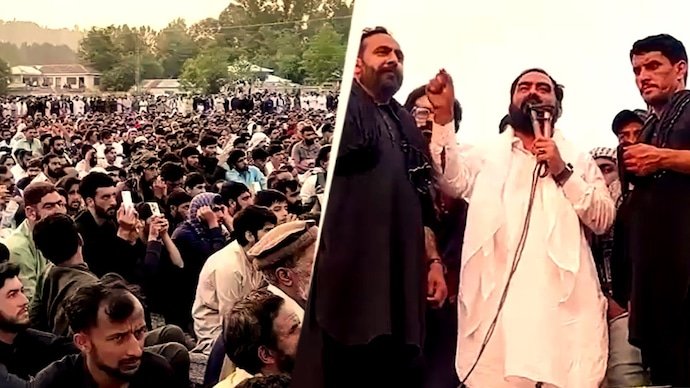
The political crisis unfolding in Pakistan-occupied Kashmir (POK) has taken a dramatic turn after Joint Awami Action Committee (JAAC) leader Sardar Aman Khan publicly accused the Pakistan Army of supplying weapons to Kashmiris in the past while simultaneously branding present-day activists as terrorists. His remarks, delivered before a massive gathering in Rawalakot, have intensified an already volatile protest movement that has entered its fourth week.
The demonstrations, which initially began over rising electricity costs, inflation and shortages of subsidised wheat, have evolved into one of the most significant political challenges to Islamabad’s control over Pakistan-occupied Kashmir in recent years. Protesters are now demanding greater political autonomy, transparent Governance, economic justice and accountability from the Pakistani administration.
As tensions continue to escalate, analysts believe the movement represents more than an economic protest. It reflects growing dissatisfaction with governance, resource allocation and political representation in a region that has long remained at the centre of South Asian geopolitical disputes.
What Happened? Understanding the Latest Controversy
Addressing supporters at Rawalakot Eidgah, JAAC leader Sardar Aman Khan alleged that the Pakistan Army itself had distributed weapons to Kashmiris during previous decades. Referring to allegations that activists are now being portrayed as extremists, Khan questioned what he described as Islamabad’s contradictory position.
“Kashmiris had guns because the Pakistan Army gave them those guns. Today they call us terrorists,” Khan told supporters during his address.
The statement quickly attracted widespread attention because it directly challenges Pakistan’s long-standing public narrative regarding militancy in Kashmir. While Pakistan has consistently maintained that it provides only diplomatic and moral support to Kashmiris, Indian authorities have repeatedly accused Islamabad of training, funding and arming militant groups operating across the Line of Control.
Khan’s remarks therefore carry political significance, particularly because they originated from a prominent leader inside Pakistan-occupied Kashmir rather than from external observers.
Background: Why Are Protests Taking Place in Pakistan-Occupied Kashmir?
The current protests did not begin over security issues. Instead, they emerged from worsening economic conditions that have affected thousands of families across Pakistan-occupied Kashmir.
Residents have complained about soaring electricity bills despite the region producing significant hydroelectric power. Protesters argue that local communities should receive cheaper electricity since major dams and power generation projects operate within the territory.
Other major concerns include:
- Rapid inflation increasing household expenses.
- Reduced availability of subsidised wheat.
- High unemployment among young people.
- Limited economic opportunities.
- Perceived political neglect by Islamabad.
- Lack of transparency in governance.
As demonstrations expanded, the movement gradually transformed from an economic campaign into a broader political platform demanding structural reforms.
Who Is the Joint Awami Action Committee (JAAC)?
The Joint Awami Action Committee has emerged as the principal organisation coordinating the protests across Pakistan-occupied Kashmir. Rather than functioning as a traditional political party, JAAC represents a coalition of traders, civil society groups, students, lawyers and local activists.
The organisation has focused on issues affecting everyday citizens, arguing that economic hardship is directly linked to governance failures.
Its growing popularity reflects increasing frustration among residents WHO believe their concerns have not received adequate attention from Pakistani authorities.
The 38-Point Charter: What Protesters Are Demanding
JAAC leaders have presented a detailed 38-point charter that reportedly seeks negotiations with Islamabad. While various demands cover economic and administrative issues, the overall objectives revolve around improving governance and ensuring greater local participation in decision-making.
| Major Area | Key Demand |
|---|---|
| Electricity | Affordable electricity generated within the region. |
| Food Security | Reliable supply of subsidised wheat. |
| Inflation | Measures to reduce the cost of living. |
| Governance | Greater transparency and accountability. |
| Resource Allocation | Fairer distribution of locally generated resources. |
| Political Rights | Enhanced local decision-making authority. |
Protest leaders have warned that if negotiations fail, demonstrations could escalate into a large march toward Muzaffarabad, the administrative capital of Pakistan-occupied Kashmir.
Allegations Regarding Militant Organisations
During his address, Sardar Aman Khan also alleged that local authorities had previously facilitated a public event involving the banned militant organisation Jaish-e-Mohammed in Rawalakot.
According to Khan, local officials allegedly approved the gathering and provided security while armed participants marched publicly.
These allegations have not been independently verified, and no official response confirming the claims has been presented publicly. Nevertheless, the accusations have added another layer of controversy to an already sensitive political situation.
Pakistan’s Response to the Protests
Pakistani authorities have responded with increased security deployments across several towns in Pakistan-occupied Kashmir.
Reports from Rawalakot, Muzaffarabad and surrounding areas indicate that police have attempted to disperse demonstrations using force in several instances. Clashes between protesters and security personnel have reportedly resulted in casualties and injuries.
The government’s approach has drawn criticism from protest organisers, who argue that excessive use of force risks deepening public anger instead of resolving underlying grievances.
Timeline of the Current POK Protest Movement
| Period | Development |
|---|---|
| Initial Phase | Public demonstrations begin over electricity prices and inflation. |
| Expansion | Students, traders and families join protests across multiple districts. |
| Escalation | Security forces clash with protesters in several cities. |
| Political Shift | JAAC expands demands to governance reforms and accountability. |
| Latest Stage | Sardar Aman Khan accuses Pakistan Army of historically arming Kashmiris. |
Why the Allegations Matter Beyond Pakistan-Occupied Kashmir
Khan’s statements are significant because they intersect with one of South Asia‘s longest-running geopolitical disputes.
For decades, India has alleged that Pakistan has supported cross-border militancy in Jammu and Kashmir through training, financing and logistical assistance. Pakistan has consistently rejected those accusations, maintaining that it provides only diplomatic and political support to Kashmiris.
Public statements from political figures within Pakistan-administered territories that appear to contradict Islamabad’s official position naturally attract international attention.
Whether these remarks influence broader diplomatic discussions remains uncertain, but they have intensified debate regarding historical policies and their long-term consequences.
Economic Hardship Behind the Political Unrest
Although headlines have focused on controversial political statements, the underlying drivers of the movement remain largely economic.
Pakistan has experienced prolonged economic instability marked by:
- High inflation.
- Currency depreciation.
- Energy shortages.
- Rising utility costs.
- Fiscal adjustment measures.
These nationwide pressures have been particularly challenging for residents of Pakistan-occupied Kashmir, many of whom argue that the region has not benefited proportionately from its own natural resources.
Economic dissatisfaction often serves as a catalyst for broader political movements, especially when citizens believe governance systems are failing to address their concerns.
Could the Movement Become More Political?
JAAC leaders have warned that continued refusal to negotiate could broaden the movement’s objectives beyond economic reforms.
Some leaders have suggested that future demonstrations could include demands related to Pakistan’s administrative role in the region.
If protests continue expanding, observers believe Islamabad may face increasing pressure to pursue political dialogue rather than relying primarily on security measures.
History has shown that movements rooted in economic grievances can rapidly evolve into larger campaigns focused on governance, accountability and constitutional reforms when public frustration remains unresolved.
Regional and International Implications
The developments are being closely watched because Pakistan-occupied Kashmir remains part of the wider Kashmir dispute, one of South Asia’s most sensitive geopolitical issues.
Any prolonged instability could have implications for:
- Regional political stability.
- Pakistan’s domestic governance challenges.
- Cross-border diplomatic narratives.
- International attention on human rights and civil liberties.
- Economic development within the region.
Although the protests remain largely focused on local governance, their evolution could influence broader regional discussions surrounding Kashmir.
Expert Insight: Why Governance Matters More Than Force
Political movements driven by everyday economic concerns often become more resilient when participants believe institutional channels are no longer addressing their grievances. In such situations, dialogue, transparency and credible Policy responses generally prove more effective than prolonged confrontation.
The current protests illustrate how issues such as electricity pricing, food affordability and local representation can gradually transform into wider demands for political accountability.
Regardless of differing political perspectives on Kashmir, governance remains a central issue influencing public trust.
Future Outlook
The immediate future of Pakistan-occupied Kashmir will largely depend on whether meaningful negotiations take place between Islamabad and JAAC representatives.
If discussions succeed, tensions could gradually ease through policy concessions addressing electricity pricing, food subsidies and administrative reforms.
However, if dialogue fails and confrontations continue, the movement could become increasingly political, attracting broader domestic and international attention.
The allegations made by Sardar Aman Khan have already added a new dimension to the crisis, ensuring that the debate extends beyond economic grievances into questions about historical policy, governance and the evolving political landscape of Pakistan-occupied Kashmir.
Conclusion
The ongoing protests in Pakistan-occupied Kashmir have evolved far beyond demonstrations over electricity bills and inflation. They now represent a broader conversation about governance, accountability, economic justice and political representation.
Sardar Aman Khan’s allegations against the Pakistan Army have intensified scrutiny of Islamabad’s handling of the region while adding fresh controversy to longstanding debates surrounding Kashmir. Although some claims remain unverified, the movement itself reflects genuine public frustration over economic hardship and governance challenges.
As negotiations remain uncertain and demonstrations continue, the coming weeks could prove decisive in determining whether the crisis moves toward dialogue and reform or enters an even more confrontational phase with wider regional implications.
For breaking news and live news updates, like us on Facebook or follow us on Twitter and Instagram. Read more on Latest World on thefoxdaily.com.






COMMENTS 0