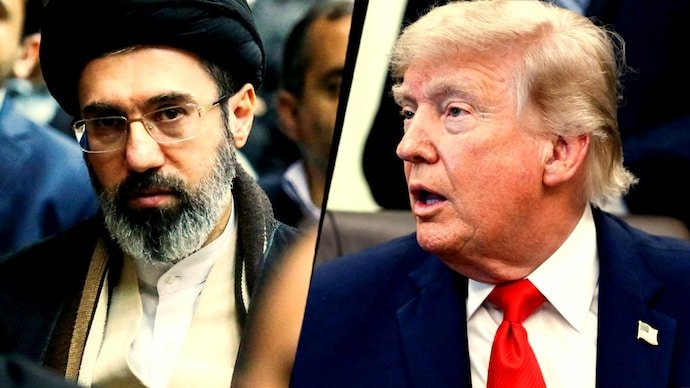
Just hours after US President Donald Trump declared that a major settlement with Iran was close to completion, Tehran publicly rejected suggestions that a final agreement had been reached. The contrasting messages exposed the fragile nature of ongoing negotiations and underscored how difficult it remains to resolve one of the world’s most complex geopolitical disputes.
Trump claimed that negotiations had advanced sufficiently for planned US military strikes to be cancelled and suggested that a formal memorandum of understanding could soon be signed in Europe. Iran, however, responded by emphasizing that key decisions are still under review and that the country will not compromise on what it describes as its fundamental national interests.
The disagreement arrives at a critical moment for the Middle East. The region has experienced months of military confrontations, threats against vital energy infrastructure, and growing fears that tensions could escalate into a broader conflict. A successful agreement could transform regional stability, while failure could push the crisis into a new and potentially dangerous phase.
Why Iran Is Rejecting Claims of an Imminent Deal
Iranian officials have been careful to avoid confirming Trump’s assessment that negotiations are nearing completion. Foreign Ministry spokesperson Esmaeil Baghaei stated that discussions continue and that no final decision has yet been approved by the country’s leadership institutions.
According to Tehran, significant progress has been made on portions of the negotiating text, but important differences remain unresolved. Iranian officials have also accused Washington of repeatedly changing its negotiating positions during discussions, creating additional complications.
This response reflects a longstanding pattern in international Diplomacy. Governments often avoid declaring success until every detail has been finalized, particularly when agreements involve national security, sanctions, military commitments, and nuclear issues.
For Iran, publicly acknowledging an agreement before internal approval could create political risks at home, especially if critics view the deal as conceding too much to foreign pressure.
The Core Issue: Iran’s Nuclear Program
At the heart of the negotiations lies the question that has dominated US-Iran Relations for decades: Iran’s nuclear activities.
Trump has repeatedly stated that the proposed agreement guarantees Iran will never obtain a nuclear weapon. According to the US President, this objective represents the central purpose of the negotiations and justifies the diplomatic effort undertaken by all parties involved.
Iran, meanwhile, continues to maintain that its nuclear program is intended exclusively for peaceful purposes, including energy generation, scientific research, and medical applications.
The challenge for negotiators is finding a framework that satisfies international concerns about nuclear proliferation while allowing Iran to preserve what it considers its sovereign rights under international law.
Any lasting agreement will likely depend on verification mechanisms, monitoring systems, and transparency measures that can provide confidence to all sides.
Trump’s Shift From Military Action to Diplomacy
One of the most remarkable aspects of the current situation is the dramatic shift in Trump’s public position.
Only days earlier, discussions focused heavily on possible military responses to escalating tensions. Reports indicated that additional strikes against Iranian targets were under consideration following attacks and counterattacks involving both sides.
Trump has now stated that fresh military action is no longer necessary because diplomatic discussions have advanced significantly.
This shift illustrates how quickly geopolitical calculations can change when negotiations show signs of progress. Military pressure and diplomatic engagement often operate simultaneously, with governments using both approaches to strengthen their bargaining positions.
Whether this transition from confrontation to diplomacy proves durable will depend largely on the willingness of both sides to resolve their remaining disagreements.
The Strategic Importance of the Strait of Hormuz
One of the most economically significant aspects of Trump’s announcement concerns the Strait of Hormuz.
The waterway serves as one of the world’s most important maritime chokepoints and is essential for international energy trade. A substantial portion of global oil exports passes through the narrow passage connecting the persian gulf to international Shipping Lanes.
Trump suggested that the Strait of Hormuz would fully reopen once a formal agreement is signed, potentially reducing uncertainty in global Energy Markets.
| Strategic Factor | Global Impact |
|---|---|
| Oil Transportation | Supports major global crude exports |
| Natural Gas Exports | Critical route for LNG shipments |
| International Shipping | Supports global trade networks |
| Energy Prices | Directly influences fuel costs worldwide |
| Economic Stability | Affects inflation and economic growth |
Any reduction in tensions around the Strait of Hormuz would likely be welcomed by governments, investors, and businesses concerned about energy security.
Recent Military Escalation Shows the Risks of Failure
The optimism surrounding negotiations cannot be separated from the military escalation that has unfolded in recent months.
Even as diplomatic efforts continued, hostilities persisted. Both sides accused each other of violating understandings and carrying out military actions that threatened regional stability.
The latest confrontation intensified after reports that a US military helicopter was brought down near the Strait of Hormuz. Subsequent strikes and retaliatory actions further increased tensions.
Iranian forces reportedly targeted facilities linked to US military operations in the region, while American military responses focused on strategic Iranian sites.
The rapid escalation demonstrated how fragile ceasefires can become when underlying political disputes remain unresolved.
For regional governments, these events served as a reminder that even localized incidents can quickly evolve into broader security crises.
Why Gulf Nations Support De-escalation
Several Middle Eastern countries have a strong interest in preventing further conflict between the United States and Iran.
Over the past decade, Gulf economies have invested heavily in diversification initiatives designed to reduce dependence on oil revenues. Governments are pursuing ambitious plans involving tourism, technology, renewable energy, logistics, and infrastructure development.
These economic transformations require stability.
Major regional powers understand that prolonged military conflict can deter investment, disrupt trade, increase insurance costs, and undermine long-term growth objectives.
As a result, many regional leaders have encouraged diplomatic solutions and welcomed efforts aimed at reducing tensions.
How Markets Are Responding to the Negotiations
Financial markets closely monitor developments involving Iran because geopolitical tensions in the Middle East often have immediate economic consequences.
Oil Prices
Any indication of reduced conflict risk generally contributes to greater stability in energy markets. Investors view diplomatic progress as a positive signal for future supply security.
Global Inflation
Energy costs influence transportation, manufacturing, agriculture, and consumer goods. Stability in energy markets can help ease inflationary pressures across multiple sectors.
Investment Confidence
Businesses tend to prefer predictable geopolitical conditions. Reduced tensions can encourage investment and improve economic planning.
Supply Chain Security
Safer shipping routes reduce logistical risks and support smoother global trade operations.
These factors explain why markets often react as strongly to diplomatic developments as they do to military events.
The Gap Between Political Messaging and Diplomatic Reality
One of the most important insights emerging from the current situation is the difference between political messaging and diplomatic reality.
Leaders frequently present negotiations in ways that strengthen their domestic political positions. Optimistic announcements can build public support, reassure allies, and influence negotiating dynamics.
However, diplomatic agreements often remain vulnerable until every provision is formally approved and signed.
The contrast between Trump’s confidence and Iran’s caution suggests that negotiations may have reached an advanced stage without necessarily crossing the finish line.
This distinction matters because history is filled with examples of agreements that appeared imminent but ultimately stalled over implementation details.
Comparison: Diplomatic Breakthrough vs Continued Confrontation
| Scenario | Potential Outcome |
|---|---|
| Successful Agreement | Reduced tensions, stable energy markets, improved regional cooperation |
| Partial Agreement | Temporary stability but continued uncertainty |
| Negotiation Failure | Renewed military risks and higher geopolitical volatility |
| Extended Talks | Short-term uncertainty with ongoing diplomatic efforts |
The coming weeks may determine which of these paths becomes reality.
The Bigger Story: A Changing Middle East
Beyond the immediate headlines, the negotiations reflect a broader transformation taking place across the Middle East.
Many countries in the region are increasingly prioritizing economic development, technological innovation, foreign investment, and infrastructure expansion. These goals require a more stable security environment than the region has experienced in recent years.
This shift is encouraging governments to pursue diplomatic engagement even with longstanding rivals.
If the current negotiations eventually succeed, they may represent not only a US-Iran agreement but also a broader change in regional strategic thinking.
Future Outlook: Can Diplomacy Overcome Distrust?
The next stage of negotiations will likely determine whether the current optimism translates into a formal agreement.
Trump believes the framework is largely complete and has suggested that a signing ceremony could occur soon. Iran, however, continues to insist that important decisions remain under review and that its core principles cannot be compromised.
This gap illustrates the central challenge facing negotiators: transforming broad political understandings into binding commitments acceptable to all sides.
If a deal is finalized, it could reduce the risk of conflict, improve energy security, strengthen regional stability, and reshape Middle Eastern diplomacy for years. If talks falter, the region could once again face escalating tensions and renewed uncertainty.
For now, the world remains focused on whether diplomatic momentum can overcome decades of distrust. The outcome could influence not only US-Iran relations but also the future security and economic landscape of the entire Middle East.
For breaking news and live news updates, like us on Facebook or follow us on Twitter and Instagram. Read more on Latest World on thefoxdaily.com.






COMMENTS 0