- From Hormuz to Malacca: Expanding Strategic Focus
- Is Trump Eyeing the Strait of Malacca?
- China’s “Malacca Dilemma”
- India’s Strategic Advantage in the Region
- The Singapore Factor: Economic Stakes and Strategic Balance
- Challenges in Controlling the Strait of Malacca
- Global Implications of a Shift Toward Malacca
- Conclusion: A New Front in Global Maritime Strategy?
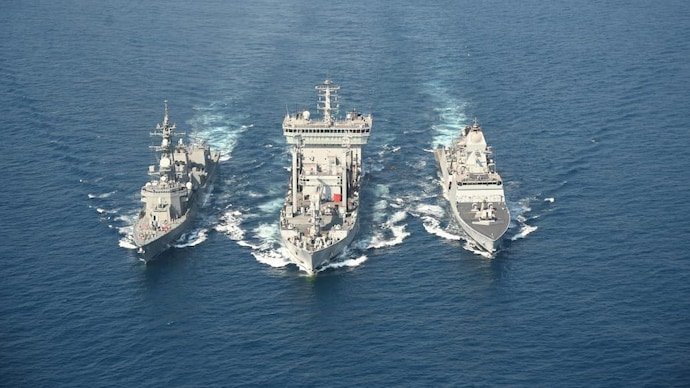
As tensions intensify around the Strait of Hormuz due to a US-led blockade on Iranian ports, strategic attention is rapidly shifting eastward. A recent defence cooperation agreement between the United States and Indonesia has triggered speculation that US President Donald Trump may now be eyeing another crucial maritime chokepoint the Strait of Malacca. This narrow yet vital sea lane, located closer to India, plays a central role in global trade and energy flows, making it a potential focal point in the evolving geopolitical landscape.
The timing of the US-Indonesia engagement, coupled with the ongoing Hormuz crisis, has raised important questions. Is Washington expanding its strategic footprint across key maritime routes? And if so, what does it mean for India, China, and global trade?
From Hormuz to Malacca: Expanding Strategic Focus
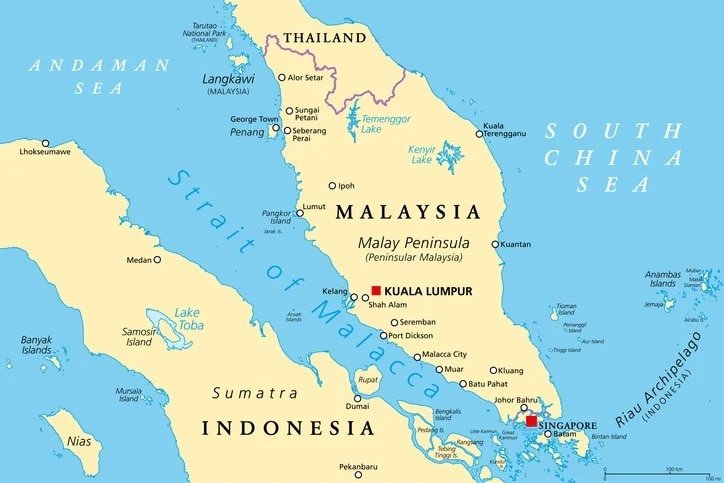
The Strait of Hormuz has long been a critical artery for global oil shipments. However, the Strait of Malacca holds even broader importance. While Hormuz primarily facilitates energy transport, Malacca carries a vast range of goods from crude oil and liquefied natural gas (LNG) to electronics, automobiles, and consumer products.
Recent developments suggest that the US may be applying lessons from the Hormuz situation to other chokepoints. Strategic analysts believe that securing multiple maritime routes could be part of a broader effort to maintain global trade stability and counter geopolitical rivals.
Why the Strait of Malacca Matters More Than Ever
The Strait of Malacca connects the Indian Ocean to the Pacific Ocean, making it one of the busiest and most strategically significant shipping lanes in the world.
| Feature | Strait of Hormuz | Strait of Malacca |
|---|---|---|
| Primary Role | Oil transport | Global trade (oil + goods) |
| Global Trade Share | ~20% of oil | ~40% of global trade |
| Width (Narrowest Point) | ~33 km | ~3 km (Phillip Channel) |
| Strategic Importance | Energy security | Economic + military significance |
This comparison highlights why the Strait of Malacca is often considered even more critical than Hormuz. Simply put, if Hormuz is the world’s fuel pipeline, Malacca is its Supply Chain highway.
Is Trump Eyeing the Strait of Malacca?
The recent defence pact between the US and Indonesia has fueled speculation among geopolitical observers. Indonesia, along with Malaysia and Singapore, shares control over the Strait of Malacca.
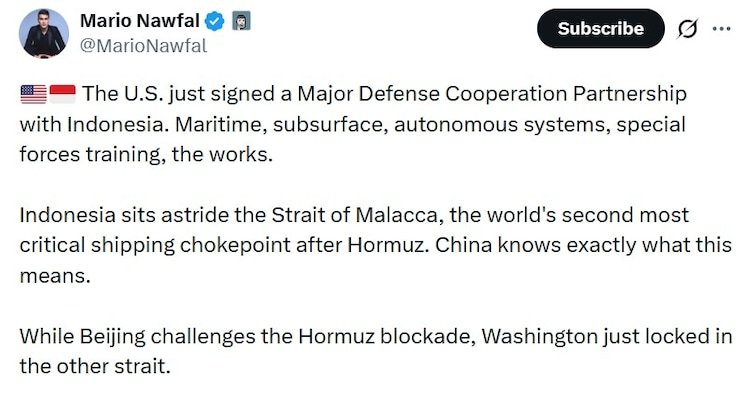
Experts believe that strengthening ties with Indonesia could allow the US to increase its strategic presence in the region. Some analysts argue that this move reflects a broader effort to secure global shipping chokepoints.
“The Strait of Malacca is unequivocally more important than Hormuz,” noted a US defence strategist, emphasizing its global significance.
Others suggest that the US may be positioning itself to counter China’s growing influence in the Indo-Pacific, particularly in maritime domains.
China’s “Malacca Dilemma”
For China, the Strait of Malacca represents a major strategic vulnerability. Nearly 80% of its oil imports pass through this narrow corridor a dependency often referred to as the “Malacca dilemma.”
This reliance makes China highly sensitive to any disruptions in the strait. In response, Beijing has taken steps to reduce its vulnerability, including:
- Expanding alternative energy routes
- Investing in port infrastructure across Asia
- Conducting ocean-mapping and surveillance operations
The possibility of increased US presence in the strait is likely to heighten China’s concerns, potentially adding another layer of tension to an already complex geopolitical equation.
India’s Strategic Advantage in the Region
India occupies a unique and strategically advantageous position when it comes to the Strait of Malacca. Its Andaman and Nicobar Islands lie close to the western entrance of the strait, giving it a natural vantage point.
Key Strategic Assets
- Geographic proximity: The strait is less than a day’s sail from Port Blair
- INS Baaz: India’s southernmost Military air station at Campbell Bay
- Great Nicobar Project: Infrastructure expansion to enhance maritime capabilities
These assets allow India to monitor maritime traffic and potentially influence Security dynamics in the region. While India does not exercise control over the strait, its location provides significant strategic leverage.
In fact, around 55% of India’s trade passes through the Strait of Malacca and Singapore region, making it a critical economic lifeline.
Potential Role in Future US Strategy
If the US seeks to expand its presence in the Strait of Malacca, India could play a key role as a regional partner. Past US administrations have already viewed India as a counterbalance to China in the Indo-Pacific.
Any coordinated strategy in the region would likely involve India, given its geographic advantage and growing naval capabilities.
The Singapore Factor: Economic Stakes and Strategic Balance
Singapore plays a disproportionately important role in the Strait of Malacca despite controlling only a small հատված of it. The country serves as a global maritime hub, with one of the world’s busiest ports.
Its economic model relies heavily on maritime trade:
- Maritime sector contributes around 7% of GDP
- Employs nearly 200,000 people
- Major global hub for ship refueling (bunkering)
Singapore’s strategic alignment with the US adds another layer to the equation. However, it must also balance relations with neighboring countries like Indonesia and Malaysia, which have greater territorial control over the strait.
Any attempt to alter the status quo such as imposing tolls or increasing military presence could disrupt this delicate balance.
Challenges in Controlling the Strait of Malacca
Despite its importance, the Strait of Malacca is not easily controlled by any single nation. Several challenges complicate the situation:
1. Shared Control
Indonesia, Malaysia, and Singapore all have jurisdiction over different parts of the strait, making unilateral actions difficult.
2. Regional Sensitivities
Any external military presence, including that of the US, must navigate regional political dynamics and sovereignty concerns.
3. Economic Dependencies
Countries in the region rely heavily on the strait for trade, making stability a top priority.
4. Risk of Escalation
Increased militarization could lead to tensions involving major powers such as the US and China.
These factors mean that while the strait is strategically valuable, it is also highly sensitive and complex to manage.
Global Implications of a Shift Toward Malacca
If the US does increase its focus on the Strait of Malacca, the implications could be far-reaching:
- Trade Security: Enhanced monitoring could stabilize shipping routes
- Geopolitical Tensions: Increased rivalry between the US and China
- Regional Alliances: Greater cooperation between the US, India, and Southeast Asian nations
- Economic Impact: Potential shifts in global supply chains
For India, such developments present both opportunities and challenges. While increased security could benefit trade, heightened tensions may complicate regional Diplomacy.
Conclusion: A New Front in Global Maritime Strategy?
The unfolding situation suggests that the Strait of Hormuz may not be the only maritime hotspot commanding global attention. As the US strengthens ties in Southeast Asia and signals interest in key chokepoints, the Strait of Malacca is emerging as a potential focal point in global strategy.
For India, the stakes are particularly high. With significant trade dependence on the strait and a strategic geographic advantage, New Delhi could play a crucial role in shaping the region’s future dynamics.
However, any shift in focus toward Malacca will require careful navigation of regional sensitivities, economic interests, and geopolitical rivalries. Because in today’s interconnected world, controlling a chokepoint isn’t just about geography it’s about balancing power, partnerships, and global stability.
For breaking news and live news updates, like us on Facebook or follow us on Twitter and Instagram. Read more on Latest World on thefoxdaily.com.






COMMENTS 0