- Why Greenland Matters More Than Ever
- The Real Goal Behind America’s Greenland Strategy
- Why Greenland Is Nervous About American Pressure
- The Trump Factor Still Looms Large
- Climate Change Is Quietly Reshaping Arctic Power Politics
- How Greenland Compares to Other Strategic Territories
- Denmark’s Difficult Position
- What Happens If Greenland Becomes Independent?
- The Arctic Could Become the Next Major Global Flashpoint
- Why This Story Matters Beyond Greenland
- Conclusion: Greenland Is No Longer on the Geopolitical Sidelines
The Arctic is no longer a frozen frontier sitting quietly at the top of the world. It has rapidly become one of the most strategically contested regions on Earth, and Greenland is now at the center of that struggle.
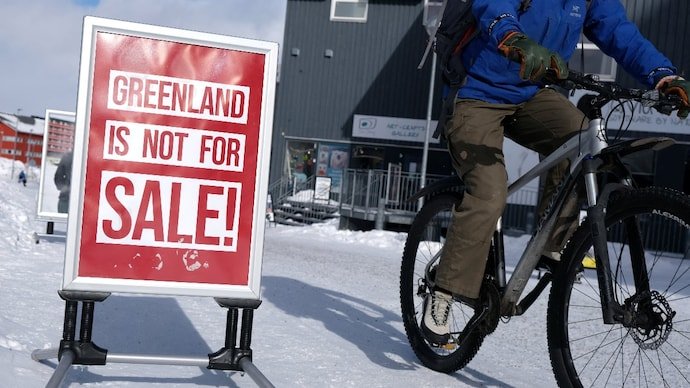
According to reports of confidential talks between the United States, Greenland, and Denmark, Washington is pushing for long-term military guarantees and deeper strategic influence over Greenland. What began as diplomatic efforts to calm tensions after Donald Trump’s controversial push to acquire Greenland has reportedly evolved into negotiations that could permanently reshape the island’s political and military future.
The discussions involve far more than military bases. At stake are Arctic shipping lanes, rare earth minerals, China’s growing influence, NATO security calculations, climate-driven resource competition, and Greenland’s own ambitions for independence.
For Greenlandic leaders, the concern is increasingly clear: economic cooperation with the United States may gradually turn into strategic dependence.
Why Greenland Matters More Than Ever
For decades, Greenland was viewed mainly as a remote Arctic territory with a tiny population and enormous ice sheets. Today, it represents one of the most valuable geopolitical prizes in the world.
Greenland sits between North America and Europe, giving it immense military importance. The island occupies a critical position along Arctic air and naval routes, making it central to missile Defense systems, early-warning radar networks, and future Arctic shipping corridors.
Climate change has dramatically increased Greenland’s strategic value. As Arctic ice melts, previously inaccessible resources and sea routes are becoming economically viable.
Greenland is believed to hold significant reserves of:
- Rare earth minerals essential for electric vehicles and defense technology
- Oil and natural gas deposits
- Uranium and other strategic minerals
- Potential future shipping corridors connecting Asia, Europe, and North America
That combination makes Greenland extraordinarily attractive not only to the United States, but also to China and Russia.
The Real Goal Behind America’s Greenland Strategy
The reported US demands suggest Washington’s priorities go beyond simple military cooperation.
The United States appears to be pursuing three long-term objectives:
1. Permanent Arctic Military Dominance
Washington wants guaranteed long-term military access to Greenland regardless of future political changes, including potential Greenlandic independence from Denmark.
This matters because Greenland is home to the strategically critical Pituffik Space Base, formerly known as Thule Air Base, one of America’s most important Arctic defense installations.
The base plays a major role in:
- Missile warning systems
- Space surveillance
- Arctic military operations
- NATO defense coordination
The US military increasingly sees the Arctic as a future frontline of great-power competition. Russia has heavily expanded Arctic military infrastructure in recent years, while China has declared itself a “near-Arctic state” despite having no Arctic coastline.
From Washington’s perspective, Greenland is too important to leave vulnerable to geopolitical uncertainty.
2. Blocking China and Russia
One of the most controversial parts of the negotiations reportedly involves US efforts to gain influence over foreign investments in Greenland.
That issue is directly tied to growing Western concerns about Chinese infrastructure and mining investments across the Arctic.
China has previously shown strong interest in Greenland’s airports, mining projects, and rare earth reserves. American officials worry that Chinese economic investments could eventually translate into strategic leverage.
This mirrors a broader global trend in which economic projects increasingly carry national security implications.
Washington’s fear is simple: whoever controls Arctic infrastructure today may influence global trade and military mobility tomorrow.
3. Securing Critical Minerals for the Future Economy
The race for rare earth minerals has become one of the defining geopolitical competitions of the 21st century.
Rare earth elements are essential for:
- Electric vehicle batteries
- Wind turbines
- Smartphones
- Missile systems
- Advanced military technologies
China currently dominates much of the global rare earth supply chain. The United States and Europe are desperately trying to diversify access to these materials.
Greenland could become a major alternative supplier.
That explains why the island has suddenly become far more important in global strategic planning than its population size might suggest.
Why Greenland Is Nervous About American Pressure
Greenland’s leaders are walking a political tightrope.
On one side, they want foreign investment, economic development, and stronger international partnerships. Greenland’s economy remains heavily dependent on Danish financial support, and many politicians see mineral development as a pathway toward eventual independence.
On the other side, Greenland fears becoming trapped between superpowers.
The reported American push for permanent military guarantees has triggered concerns that Greenland could lose meaningful control over its future.
Many Greenlandic politicians worry that security agreements signed today could outlast future governments and limit the island’s sovereignty for generations.
The phrase reportedly used during negotiations a “forever clause” captures those fears perfectly.
For Greenland, the issue is not merely about military bases. It is about whether independence would remain genuinely independent if another country retained permanent strategic rights over the island.
The Trump Factor Still Looms Large
Donald Trump’s earlier proposal to purchase Greenland was initially treated globally as a political curiosity. Denmark famously rejected the idea, and the controversy briefly strained relations between Washington and Copenhagen.
But beneath the headlines and jokes, the proposal reflected a serious strategic reality.
Successive American administrations not just Trump’s have viewed Greenland as critically important.
The difference is that Trump expressed those ambitions far more openly and aggressively than previous presidents.
Now, Greenlandic officials reportedly fear that if geopolitical tensions elsewhere ease, renewed pressure over Greenland could return to the forefront of US foreign policy.
That anxiety explains why current negotiations are being watched so carefully inside Greenland.
Climate Change Is Quietly Reshaping Arctic Power Politics
One major dimension often missing from mainstream coverage is the role climate change plays in accelerating Arctic tensions.
The Arctic is warming roughly four times faster than the global average. As ice retreats:
- New shipping lanes become accessible
- Mineral extraction becomes easier
- Military operations become more practical
- Competition for Arctic influence intensifies
This means Greenland’s geopolitical importance is likely to grow, not decline.
The irony is difficult to ignore. The same climate changes threatening Greenland’s environment are also making the island more strategically valuable to global powers.
That creates a difficult balancing act for Greenlandic leaders, who want economic opportunity while maintaining strict environmental protections.
How Greenland Compares to Other Strategic Territories
The Greenland negotiations resemble broader global trends in how powerful nations compete for strategic territories.
| Region | Why It Matters | Key Powers Involved |
|---|---|---|
| Greenland | Arctic defense, rare earth minerals, shipping routes | US, Denmark, China, Russia |
| Taiwan | Semiconductors, Indo-Pacific security | US, China |
| South China Sea | Trade routes, military control | China, US, ASEAN nations |
| Svalbard | Arctic access and resource positioning | Russia, Norway, NATO |
The pattern is consistent: geography that once seemed remote is becoming strategically priceless in an era of resource competition and military rivalry.
Denmark’s Difficult Position
Denmark faces an increasingly delicate challenge.
As a NATO ally, Copenhagen values strong security ties with Washington. But Denmark also remains responsible for Greenland’s foreign affairs and defense under the current constitutional arrangement.
That places Denmark in the awkward position of balancing alliance obligations with Greenland’s growing demands for autonomy.
If Denmark appears too accommodating toward US pressure, it risks political backlash in Greenland. If it resists too strongly, tensions with Washington could deepen.
The negotiations therefore represent not just a US-Greenland issue, but also a test of Denmark’s ability to manage Arctic diplomacy inside the NATO alliance.
What Happens If Greenland Becomes Independent?
Greenland’s independence movement has slowly gained momentum over the years.
Many Greenlanders support eventual independence from Denmark, though economic realities remain a major obstacle.
The current negotiations complicate that debate significantly.
If Greenland were to achieve independence while simultaneously signing permanent strategic agreements with the United States, critics argue the island could simply exchange one form of dependence for another.
That concern explains the strong reactions from Greenlandic politicians warning against surrendering long-term control.
The deeper question is philosophical as much as political:
Can a small Arctic nation remain fully sovereign while sitting at the center of great-power competition?
The Arctic Could Become the Next Major Global Flashpoint
For years, global attention focused heavily on the Indo-Pacific, Eastern Europe, and the Middle East. But many security analysts increasingly believe the Arctic may become the next major arena of geopolitical rivalry.
Several trends point in that direction:
- Russia’s expanding Arctic military infrastructure
- China’s growing economic interest in polar regions
- NATO’s renewed Arctic focus
- Climate-driven access to resources and shipping routes
- Competition for critical minerals
Greenland sits directly at the center of all those developments.
That means the island’s future will likely influence not just Arctic politics, but broader global security dynamics over the next several decades.
Why This Story Matters Beyond Greenland
At first glance, negotiations over a sparsely populated Arctic island may seem distant from everyday global concerns.
In reality, the stakes are enormous.
The outcome could influence:
- Future NATO strategy
- Global rare earth supply chains
- US-China competition
- Arctic environmental policy
- International norms surrounding small-state sovereignty
It also raises difficult questions about how powerful nations pursue security in an era where economic investments, military access, climate change, and resource competition are increasingly interconnected.
Conclusion: Greenland Is No Longer on the Geopolitical Sidelines
The reported US push for a permanent foothold in Greenland reveals a broader reality: the Arctic has entered a new era of strategic competition.
What once looked like a diplomatic controversy sparked by Donald Trump’s comments has evolved into a serious geopolitical negotiation with global implications.
For the United States, Greenland represents Military Security, mineral access, and Arctic dominance. For Greenland, the challenge is preserving sovereignty while navigating pressure from much larger powers. For Denmark, the talks test the balance between alliance politics and territorial responsibility.
The most important takeaway is this: Greenland is no longer a peripheral territory in world affairs.
It has become one of the most strategically significant regions of the 21st century and the decisions made today could shape Arctic power dynamics for generations.
For breaking news and live news updates, like us on Facebook or follow us on Twitter and Instagram. Read more on Latest World on thefoxdaily.com.





COMMENTS 0