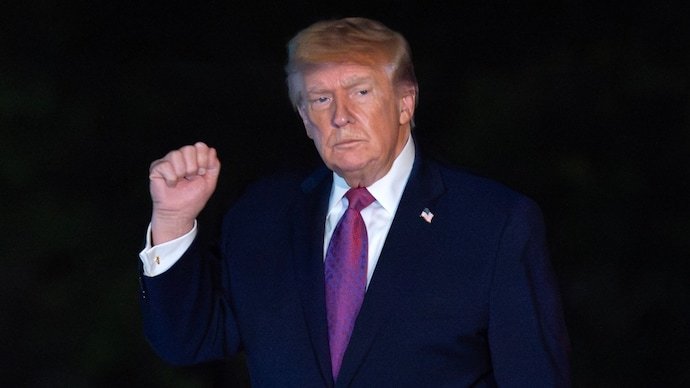
US President Donald Trump has delivered one of his strongest statements yet on the future of negotiations with Iran, insisting that he not Israel will determine the direction of Diplomacy and that Israeli Prime Minister Benjamin Netanyahu would ultimately have to accept any agreement reached between Washington and Tehran.
The comments come at a particularly sensitive moment. Iran and Israel have once again exchanged military strikes, threatening to derail months of diplomatic efforts aimed at reducing tensions, limiting Iran’s nuclear activities, and preventing a wider regional war.
Despite the latest escalation, Trump has maintained that negotiations remain on track and has publicly signaled that military action should not interfere with the possibility of a diplomatic breakthrough.
His remarks reveal a critical reality often overlooked in headlines: the future of Middle East stability may depend as much on negotiations in Washington as on military developments in Tehran, Tel Aviv, and Beirut.
Trump’s Message: Washington Leads, Allies Follow
Trump’s most notable statement was his assertion that he “calls all the shots” regarding negotiations with Iran.
His comments were directed at growing speculation that Israel could take additional military action against Iran regardless of ongoing diplomatic efforts.
By stating that Netanyahu would have “no choice” but to accept a US-Iran agreement, Trump signaled that Washington intends to retain primary control over negotiations involving Iran’s nuclear program and broader regional Security arrangements.
The message also reflects a longstanding principle of American foreign policy: while the United States maintains close relationships with regional allies, major strategic agreements involving Global Security issues are typically negotiated through Washington.
Why the Timing Matters
Trump’s comments arrived immediately after one of the most dangerous escalations between Israel and Iran since the April ceasefire.
Iran launched ballistic missiles toward Israel after Israeli military operations targeted areas linked to Hezbollah in Beirut’s southern suburbs.
Israel responded with strikes on military targets inside Iran, triggering concerns that the region could slide into a broader conflict.
Historically, moments of military escalation often become defining tests for diplomatic negotiations.
In many cases, governments either double down on diplomacy to prevent further violence or abandon talks entirely in favor of military options.
Trump’s remarks indicate that his administration is attempting to pursue the first path despite growing pressure from multiple sides.
The Bigger Question: What Would a New Iran Deal Look Like?
Although details remain under negotiation, discussions between Washington and Tehran are believed to focus on several major areas.
- Restrictions on Iran’s nuclear program
- Verification and inspection mechanisms
- Sanctions relief
- Frozen Iranian assets
- Regional security arrangements
- Future military de-escalation commitments
The challenge is that both sides continue to have very different priorities.
The United States wants guarantees that Iran cannot develop nuclear weapons. Iran wants economic relief and recognition of its strategic interests. Israel wants stronger security assurances against threats from Iran and allied groups.
Reconciling these objectives remains one of the most complex diplomatic challenges in international politics.
How Israel Views the Situation
For Israel, the issue extends beyond Iran’s nuclear program.
Israeli leaders have repeatedly argued that Iran’s support for regional groups such as Hezbollah creates long-term security concerns regardless of Nuclear Negotiations.
This explains why Israeli officials often emphasize military pressure even while diplomatic discussions continue.
From Israel’s perspective, any agreement that fails to address broader regional security threats may be viewed as incomplete.
That difference in priorities helps explain why tensions occasionally emerge between Washington and Tel Aviv even when both governments share similar strategic goals.
Iran’s Position Has Also Hardened
Iranian officials continue to insist that regional issues cannot be separated from wider negotiations.
Tehran has repeatedly linked developments in Lebanon to discussions with the United States, arguing that military operations against its allies directly affect prospects for peace.
Iran also continues to demand economic concessions, including sanctions relief and access to frozen assets.
At the same time, Iranian leaders have maintained that they will respond forcefully to military attacks, creating a situation where diplomacy and confrontation are unfolding simultaneously.
The Lebanon Factor Is Becoming Increasingly Important
One of the most important developments in recent months is the growing role of Lebanon in broader regional negotiations.
While discussions often focus on Iran’s nuclear program, recent events demonstrate that developments in Lebanon can quickly influence diplomatic calculations.
Iran views Hezbollah as a strategic ally. Israel views Hezbollah as a major security threat.
As long as fighting continues in Lebanon, diplomatic progress elsewhere becomes significantly more difficult.
This means that future negotiations may increasingly require discussions not only about nuclear issues but also about regional conflicts and security arrangements.
Why Energy Markets Are Watching Closely
The latest escalation has also captured the attention of global investors.
Oil prices tend to react sharply whenever tensions rise between Iran, Israel, and the United States.
The reason is simple: the Middle East remains one of the world’s most important energy-producing regions.
Any disruption involving major producers, transportation routes, or military conflict can affect global supply chains and fuel prices.
| Issue | Potential Global Impact |
|---|---|
| Regional Conflict | Higher oil prices |
| Shipping Disruptions | Supply chain delays |
| Failed Diplomacy | Market uncertainty |
| New Nuclear Agreement | Improved investor confidence |
| Expanded Military Operations | Increased economic volatility |
Because energy costs influence transportation, manufacturing, and consumer prices worldwide, developments in the Middle East often have economic consequences far beyond the region.
Trump’s Dual Strategy: Diplomacy Backed by Pressure
One of the defining characteristics of Trump’s approach toward Iran has been the combination of diplomatic engagement and strong deterrent messaging.
While repeatedly emphasizing that a deal is close, he has also warned of severe consequences if negotiations fail.
This strategy aims to create incentives for compromise while maintaining leverage during talks.
Supporters argue that such an approach increases negotiating power. Critics contend that strong military rhetoric can make diplomatic breakthroughs harder to achieve.
Regardless of perspective, the strategy reflects an effort to keep multiple options available simultaneously.
The Key Insight Many Analysts Are Missing
Much of the discussion surrounding Trump’s comments focuses on his relationship with Netanyahu or the immediate military situation.
However, the deeper significance lies elsewhere.
The statements suggest that Washington is attempting to redefine the balance between military action and diplomacy in the Middle East.
For years, regional conflicts have often dictated diplomatic outcomes. Trump appears to be arguing for the opposite approach that diplomacy should dictate military decisions.
Whether that strategy succeeds may determine not only the future of US-Iran relations but also the broader stability of the region.
What Happens Next?
Several critical developments are likely to shape the coming weeks:
- Further negotiations between Washington and Tehran
- Potential Israeli responses to Iranian actions
- Developments in Lebanon involving Hezbollah
- International diplomatic efforts to reduce tensions
- Monitoring of regional energy markets
- Decisions regarding sanctions and economic measures
Each of these factors could influence whether the current crisis moves toward resolution or deeper confrontation.
Conclusion
Donald Trump’s assertion that he “calls the shots” and that Benjamin Netanyahu would have “no choice” but to accept a US-Iran agreement highlights the growing importance of diplomacy amid escalating regional tensions. While missiles and military operations continue to dominate headlines, the future of the Middle East may ultimately depend on whether negotiators can bridge deep divisions between Washington, Tehran, and Israel.
The stakes extend far beyond a single nuclear agreement. They involve regional security, global energy markets, international diplomacy, and the risk of a wider conflict that could affect millions of people.
For now, the situation remains delicately balanced between two competing forces: the momentum of military escalation and the possibility of a diplomatic breakthrough. The coming weeks may determine which path ultimately prevails.
For breaking news and live news updates, like us on Facebook or follow us on Twitter and Instagram. Read more on Latest World on thefoxdaily.com.






COMMENTS 0