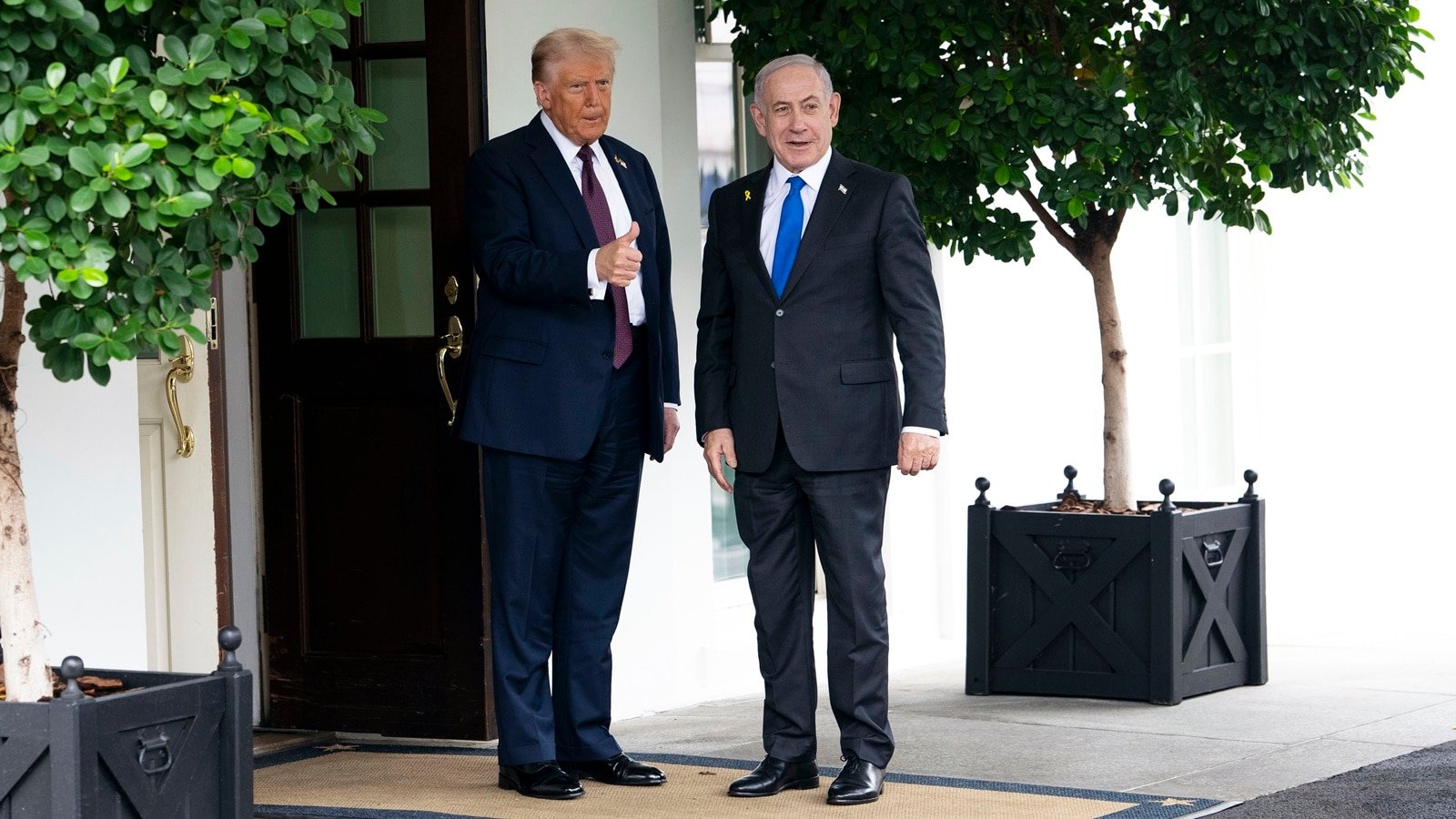
US President Donald Trump and Israeli Prime Minister Benjamin Netanyahu are scheduled to meet at the White House on Tuesday in what is expected to be one of the most consequential diplomatic meetings of the year. The discussions come months after the United States and Israel jointly launched military operations against Iran and at a time when both leaders face mounting political challenges at home.
The agenda extends well beyond Iran. The two leaders are expected to discuss the ongoing conflict in Gaza, security arrangements in southern Lebanon, the future of the Abraham Accords, regional diplomacy, and the next phase of US-Israel strategic cooperation. While Trump and Netanyahu continue to describe themselves as close allies, recent developments suggest differences have emerged over how to handle Iran and broader regional security.
Why the Trump-Netanyahu Meeting Matters
The United States and Israel share one of the world’s closest strategic partnerships, with cooperation spanning defense, intelligence, technology, and diplomacy. Decisions taken by Washington and Jerusalem frequently influence the broader Middle East, affecting regional security, global energy markets, and international diplomacy.
This meeting is particularly significant because it follows months of heightened military tensions involving Iran and comes as diplomatic efforts seek to prevent further escalation across the region.
Analysts view the summit as an opportunity for both leaders to align their priorities while addressing areas where their approaches have recently diverged.
Meeting at a Glance
| Topic | Expected Discussion |
|---|---|
| Iran | Nuclear programme, regional security, future strategy |
| Gaza | Security operations, humanitarian situation, reconstruction efforts |
| Lebanon | Border security and implementation of recent agreements |
| Abraham Accords | Regional normalization and expansion efforts |
| US-Israel Relations | Strategic coordination and future cooperation |
Iran Expected to Be the Central Focus
Iran remains the most sensitive issue on the agenda. Recent months have seen military confrontation, diplomatic engagement, and continued international concern surrounding Tehran’s nuclear programme.
According to officials familiar with the visit, Netanyahu is expected to brief Trump on Israeli intelligence assessments regarding Iran’s nuclear activities and regional capabilities.
Publicly, both leaders have maintained that Iran should not acquire nuclear weapons, although recent comments suggest differences may exist regarding the preferred path forward.
Speaking before the meeting, Trump acknowledged that while he and Netanyahu have “a little difference,” they remain largely aligned on broader objectives.
Netanyahu has also indicated that while diplomacy would be preferable if successful, Israel continues to view preventing Iran from advancing its nuclear programme as a core national security priority.
How US and Israeli Approaches Have Evolved
Following Trump’s return to the White House, relations between Washington and Jerusalem appeared stronger than ever. The two governments coordinated closely on regional security matters and projected a united strategic front.
However, the prolonged regional conflict has altered political calculations.
As military operations expanded and regional tensions intensified, the United States increasingly emphasized diplomatic engagement alongside military preparedness. Israel, meanwhile, has continued to advocate maintaining pressure on groups it considers security threats.
These differences do not necessarily indicate a breakdown in the alliance but rather reflect evolving strategic priorities as circumstances change.
Domestic Political Pressure on Both Leaders
The summit also takes place against challenging domestic political environments.
In Israel, Netanyahu faces political pressure ahead of future electoral contests while continuing to manage complex security challenges and public debate over the country’s military operations.
In the United States, Trump confronts growing political scrutiny over foreign policy, economic conditions, and public concerns regarding prolonged military involvement overseas.
These domestic considerations are likely to influence how both leaders approach diplomacy, military strategy, and future regional engagement.
Gaza Remains a Major Diplomatic Challenge
The humanitarian and security situation in Gaza is expected to feature prominently during the discussions.
While Israel maintains that its military operations target armed groups, the conflict has generated widespread international concern over civilian casualties and humanitarian conditions.
Recent developments include Israeli cabinet approval of measures intended to facilitate aspects of an internationally supported stabilization framework. However, implementation remains limited, with relatively few countries committing personnel to participate in proposed international arrangements.
The future governance, reconstruction, and security architecture of Gaza remain among the most difficult issues facing regional policymakers.
Lebanon and Regional Stability
Lebanon represents another important topic on the agenda.
Recent understandings between Israel and Lebanon have sought to improve security along the border while reducing the risk of renewed large-scale conflict.
One recent initiative involves allowing the Lebanese Armed Forces to deploy in selected areas previously affected by militant activity as part of a monitored security arrangement.
Further discussions involving international partners are expected to examine whether these measures can be expanded while preserving stability along the border.
The Abraham Accords Could Return to the Spotlight
The White House has indicated that expanding the Abraham Accords may also be discussed during the meeting.
The normalization agreements, first signed in 2020, established formal diplomatic relations between Israel and several Arab nations and created new opportunities for cooperation in trade, investment, tourism, technology, and security.
Although regional conflicts have complicated efforts to broaden the framework, policymakers continue exploring possibilities for additional diplomatic engagement across the Middle East.
Comparison: Areas of Cooperation and Emerging Differences
| Issue | Shared Position | Areas of Ongoing Discussion |
|---|---|---|
| Iran’s Nuclear Programme | Prevent nuclear weapon development | Preferred diplomatic and military approach |
| US-Israel Alliance | Strong strategic partnership | Regional policy priorities |
| Gaza | Security concerns acknowledged | Humanitarian and reconstruction strategy |
| Lebanon | Border stability | Implementation of security arrangements |
| Regional Diplomacy | Support broader cooperation | Pace and scope of normalization efforts |
Why Intelligence Sharing Is Important
Intelligence cooperation has long been one of the foundations of the US-Israel relationship.
During the meeting, Netanyahu is expected to share Israeli intelligence assessments related to Iran’s nuclear programme and broader regional developments.
Such exchanges help policymakers evaluate emerging risks, coordinate diplomatic initiatives, and assess security options. Intelligence assessments often influence not only bilateral decisions but also consultations with allies across Europe and the Middle East.
Growing Debate Within the United States
American public opinion regarding Middle East policy has evolved considerably in recent years.
Debate over the humanitarian consequences of the conflict in Gaza, US military involvement abroad, and long-term regional strategy has become increasingly prominent across political and policy circles.
These discussions add another layer of complexity to the White House meeting, as policymakers seek to balance national security objectives with diplomatic engagement and humanitarian considerations.
Expert Insight: A Mature Alliance Can Include Policy Differences
International Relations experts often note that close allies do not always agree on every tactical decision. Strategic partnerships frequently involve discussions over timing, methods, and diplomatic priorities while maintaining broader shared objectives.
The United States and Israel continue to cooperate closely in defense, intelligence, and regional security. At the same time, evolving circumstances can lead each government to emphasize different approaches depending on domestic politics, military assessments, and international diplomacy.
The upcoming summit will therefore be less about determining whether the alliance remains intact and more about how both governments coordinate their next steps amid rapidly changing regional conditions.
Potential Outcomes of the Meeting
While no major announcements have been confirmed in advance, observers will closely watch for developments in several areas:
- Greater coordination on Iran policy.
- Progress on Gaza stabilization and humanitarian efforts.
- Expansion of security cooperation in Lebanon.
- Renewed momentum for regional diplomatic initiatives.
- Joint statements outlining future strategic priorities.
Even without formal agreements, the discussions could influence diplomatic engagement across the Middle East in the coming months.
Future Outlook
The Trump-Netanyahu meeting is likely to shape the next phase of US-Israel cooperation at a time when the Middle East remains highly volatile. The effectiveness of diplomacy with Iran, progress toward stability in Gaza and Lebanon, and efforts to strengthen regional partnerships will all depend in part on the strategic coordination established during these talks.
Although differences over tactics may persist, both governments continue to share broad security interests. The challenge ahead will be balancing military preparedness with diplomatic initiatives capable of reducing regional tensions while maintaining long-term stability.
Conclusion
The White House meeting between Donald Trump and Benjamin Netanyahu comes at a pivotal moment for both leaders and for the broader Middle East. With Iran’s nuclear programme, the conflicts in Gaza and Lebanon, and regional diplomacy all on the agenda, the discussions are expected to influence security and foreign policy well beyond Washington and Jerusalem.
As both leaders navigate domestic political pressures alongside evolving regional challenges, the summit offers an opportunity to reaffirm strategic cooperation while addressing emerging policy differences. The decisions and signals that emerge from the meeting could play an important role in shaping the next chapter of Middle East diplomacy and US-Israel Relations.
For breaking news and live news updates, like us on Facebook or follow us on Twitter and Instagram. Read more on Latest World on thefoxdaily.com.






COMMENTS 0