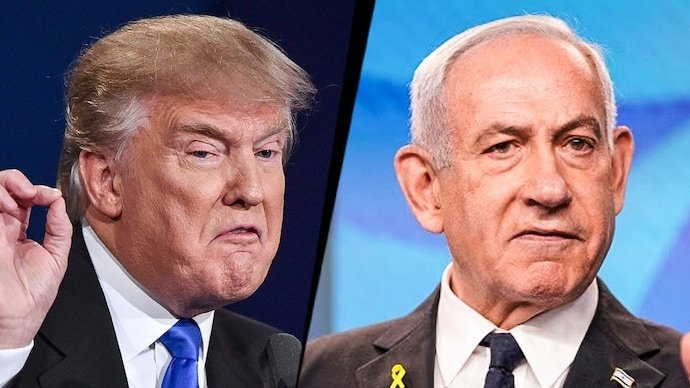
US President Donald Trump has once again placed himself at the center of international headlines after making a striking remark about Israeli Prime Minister Benjamin Netanyahu. During an interview discussing the aftermath of the Iran conflict, Trump said he maintains a strong relationship with Netanyahu but added that he needs to keep him “a little bit sane.”
The comment immediately drew attention because it touches on one of the most consequential geopolitical relationships in the world: the strategic partnership between the United States and Israel. Beyond the headline-grabbing phrase, Trump’s remarks provide insight into how he views American influence over Israeli decision-making, the future of regional Security, and Washington’s role in preventing wider conflict across the Middle East.
As tensions continue to simmer despite recent diplomatic breakthroughs involving Iran, Trump’s comments raise important questions about Leadership, military restraint, regional alliances, and the future direction of US Foreign Policy.
What Exactly Did Trump Say?
During a wide-ranging interview, Trump was asked about his relationship with Israeli Prime Minister Benjamin Netanyahu.
His response was brief but highly memorable:
“Good, but we have to keep him a little bit sane.”
Trump followed the comment by suggesting that he possesses significant influence over Israeli policy decisions. When asked whether he could stop Israel from launching military action against Lebanon, he expressed confidence that he could.
He further emphasized that Netanyahu respects him and implied that his administration maintains substantial leverage over Israeli strategic decisions.
While political leaders often publicly praise allies, it is relatively uncommon for a US president to characterize a close partner in such personal terms.
Why the Remark Matters
At first glance, the comment may appear humorous or off-the-cuff. However, it carries broader geopolitical implications.
The statement reflects three important themes:
- Trump’s belief in personal Diplomacy.
- His confidence in American influence over allies.
- Ongoing concerns about regional military escalation.
The Middle East remains one of the world’s most volatile regions. Decisions made in Jerusalem, Washington, Tehran, Beirut, and other capitals can quickly influence global security, energy markets, and international diplomacy.
Therefore, any indication of disagreements or efforts at restraint between US and Israeli leadership attracts significant attention.
The Historical Importance of the US-Israel Alliance
The United States and Israel have maintained one of the closest strategic partnerships in modern International Relations.
The relationship is built on multiple pillars:
- Military cooperation.
- intelligence sharing.
- Economic ties.
- Technological collaboration.
- Shared security interests.
For decades, successive US administrations have viewed Israel as a critical ally in the Middle East.
At the same time, American leaders have occasionally sought to restrain Israeli military actions when broader regional stability was at risk.
Trump’s latest comments fit within this long tradition of balancing support for Israel with efforts to prevent larger regional conflicts.
Trump and Netanyahu: A Relationship Defined by Strategy and Politics
Few international political relationships have received as much attention in recent years as the connection between Donald Trump and Benjamin Netanyahu.
During Trump’s first presidency, the two leaders frequently highlighted their close cooperation.
Several major policy decisions reflected that alignment, including:
- Recognition of Jerusalem as Israel’s capital.
- Support for normalization agreements between Israel and Arab nations.
- A tougher stance toward Iran.
- Expanded security cooperation.
Despite their public partnership, analysts have often noted that both leaders are highly independent political figures with strong domestic constituencies and distinct strategic priorities.
Trump’s recent remark suggests that while cooperation remains strong, he also views himself as an important moderating influence.
The Iran Factor Behind Trump’s Comments
Understanding Trump’s statement requires examining the broader regional context.
The recent conflict involving Iran significantly altered Middle Eastern security calculations.
Following military operations, diplomatic efforts accelerated, eventually leading to negotiations aimed at reducing tensions and preventing further escalation.
Trump has consistently argued that his policies toward Iran strengthened Israel’s security.
During the interview, he reiterated his long-standing position that pressure on Iran’s nuclear program was necessary to prevent future threats.
His comments suggest that he sees managing Israeli responses as part of a larger strategy for maintaining regional stability after the conflict.
Can the United States Really Influence Israeli Military Decisions?
This question sits at the heart of Trump’s remarks.
The reality is more complex than political rhetoric often suggests.
Israel remains a sovereign nation with its own military, intelligence agencies, political leadership, and national security priorities.
However, the United States possesses considerable influence through:
- Security cooperation.
- Military assistance.
- Diplomatic support.
- Intelligence partnerships.
- International coordination.
American presidents have historically used this influence to encourage, discourage, or shape military actions in the region.
While no US leader can simply dictate Israeli policy, Washington’s views carry substantial weight in Jerusalem.
Why Lebanon Remains a Major Concern
One of the most significant aspects of Trump’s interview involved his comments regarding Lebanon.
The Israel-Lebanon frontier has repeatedly served as a flashpoint for regional conflict.
Several factors contribute to ongoing tensions:
- Cross-border security concerns.
- Hezbollah’s military capabilities.
- Territorial disputes.
- Regional proxy dynamics.
- Broader Iran-Israel competition.
A major escalation in Lebanon could quickly draw additional regional actors into a wider conflict.
This explains why preventing further deterioration remains a priority for diplomats and policymakers.
Leadership Style: Trump’s Preference for Personal Influence
One often overlooked aspect of the interview is how clearly it reflects Trump’s approach to international diplomacy.
Unlike traditional diplomatic frameworks that emphasize institutions and formal processes, Trump frequently highlights personal relationships with world leaders.
His comments regarding Netanyahu fit this pattern.
Rather than focusing on government-to-government mechanisms, he emphasized individual influence, trust, and direct communication.
This leadership style has become a defining feature of Trump’s approach to global affairs.
Comparison: Traditional Diplomacy vs Personal Diplomacy
| Traditional Diplomacy | Personal Diplomacy |
|---|---|
| Institution-driven | Leader-driven |
| Formal negotiations | Direct relationships |
| Structured communication | Personal influence |
| Long-term processes | Rapid decision-making |
| Bureaucratic coordination | Individual engagement |
Trump’s remarks clearly align with the second model.
An Insight Many Analysts Overlook
Much of the discussion surrounding Trump’s statement focuses on the word “sane.”
However, the more significant part of the interview may actually be his repeated emphasis on preventing future conflicts.
The statement suggests a strategic shift from wartime coordination toward post-conflict management.
Military victories often receive substantial attention, but maintaining stability afterward is frequently the harder challenge.
Trump appears to be signaling that controlling escalation among allies may be just as important as confronting adversaries.
This distinction could become increasingly relevant as regional negotiations continue.
How Global Markets View Regional Stability
Investors and energy markets closely monitor developments involving Israel, Iran, and Lebanon.
Military escalation can influence:
- Oil prices.
- Shipping routes.
- Insurance costs.
- Commodity markets.
- Investor confidence.
Conversely, signs of diplomatic restraint often reduce uncertainty.
Trump’s assertion that he can help prevent additional military operations may therefore be interpreted by markets as a signal favoring stability.
Potential Political Reactions
The remark is likely to generate diverse reactions across political circles.
Supporters may view it as evidence of Trump’s confidence and influence on the world stage.
Critics may question whether such public comments are appropriate when discussing sensitive international relationships.
Meanwhile, policymakers in Israel and across the Middle East will likely focus less on the wording itself and more on the broader message regarding future military decisions.
What Happens Next?
The coming months could prove decisive for the region.
Several developments will shape the future landscape:
- Progress in diplomatic negotiations.
- Security conditions in Lebanon.
- Developments related to Iran’s nuclear program.
- Regional economic recovery efforts.
- US engagement in Middle East diplomacy.
If diplomatic momentum continues, Trump’s comments may eventually be viewed as part of a broader effort to prevent renewed conflict.
If tensions escalate again, they may instead be remembered as an acknowledgment of how difficult it remains to balance competing regional interests.
Future Outlook
The future of US-Israel relations remains strong, but the nature of that partnership continues to evolve as regional dynamics change. Trump’s latest remarks suggest that future cooperation may increasingly focus on managing escalation rather than simply responding to immediate threats.
The Middle East is entering a period where diplomacy, reconstruction, and long-term security arrangements may become just as important as military capabilities. Leaders across the region face growing pressure to convert temporary stability into sustainable peace.
Whether that objective can be achieved will depend on the willingness of all parties to balance security concerns with diplomatic opportunities.
Conclusion
Donald Trump’s comment that he needs to keep Benjamin Netanyahu “a little bit sane” may have generated headlines because of its unusual phrasing, but its broader significance lies in what it reveals about power, influence, and diplomacy in the Middle East.
The statement highlights Trump’s belief that the United States remains a decisive force in shaping regional outcomes and that personal relationships between leaders can influence critical decisions. It also reflects ongoing concerns about preventing new conflicts following recent tensions involving Iran and Lebanon.
As negotiations continue and regional actors navigate an uncertain future, Trump’s remarks offer a glimpse into how he views America’s role not merely as an ally, but as a stabilizing force seeking to prevent the next crisis before it begins.
For breaking news and live news updates, like us on Facebook or follow us on Twitter and Instagram. Read more on Latest World on thefoxdaily.com.





COMMENTS 0