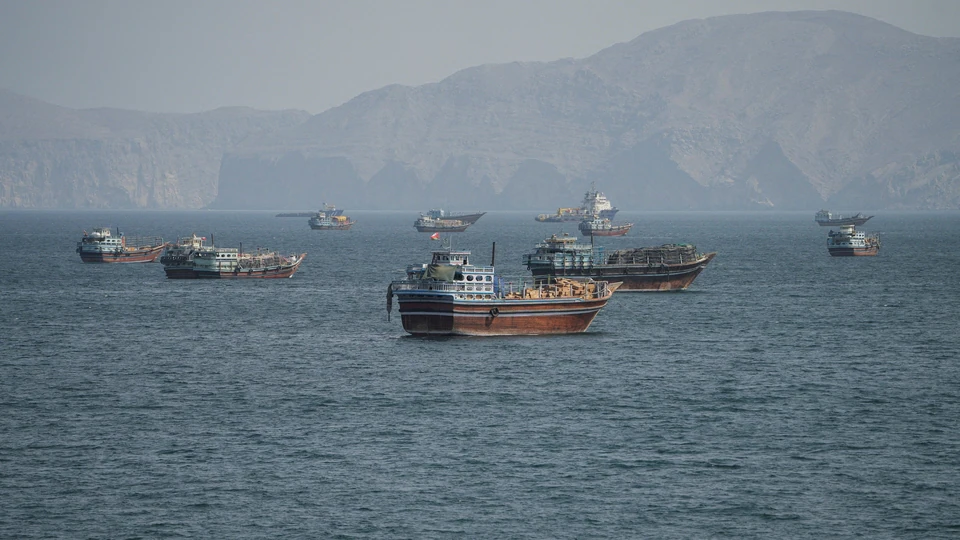
Iran has urged the United States to accept its conditions for reopening the strategically important Strait of Hormuz, with Foreign Minister Abbas Araghchi saying the waterway could reopen within six days if Washington agrees to Tehran’s proposal. Negotiations could resume on the seventh day, he said, as diplomatic efforts continue amid tensions between the two countries.
Araghchi said Tehran was reviewing comments received from Washington but maintained that Iran’s seven-day proposal remained on the table. The conditions include lifting the US blockade on Iranian ports, removing sanctions on Iranian oil exports and ending hostilities across regional fronts.
Separately, Iran’s newly appointed Defence Minister Mehrdad Akhlaghi warned that the United States and its allies in West Asia would suffer “enormous damage” if Washington resumed military action against Tehran. His remarks underline the continuing military risks as both countries remain divided over the terms of a potential agreement.
The diplomatic deadlock has significant implications for global energy markets because the Strait of Hormuz was a major transit route for international oil and liquefied natural gas shipments before the war.
Iran’s Proposal to Reopen the Strait of Hormuz
Iranian Foreign Minister Abbas Araghchi outlined Tehran’s proposal while in Baghdad for a meeting of the Organisation of Islamic Cooperation (OIC). He said Iran was examining Washington’s response but insisted that the proposal remained available as a possible path towards reopening the waterway.
“Our situation is clear and based on the seven-days proposal presented to the US. They shared comments which we are reviewing, but our proposal is still on the table and if there is any honesty on the US part, which there isn’t, the way to reopening the Strait of Hormuz is obvious,” Araghchi said.
Under the proposed arrangement, the Strait of Hormuz could reopen on the sixth day if the United States accepts Iran’s conditions. Negotiations would then resume on the seventh day, according to the foreign minister.
The proposed timeline is conditional, however. Iran has not announced that the United States has accepted its demands, and the waterway’s reopening remains dependent on an agreement between the two sides.
Tehran’s conditions include three central demands: the lifting of the US blockade on Iranian ports, the removal of sanctions on Iranian oil exports and an end to hostilities across regional fronts.
These demands connect the reopening of the strait to broader security and economic issues. Iran is seeking relief from restrictions affecting its trade and oil exports while also demanding an end to military hostilities in the region.
For Washington, accepting the proposal would require decisions on sanctions, maritime restrictions and the wider conflict. The two countries have not yet resolved their differences over the order in which these issues should be addressed.
Why the United States and Iran Disagree
The main obstacle to an agreement is the disagreement over the scope and sequence of negotiations. Washington wants Iran’s nuclear programme to be addressed from the beginning, while Tehran wants the initial discussions to focus on reopening the Strait of Hormuz and restoring security in the waterway.
The difference matters because the two sides are approaching negotiations with different priorities. The United States has linked a broader settlement to restrictions on Iran’s nuclear activities, while Iran’s current proposal places immediate emphasis on maritime access, sanctions and ending hostilities.
Earlier in October, US Vice President JD Vance said Iran must make a “meaningful” reduction in its uranium enrichment capacity to satisfy Washington’s demands and end the eight-month war between the two countries.
Iran’s proposal was submitted in mid-September after an interim ceasefire collapsed. Tehran subsequently acknowledged receiving a response from Washington, but the exchange has not yet produced an agreement on reopening the strait.
Iran’s security chief said last week that negotiations had stalled because Washington had not addressed all seven conditions associated with Tehran’s proposal. Araghchi’s latest comments indicate that Iran is still examining the US response but has not abandoned its demands.
The disagreement over nuclear negotiations is particularly significant because a reopening agreement focused on maritime security would not necessarily resolve the wider dispute over Iran’s nuclear programme. Even if the two countries reached an understanding on the strait, further negotiations could be needed to address their remaining differences.
Why the Strait of Hormuz Is Critical to Global Energy Supplies
The Strait of Hormuz is one of the world’s most strategically important maritime routes because it connects the Persian Gulf with the Gulf of Oman and the wider Arabian Sea. Before the war, approximately one-fifth of global oil and liquefied natural gas trade passed through the waterway, according to Reuters.
Its importance extends beyond Iran and the United States. Oil and Gas shipments travelling through the strait supply energy markets across Asia and other parts of the world, making disruptions a concern for importers, shipping companies and energy producers.
When passage through a major energy corridor is disrupted, the consequences can extend across the global economy. Shipping operators may face uncertainty over vessel movements, while energy buyers can become more concerned about the reliability of supplies and the cost of transporting fuel.
For countries heavily dependent on imported energy, prolonged uncertainty around the Strait of Hormuz can complicate purchasing decisions and increase exposure to international price movements. The extent of any effect depends on the duration of the disruption, available alternative supplies and how markets respond to developments.
India is among the countries for which developments in the region are important because it imports substantial quantities of crude oil and relies on international shipping to meet its energy needs. A sustained disruption to a major oil transit route could affect supply planning, freight costs and the price India pays for imported energy.
However, the precise economic impact of the current situation cannot be determined from the reopening proposal alone. It would depend on whether an agreement is reached, when normal shipping can resume and whether vessels can travel through the strait safely and reliably.
Iran’s Defence Minister Warns of ‘Enormous Damage’
While diplomatic discussions continue, Iran’s newly appointed Defence Minister Mehrdad Akhlaghi issued a separate warning to Washington on Sunday. He said the United States and its allies in West Asia would face serious consequences if the US resumed its military campaign against Iran.
“People can rest assured that they will most likely not dare to attack us,” Akhlaghi told reporters after securing parliament’s approval, according to AFP. “If they (the US) do, they themselves and the region will suffer enormous damage.”
The remarks reflect Tehran’s warning that renewed military action could escalate the conflict and expose countries across the region to further risks. They also came as Iran continued to press the United States to consider its conditions for reopening the Strait of Hormuz.
Akhlaghi’s statement was a warning about the potential consequences of another attack, rather than confirmation that new military action had been ordered or that a fresh offensive was imminent.
The simultaneous diplomatic and military messaging highlights the difficult environment in which negotiations are taking place. Iran is presenting a proposal for reopening a vital shipping route while warning that renewed hostilities could cause substantial damage across the region.
Iranian Parliament Approves Mehrdad Akhlaghi as Defence Minister
Iran’s parliament approved Akhlaghi’s appointment as defence minister, with 237 lawmakers voting in favour out of 277 votes cast, according to the Iranian government website cited by AFP.
He replaced Aziz Nasirzadeh, who was killed in a US-Israeli attack on a leadership compound on February 28, alongside former Supreme Leader Ayatollah Ali Khamenei and senior military commanders, according to the report.
The appointment comes during a period of heightened tensions and uncertainty over the direction of the conflict. The defence minister’s public warning signals that Tehran continues to emphasise military readiness alongside its diplomatic efforts.
Parliamentary approval formalised Akhlaghi’s appointment, but his remarks do not by themselves establish what military decisions Iran might take if negotiations fail. Any assessment of the next phase of the conflict will depend on subsequent actions and official announcements from the parties involved.
Can the Strait of Hormuz Really Reopen Within Six Days?
Iran’s proposed six-day timeline offers a possible framework for reopening the waterway, but it is not a confirmed schedule. Araghchi said the timeline would apply if Washington accepted Tehran’s conditions, which remain under discussion.
Several issues must therefore be resolved before the proposed timetable can become reality. The United States would need to respond to Iran’s demands concerning the blockade on Iranian ports, sanctions on oil exports and hostilities across regional fronts. The two sides would also need to address their disagreement over Iran’s nuclear programme and the order of negotiations.
The status of the interim ceasefire and the security situation across the region are also relevant to whether an agreement can be implemented. Even if a political understanding is reached, the safe and reliable movement of commercial vessels would remain essential to restoring confidence in the shipping route.
Iran’s statement that negotiations could resume on the seventh day should consequently be understood as part of its proposed sequence of events, not as confirmation that talks have been scheduled or that the United States has agreed to the conditions.
What Happens Next in the US-Iran Standoff?
The immediate question is whether Washington’s response to Iran’s proposal can lead to a compromise over the Strait of Hormuz. Araghchi said Tehran was reviewing the US comments, leaving open the possibility of further diplomatic engagement without confirming that an agreement was close.
Iran’s insistence on lifting the port blockade, removing oil sanctions and ending regional hostilities remains a major obstacle. Washington’s demand that Iran’s nuclear programme be addressed from the outset presents another point of disagreement.
At the same time, Akhlaghi’s warning highlights the risk that a breakdown in negotiations could be accompanied by renewed military confrontation. His comments do not establish that an attack is imminent, but they underline the potential consequences both sides associate with further escalation.
For global energy markets, the most important development would be a verifiable agreement that allows commercial shipping to resume safely through the Strait of Hormuz. Until that happens, the six-day timeline remains conditional on the United States accepting Iran’s proposal.
The diplomatic path forward will depend on whether the two countries can reconcile their competing priorities. Iran wants the reopening of the waterway and relief from economic restrictions to take centre stage, while Washington continues to insist on addressing the nuclear dispute. How the two sides resolve those differences will determine whether the proposed reopening plan advances or the standoff continues.
For breaking news and live news updates, like us on Facebook or follow us on Twitter and Instagram. Read more on Latest World on thefoxdaily.com.






COMMENTS 0