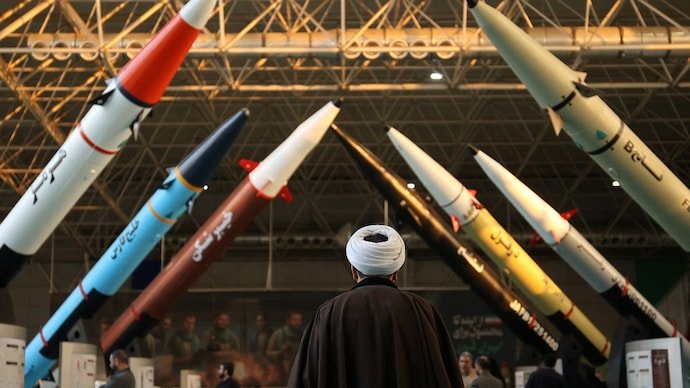
After months of escalating conflict, Military strikes, diplomatic breakdowns and fears of a wider regional war, the United States and Iran may finally be approaching a turning point.
According to multiple reports, Tehran has agreed in principle to surrender its stockpile of highly enriched uranium as part of a broader peace arrangement being negotiated with Washington. If finalised, the move could become the most significant breakthrough in US-Iran relations since the 2015 nuclear agreement.
The development is especially important because the uranium stockpile has long been considered the single biggest obstacle in nuclear negotiations between the two countries.
For years, the West viewed Iran’s growing uranium reserves as a direct proliferation risk. Israel repeatedly warned that Iran was edging dangerously close to acquiring weapons-grade nuclear capability, while Tehran insisted its nuclear programme remained peaceful and sovereign.
Now, amid mounting economic pressure, regional instability and military confrontation, both sides appear to be searching for an off-ramp before the crisis spirals even further.
But behind the headlines lies a much bigger story one involving Global energy markets, military deterrence, geopolitical strategy, Gulf security and the future balance of power in the Middle East.
Why Iran’s Uranium Stockpile Became the Core Issue
The dispute centers on Iran’s stockpile of uranium enriched to 60 percent purity.
According to the International Atomic Energy Agency (IAEA), Iran currently possesses nearly 400 kilograms of uranium enriched to that level.
While 60 percent enrichment is not technically weapons-grade, it is considered extremely close. Nuclear experts have long argued that once uranium reaches such high purity, the remaining technical steps required to produce weapons-grade material become significantly shorter.
This is why the issue became so explosive diplomatically.
Western governments, particularly the United States and Israel, feared Iran could potentially accelerate toward nuclear weapon capability if tensions escalated further.
Iran, meanwhile, maintained that enrichment was part of its sovereign nuclear rights and repeatedly rejected demands for complete dismantlement.
The result was years of deadlock.
Why Tehran May Be Willing to Compromise Now
The timing of Iran’s apparent willingness to negotiate is not accidental.
Several factors appear to have pushed Tehran toward a more flexible position.
1. Severe Economic Pressure
Years of sanctions have significantly strained Iran’s economy.
Inflation, currency instability, unemployment and restricted access to global financial systems have created growing domestic pressure.
The proposed agreement reportedly includes the possible release of billions of dollars in frozen Iranian assets, creating a strong economic incentive for compromise.
2. Military Pressure After Recent Strikes
The recent US and Israeli strikes on Iranian facilities dramatically changed the strategic environment.
Reports suggest American military planners even considered bunker-busting operations targeting underground uranium facilities at Isfahan.
The possibility of further military escalation may have convinced Tehran that controlled negotiation is preferable to prolonged confrontation.
3. Regional Isolation Risks
Iran’s confrontation with the United States and Israel also increased anxiety among Gulf countries concerned about regional instability.
Tehran may be seeking to reduce diplomatic isolation and prevent a broader regional coalition from forming against it.
What the US Wants From the Deal
For Washington, the negotiations are about much more than just uranium.
The United States appears focused on three major objectives:
- Preventing nuclear weapon capability
- Stabilising the Middle East
- Protecting global energy markets
The Strait of Hormuz remains central to this equation.
Nearly one-fifth of the world’s oil and gas flows through the narrow maritime corridor. Any prolonged conflict involving Iran could severely disrupt global energy supplies and trigger massive economic consequences worldwide.
That is one reason President Donald Trump recently emphasized reopening and securing Hormuz shipping routes.
Energy security has effectively become inseparable from nuclear Diplomacy.
The Deal Could Resemble the 2015 Nuclear Agreement But With Important Differences
One of the most interesting aspects of the current talks is that negotiators appear to be revisiting elements of the 2015 Iran nuclear deal negotiated during Barack Obama’s presidency.
Under that agreement, Iran transferred significant portions of its enriched uranium stockpile to Russia in exchange for sanctions relief.
Similar mechanisms are reportedly now under discussion again.
However, there are key differences between the two situations.
| 2015 Nuclear Deal | Current Negotiations |
|---|---|
| Focused primarily on nuclear restrictions | Includes broader regional peace considerations |
| Less military escalation beforehand | Follows direct military strikes and conflict |
| Lower enrichment levels | Iran now possesses 60% enriched uranium |
| Different regional geopolitical landscape | Greater Gulf instability and global energy risks |
| Limited regional normalization efforts | Broader focus on regional de-escalation |
The current negotiations therefore carry much higher stakes.
The Most Difficult Question: What Happens to the Uranium?
Although Iran reportedly agreed in principle to surrender the stockpile, the actual disposal mechanism remains unresolved.
Several possible options are being discussed.
Transfer to Another Country
One possibility involves shipping the uranium abroad, potentially following the model used in 2015 when material was transferred to Russia.
This would remove immediate proliferation concerns but would require complex international oversight and guarantees.
Dilution
Another option involves reducing the enrichment level so the material can no longer be rapidly weaponized.
This may be politically easier for Tehran because the uranium technically remains within Iranian control.
Permanent Neutralisation
Some hardliners in Washington and Israel reportedly prefer destruction or irreversible neutralisation of the stockpile.
However, achieving agreement on such measures could prove extremely difficult diplomatically.
Israel’s Security Concerns Remain Central
Any US-Iran agreement will inevitably be viewed through the lens of Israeli security concerns.
Israeli officials have consistently argued that Iran’s enrichment programme represents an existential threat.
Israel has repeatedly pushed for:
- Stronger nuclear restrictions
- Longer enrichment bans
- Aggressive inspection mechanisms
- Limits on missile programmes
- Reduced Iranian regional influence
The Israeli government is therefore likely to scrutinize every detail of any proposed agreement extremely carefully.
The broader regional response may ultimately determine whether the deal produces long-term stability or only temporary de-escalation.
The Energy Market Angle Competitors Are Missing
Most coverage is focusing narrowly on nuclear diplomacy.
But the bigger story may actually be about global energy stability.
Oil markets have become increasingly sensitive to geopolitical disruptions in recent years.
The possibility of prolonged conflict involving Iran created fears of:
- Hormuz shipping disruptions
- Oil supply shortages
- Price spikes
- Inflationary pressure worldwide
- Economic instability in energy-importing countries
That means a successful agreement could have consequences far beyond the Middle East.
Countries like India, Japan, South Korea and many European economies have enormous stakes in stable Gulf energy flows.
In many ways, the negotiations are as much about global economic stability as they are about nuclear policy.
Trump’s Calculations Appear Different From Obama’s Approach
One interesting contrast is the political framing.
Obama’s 2015 deal was primarily presented as a diplomatic and nonproliferation achievement.
Trump’s current approach appears more focused on strategic leverage, deterrence and “peace through pressure.”
The recent military strikes, combined with ongoing negotiations, suggest a hybrid strategy that mixes diplomacy with overt coercive pressure.
Whether that approach produces a more durable agreement remains uncertain.
The Future of Iran’s Enrichment Programme Is Still Unresolved
Even if the uranium stockpile issue is resolved, another major dispute remains: Iran’s future enrichment rights.
Reports suggest Washington wants a long-term moratorium on enrichment activities, while Tehran prefers a much shorter timeline.
This disagreement could become the next major sticking point.
For Iran, maintaining some enrichment capability is tied closely to sovereignty and national prestige.
For the United States and Israel, unrestricted enrichment creates long-term proliferation concerns.
Balancing those competing priorities will not be easy.
Why Gulf Countries Are Watching Closely
The negotiations are also deeply important for Gulf Arab states.
Countries like Saudi Arabia, the UAE and Qatar have spent years trying to balance relations with both Washington and Tehran while avoiding direct conflict spillover.
The recent attacks on regional targets demonstrated that Gulf states are no longer insulated from regional confrontation.
That has increased pressure for some form of diplomatic stabilisation.
A successful agreement could reduce regional tensions significantly. A failed agreement could move the region closer to prolonged instability.
Prediction: A Limited Deal Is More Likely Than a Grand Bargain
One realistic prediction is that negotiators may ultimately pursue a phased or limited agreement rather than a sweeping comprehensive settlement.
Why?
Because the political distrust between the two sides remains enormous.
A narrower framework focused initially on:
- Uranium stockpile management
- Sanctions relief
- Shipping security
- De-escalation measures
may prove more achievable than attempting to solve every issue simultaneously.
Incremental diplomacy often succeeds where maximalist negotiations collapse.
The Bigger Geopolitical Reality
The most important insight competitors are missing is that this negotiation reflects a broader transformation in Global Geopolitics.
Modern conflicts are no longer isolated military confrontations.
They are interconnected battles involving:
- Energy security
- Global trade routes
- Financial sanctions
- Nuclear deterrence
- Regional alliances
- Economic stability
The Iran negotiations sit at the center of all those overlapping systems.
That is why the outcome matters far beyond Tehran and Washington.
Conclusion: A Critical Moment for the Middle East and Global Stability
Iran’s reported willingness to surrender its highly enriched uranium stockpile represents one of the most consequential diplomatic developments in the Middle East in years.
If negotiations succeed, the agreement could reduce the immediate risk of military escalation, stabilize global energy markets and reopen channels for broader regional diplomacy.
But major challenges remain unresolved.
The fate of the uranium itself, the future of Iran’s enrichment programme, Israeli security concerns and the structure of sanctions relief all remain highly sensitive issues.
The negotiations therefore remain fragile.
Still, the fact that both sides are even discussing such concessions after months of confrontation suggests that the costs of continued escalation may finally be outweighing the benefits for all parties involved.
In an increasingly unstable world, even limited diplomatic breakthroughs can carry enormous global consequences.
And in this case, the outcome could shape not only the future of Iran-US relations, but also the security architecture of the entire Middle East for years to come.
For breaking news and live news updates, like us on Facebook or follow us on Twitter and Instagram. Read more on Latest World on thefoxdaily.com.






COMMENTS 0