- What Triggered the Trump-Merz Confrontation?
- The Core Issue: Iran’s Nuclear Ambitions
- Beyond Iran: A Broader Transatlantic Rift
- The NATO Factor: Alliance Under Pressure
- A Unique Insight: This Is About Leadership Models, Not Just Policy
- Political Stakes: Why This Matters Now
- Possible Scenarios Going Forward
- Real-World Impact: What It Means Globally
- Conclusion: More Than a War of Words
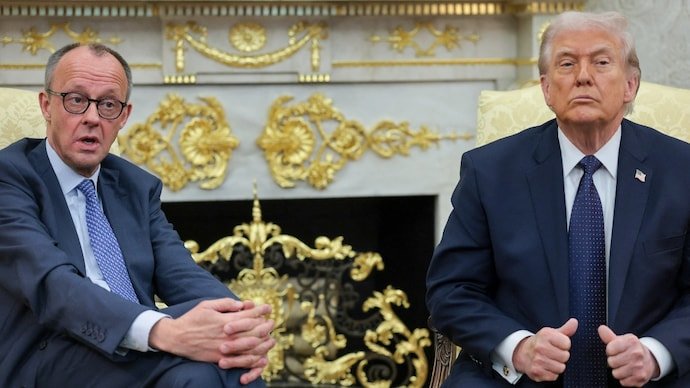
A sharp exchange between former US President Donald Trump and German Chancellor Friedrich Merz has brought transatlantic tensions back into the spotlight. What began as criticism over Iran policy has quickly evolved into a broader political confrontation touching on immigration, energy, the Russia-Ukraine War, and even the future of US troop presence in Europe.
At the center of the dispute is a fundamental disagreement: how to handle Iran’s nuclear ambitions. But the intensity of the rhetoric suggests something larger is at play a clash of leadership styles, strategic priorities, and visions for Global Security.
What Triggered the Trump-Merz Confrontation?
The latest war of words was sparked when Friedrich Merz publicly questioned Washington’s approach to Iran, suggesting that US Diplomacy had been outmaneuvered by Tehran. His remarks struck a nerve with Donald Trump, who responded forcefully, accusing the German leader of misunderstanding the situation and interfering in US Foreign Policy.
Trump’s response was blunt and personal. He urged Merz to focus on Germany’s domestic challenges particularly immigration and energy while also criticising his handling of the Russia-Ukraine conflict.
But beneath the rhetoric lies a more substantive disagreement about how to deal with one of the world’s most sensitive security threats.
The Core Issue: Iran’s Nuclear Ambitions
Iran’s nuclear programme has long been a flashpoint in global politics. The stakes are high: preventing nuclear proliferation while avoiding a broader regional conflict.
Trump’s position has consistently leaned toward maximum pressure using Sanctions, diplomatic isolation, and the threat of force to curb Iran’s capabilities. His recent remarks suggest he continues to view strong, unilateral action as the most effective path.
Merz, on the other hand, appears to favor a more cautious and multilateral approach, reflecting broader European preferences for negotiation and diplomatic engagement.
This divergence is not new but the tone of the exchange highlights how fragile alignment between allies can become when strategies differ.
Key Differences in Approach
| Aspect | Donald Trump’s Approach | Friedrich Merz / European Approach |
|---|---|---|
| Strategy | Maximum pressure and deterrence | Diplomatic engagement and negotiation |
| Tone | Confrontational | Critical but measured |
| Goal | Rapid neutralisation of nuclear threat | Long-term stability through agreements |
| Alliances | Willing to act independently | Emphasis on multilateral coordination |
Beyond Iran: A Broader Transatlantic Rift
While Iran is the immediate trigger, the disagreement reflects deeper structural tensions between the United States and Europe.
1. The Russia-Ukraine War
Trump’s criticism of Merz’s handling of the Russia-Ukraine conflict adds another layer to the dispute. Europe has been heavily involved in supporting Ukraine, both financially and militarily, while also dealing with the economic fallout of the war.
By calling Merz “ineffective,” Trump is not just criticising policy he is challenging Europe’s leadership role in its own neighborhood.
2. Energy and Economic Pressures
Merz has highlighted the economic consequences of geopolitical instability, particularly disruptions affecting global energy supplies. Europe remains sensitive to energy shocks, especially when conflicts impact key transit routes.
This creates a tension between security priorities and economic realities. Aggressive policies toward Iran could exacerbate energy volatility something European economies are keen to avoid.
3. Immigration and Domestic Politics
Trump’s remarks about Germany’s immigration situation reflect a broader political narrative he has consistently emphasized. By linking foreign policy criticism to domestic issues, he frames the debate in a way that resonates with his political base.
This blending of domestic and international criticism is a hallmark of modern political communication and it raises the stakes of such disputes.
The NATO Factor: Alliance Under Pressure
The exchange has also revived discussion about the US military presence in Germany a cornerstone of NATO’s European security framework.
Germany hosts thousands of US troops at strategic bases, making it a critical hub for operations across Europe and beyond. Any suggestion of reducing this presence carries significant implications.
Why US Troops in Germany Matter
- They support NATO’s deterrence strategy
- They enable rapid deployment across Europe and the Middle East
- They symbolize long-standing US-European security ties
Trump’s renewed consideration of troop reductions signals potential shifts in US Defense priorities and raises concerns about alliance cohesion.
A Unique Insight: This Is About Leadership Models, Not Just Policy
One angle often missed in coverage is that this clash is not just about Iran or even Geopolitics it’s about competing models of leadership.
Trump’s approach emphasizes:
- Direct, assertive communication
- National interest over alliance consensus
- Rapid, decisive action
Merz’s approach reflects:
- Consensus-building within alliances
- Measured public communication
- Long-term strategic planning
These differences shape not only policy outcomes but also how those policies are perceived globally.
In essence, this is a clash between two philosophies: speed versus stability, unilateral action versus coordinated diplomacy.
Political Stakes: Why This Matters Now
The timing of this dispute is significant. Rising fuel prices, linked to global tensions, are beginning to impact domestic politics in the United States. Economic pressure often translates into political vulnerability especially ahead of key elections.
For Trump, demonstrating strength on Iran may serve both strategic and political purposes.
For Merz, balancing criticism of US policy with maintaining a functional relationship is equally delicate. Germany relies heavily on transatlantic cooperation, even when disagreements arise.
Possible Scenarios Going Forward
Scenario 1: Controlled Tensions
The dispute remains rhetorical, with both sides maintaining cooperation on key issues despite public disagreements.
Scenario 2: Policy Divergence Deepens
Differences over Iran and other issues lead to more pronounced splits in strategy between the US and Europe.
Scenario 3: Strategic Realignment
The conflict prompts broader discussions about NATO roles, troop deployments, and alliance priorities.
Real-World Impact: What It Means Globally
This dispute is not just diplomatic theater it has tangible implications:
- Global Markets: Tensions affecting energy supply routes can influence fuel prices worldwide
- Security: Diverging strategies on Iran may impact regional stability in the Middle East
- Alliances: Public disagreements can weaken perceptions of unity among Western nations
Conclusion: More Than a War of Words
The escalating exchange between Donald Trump and Friedrich Merz highlights how quickly policy disagreements can evolve into broader geopolitical tensions.
While the immediate issue revolves around Iran, the underlying story is about leadership, alliances, and the future of global cooperation.
In a world already facing multiple crises, unity among major powers is often seen as essential. Yet this episode serves as a reminder that even close allies can diverge sharply especially when national interests, political pressures, and strategic visions collide.
Whether this remains a temporary flare-up or signals deeper divisions will depend on what happens next. But one thing is clear: in today’s interconnected world, even a single diplomatic clash can ripple far beyond its original context.
For breaking news and live news updates, like us on Facebook or follow us on Twitter and Instagram. Read more on Latest World on thefoxdaily.com.





COMMENTS 0