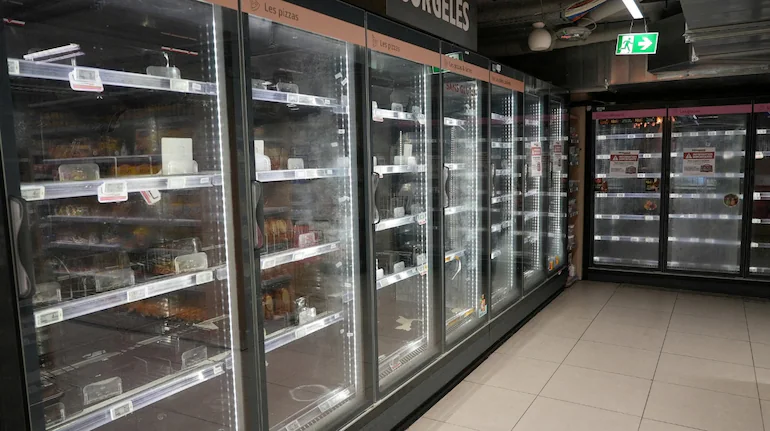
Britain has carried out a secret cybersecurity operation to protect tens of thousands of commercial refrigerators and freezers from potential hacking after a series of Cyberattacks disrupted refrigeration systems across Europe and caused food losses worth millions of euros. The operation involved major supermarket chains, warehouses, restaurants, hotels, petrol stations, stadiums and food processing facilities, highlighting a growing cybersecurity risk to the infrastructure that keeps food supplies safe.
The emergency effort focused on vulnerabilities discovered in commercial refrigeration controllers manufactured by UK-based Resource Data Management (RDM). These devices allow businesses to monitor and regulate temperatures across multiple fridges and freezers remotely. Security researchers warned that attackers exploiting the weaknesses could potentially gain access to the controllers and interfere with refrigeration operations.
As a precaution, thousands of controllers were disconnected from the public internet or taken offline. In some businesses, employees physically unplugged internet cables and switched to manually checking refrigeration temperatures to ensure that food storage systems continued operating safely.
The National Cyber Security Centre (NCSC), the Department for Environment, Food and Rural Affairs (Defra) and the Food Standards Agency (FSA) joined the effort to alert businesses and coordinate protective measures. The operation was kept confidential while organisations secured their systems to avoid drawing the attention of potential attackers.
Why Did the UK Launch a Secret Operation to Protect Refrigeration Systems?
The UK operation followed several cyber incidents targeting commercial refrigeration infrastructure in Europe and the United States. These attacks demonstrated that systems responsible for maintaining food-storage temperatures could become targets for hackers, with consequences extending beyond conventional data theft or disruption of computer networks.
Commercial refrigeration controllers are essential components of supermarket and food distribution operations. They regulate temperatures in refrigerators, freezers and cold-storage facilities, helping prevent food from spoiling. A successful cyberattack could allow criminals to interfere with temperature settings, disrupt monitoring systems or compromise the operation of connected equipment.
For supermarkets, even a relatively short disruption can create significant problems. Perishable food may become unsafe, inventory can be lost and businesses may face operational interruptions. Food processing facilities, restaurants and warehouses also depend on reliable refrigeration to protect products throughout the supply chain.
After security researchers identified weaknesses in RDM controllers, major retailers redirected IT teams to assess their exposure and secure affected equipment. An employee at one large retailer told the BBC that hundreds of devices were taken offline each day over approximately one week.
The wider operation reportedly lasted around three weeks. Its confidential nature was intended to give businesses time to address the vulnerabilities without alerting cybercriminals or other potentially hostile actors to the weaknesses before protective measures were implemented.
How Thousands of UK Refrigeration Controllers Were Secured
The response involved identifying vulnerable devices, restricting their internet connectivity and applying software updates where available. Businesses also reviewed how their refrigeration controllers communicated with external networks and whether those connections were necessary for daily operations.
Some organisations disconnected controllers from the public internet as an immediate precaution. In certain locations, staff physically removed network cables and switched to manual temperature monitoring while technical teams worked on security measures.
This approach helped reduce the possibility of remote interference, although it also required additional staff attention. Systems that normally allow refrigeration temperatures to be monitored centrally had to be checked manually in affected locations.
The scale of the response reflected how widely commercial refrigeration controllers are deployed. A single data manager can oversee several refrigeration units, meaning a vulnerability in one device could potentially affect multiple fridges and freezers at a business location.
The NCSC said it had shared security advice with organisations in the food and retail sectors to help them understand the potential risks to their networks and take appropriate steps to reduce exposure.
How European Refrigeration Cyberattacks Triggered Britain’s Response
The UK security operation gained urgency after a series of incidents involving commercial cooling systems in Europe and the United States. The attacks raised concerns that hackers could target industrial equipment connected to the internet and use it to disrupt essential services.
August: Refrigeration Systems at US Military Bases Reportedly Affected
In August, refrigeration systems at a small number of US military bases were reportedly affected by a suspected cyberattack, prompting an investigation by the Pentagon. The Guardian reported that at least six military bases were impacted.
The reported incidents raised questions about the security of connected equipment used in sensitive facilities. Although refrigeration systems may appear to be ordinary operational infrastructure, their disruption can create risks for food storage and other essential activities.
October 11-12: Attacks Hit Hundreds of French Sites
On October 11 and 12, hackers targeted temperature-control systems manufactured by Danish company Danfoss, affecting hundreds of supermarkets and food processing facilities in France. Reports indicated that approximately 700 commercial sites were affected.
The incidents reportedly triggered 15 fires after attackers raised temperatures in refrigeration systems. The disruption highlighted how manipulating industrial temperature controls could produce consequences beyond the immediate loss of digital access.
French intelligence and cybersecurity agencies accused Iran’s Islamic Revolutionary Guard Corps (IRGC) of carrying out the October attacks. Iran denied the allegations. The attribution therefore remains a contested claim rather than an established fact.
November 1-2: Further Attacks Spread Across Seven European Countries
A subsequent wave of attacks on November 1 and 2 affected supermarkets across seven European countries. Belgium and Luxembourg were among the worst-hit markets, while a small number of blood bank sites in France were also reportedly affected.
The incidents caused disruption to refrigeration operations and contributed to food losses worth millions of euros across affected markets. Germany’s information security office also warned about continuing vulnerabilities in some Danfoss industrial cooling appliances.
These incidents reinforced concerns that commercial refrigeration systems could become attractive targets for attackers seeking to disrupt businesses and critical supply-chain operations.
Britain initially appeared to have largely avoided the European incidents because its refrigeration industry relied on different equipment. However, security researchers subsequently discovered that controllers used by UK businesses had their own vulnerabilities, prompting the nationwide protective effort.
What Was the Vulnerability in UK Supermarket Fridges and Freezers?
The security weakness was identified in refrigeration controllers manufactured by Resource Data Management, a British company whose equipment is used by commercial businesses to manage temperatures across multiple refrigeration units.
The discovery was made in late October by staff at Omega Solutions, a British refrigeration consultancy. While examining the security of popular RDM controllers, an employee identified a potential weakness and alerted the manufacturer.
Omega Solutions subsequently involved cybersecurity firm Pen Test Partners to investigate the issue further. Researchers at the firm identified additional security gaps that could potentially have allowed attackers to gain control of vulnerable data managers.
The central concern was that these controllers could be remotely accessed and manipulated if the weaknesses were exploited. Since one controller can manage several refrigeration units, a successful intrusion could potentially affect multiple systems at a commercial site.
The risks were particularly concerning for businesses operating large networks of refrigerators and freezers. A compromise of centralised temperature-management equipment could interfere with normal cooling operations and create problems across several units simultaneously.
Garry Turner-Smith of Omega Solutions warned that malicious actors exploiting the vulnerabilities could potentially gain control of exposed RDM data managers and interfere with refrigeration systems across multiple locations. Such an intrusion could cause disruption comparable to the incidents reported in Europe.
Cybersecurity Experts Warn Businesses Against Exposing Controllers to the Internet
Ken Munro, managing partner at Pen Test Partners, said researchers faced the challenge of alerting supermarkets and businesses throughout the Food Supply Chain while keeping the investigation quiet. The aim was to allow organisations to secure vulnerable systems without attracting the attention of cybercriminals or nation-state hackers.
Munro said the cybersecurity firm had attempted to contact owners of devices exposed to potential threats. While researchers were able to identify certain controllers and notify their owners, many devices operating at smaller stores could still be exposed.
He urged businesses to remove vulnerable controllers from the public internet or install updated firmware to reduce the risk of unauthorised access.
The warning is significant because industrial controllers are not always managed in the same way as ordinary office computers. Some devices remain connected to networks for remote monitoring and maintenance, but may not receive the same level of security attention as servers, laptops or other IT infrastructure.
Exposing such equipment directly to the internet can increase the risk of unauthorised access, particularly when devices contain outdated software, weak security configurations or vulnerabilities that have not been patched.
What Has RDM Said About the Security Concerns?
Resource Data Management has disputed comparisons between its equipment and the Danfoss systems targeted in the European attacks. Chief executive Ged Evans told the BBC that the vulnerability had been identified in a test environment and that the assessment involved dismantling the company’s hardware.
Evans argued that the testing went beyond what would normally be involved in such exercises. His comments underline the difference between identifying a technical weakness under controlled testing conditions and demonstrating that the same weakness has been exploited in a real-world attack.
RDM said it responded quickly to the concerns, released initial software patches and proactively contacted customers to explain the potential issues and recommend protective measures.
The company also said there was no evidence of malicious activity involving its controllers. It added that it continued to work with the NCSC and other authorities to monitor the situation.
These assurances are important, but the absence of confirmed malicious activity on RDM equipment does not eliminate the need to address vulnerabilities. Security researchers and authorities have encouraged businesses to take precautionary action to reduce the possibility of future exploitation.
Why Commercial Refrigeration Systems Are Becoming a Cybersecurity Concern
The incidents highlight a broader challenge facing businesses as industrial equipment becomes increasingly connected to digital networks. Refrigeration controllers, heating systems, manufacturing equipment and other operational technologies are increasingly monitored remotely to improve efficiency and reduce maintenance costs.
However, connectivity can also create additional entry points for attackers. A device designed primarily to regulate temperatures may become a cybersecurity risk if it is accessible through an insecure network connection.
Unlike a conventional data breach, an attack on refrigeration infrastructure can have direct physical and economic consequences. Manipulating temperature controls could spoil food, disrupt distribution operations and force businesses to dispose of products that may no longer be safe for consumption.
The potential impact extends beyond supermarkets. Food processing facilities, cold-storage warehouses, hotels, restaurants and petrol stations all depend on refrigeration to preserve products. Healthcare-related facilities, including blood storage locations, may also rely on temperature-controlled environments where interruptions can have serious consequences.
The European incidents have therefore demonstrated why cybersecurity protections must cover operational technology as well as conventional IT networks. Businesses need to know which devices are connected, restrict unnecessary internet access, apply security updates and monitor systems for unusual activity.
What Businesses Should Do to Protect Refrigeration Controllers
The UK operation has highlighted several practical steps that businesses using connected refrigeration equipment can take to reduce their exposure to cyberattacks.
- Remove unnecessary internet exposure: Refrigeration controllers should not be directly accessible from the public internet unless there is a clear operational requirement and appropriate security protection.
- Install security updates: Businesses should apply firmware patches and software updates provided by equipment manufacturers.
- Review network access: Organisations should restrict access to controllers and separate operational technology from general business networks where possible.
- Identify connected devices: Retailers and facility operators should maintain an inventory of refrigeration controllers and understand which systems can be accessed remotely.
- Monitor temperature controls: Unusual temperature changes, unexpected system behaviour or unexplained access attempts should be investigated promptly.
- Prepare manual procedures: Businesses should have contingency arrangements for monitoring refrigeration temperatures if connected systems must be disconnected during a security incident.
These measures can help reduce the risk of unauthorised access while ensuring that refrigeration systems continue to operate safely. They also demonstrate why cybersecurity planning must involve both IT teams and employees responsible for physical infrastructure.
UK Refrigeration Security Operation Highlights Risks to the Food Supply Chain
Britain’s secret operation to secure commercial fridges and freezers demonstrates how cyber threats can reach parts of everyday infrastructure that consumers rarely associate with digital security. Refrigeration systems are essential to supermarkets and the wider food supply chain, yet vulnerabilities in their controllers could potentially expose them to remote interference.
The response involved government agencies, cybersecurity researchers, equipment manufacturers and major retailers working together to identify weaknesses and reduce exposure. Thousands of controllers were disconnected or taken offline, while businesses introduced manual temperature checks and applied available security updates.
Although RDM has said there is no evidence of malicious activity on its controllers, the vulnerabilities prompted precautionary action because the consequences of a successful attack could extend to food safety, commercial losses and supply-chain disruption.
The wider lesson from the European incidents and the UK response is that protecting critical infrastructure requires securing not only computers and data networks but also the connected devices that control physical operations. As more industrial equipment becomes internet-enabled, businesses will need stronger safeguards to prevent hackers from turning routine operational technology into a point of entry.
For breaking news and live news updates, like us on Facebook or follow us on Twitter and Instagram. Read more on Latest World on thefoxdaily.com.


COMMENTS 0