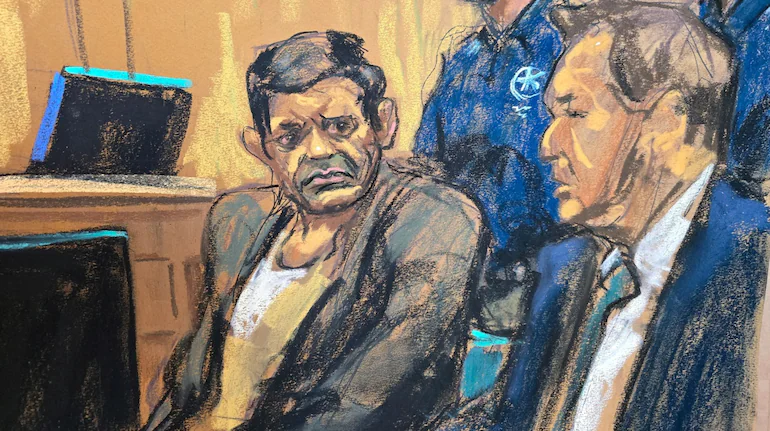
An Indian national, Nikhil Gupta, has been sentenced to nearly 20 years in a US federal prison for his role in a murder-for-hire conspiracy targeting Khalistani separatist Gurpatwant Singh Pannun in New York. A federal judge in Manhattan handed Gupta a 235-month prison term, marking a major development in a case that has drawn international attention because of allegations involving an Indian government employee and a plot against a US citizen on American soil.
US District Judge Victor Marrero announced the sentence on Friday in the Southern District of New York. Gupta, 55, received a prison term of 19 years and seven months after pleading guilty to murder-for-hire, conspiracy to commit murder-for-hire and conspiracy to commit money laundering.
Pannun, who holds American and Canadian citizenship and is associated with the separatist organisation Sikhs for Justice (SFJ), was present in court when the sentence was pronounced. The case has become a sensitive issue in India-US Relations because US prosecutors alleged that the conspiracy involved an individual they identified as an Indian government employee.
Nikhil Gupta Receives 235-Month Prison Sentence
Gupta’s sentence of 235 months falls at the lower end of the US Sentencing Guidelines range of 235 to 293 months. Federal prosecutors had sought a 293-month sentence, equivalent to more than 24 years, arguing that the seriousness of the conspiracy justified a substantially longer prison term.
The prosecution described Gupta as a central participant in an alleged foreign-backed effort to arrange the killing of an American citizen inside the United States. In its sentencing submission, the government characterised his conduct as “as brutal as it was brazen”.
US Attorney James McDonald argued that Gupta played a crucial role in the conspiracy and helped facilitate an operation intended to kill Pannun because of his political activities and ideology.
The defence, however, urged the court to impose a significantly shorter sentence. Gupta’s lawyers had requested 144 months in prison, followed by three years of supervised release. They argued that the punishment should reflect his individual circumstances while still recognising the seriousness of the offences.
The final 235-month sentence was therefore substantially longer than the defence request, although it remained below the maximum term sought by prosecutors.
Gupta Pleaded Guilty to Three Charges
Gupta’s guilty plea covered three offences: murder-for-hire, conspiracy to commit murder-for-hire and conspiracy to commit money laundering. The charges arose from an alleged effort in 2023 to arrange Pannun’s assassination in New York City.
By pleading guilty, Gupta admitted his criminal responsibility for the offences covered by the plea. The case was consequently resolved through the sentencing process rather than a trial on those charges.
The allegations nevertheless extend beyond Gupta himself. US prosecutors have identified Vikash Yadav, described in the indictment as an Indian government employee, as an alleged co-conspirator. The case has raised questions about the alleged involvement of individuals operating across national borders and the use of intermediaries to arrange a targeted killing.
It is important to distinguish the established outcome of Gupta’s case from the allegations concerning other individuals. Gupta has been sentenced following his guilty plea, while claims about the involvement of additional people must be assessed through their respective legal proceedings and the evidence presented in court.
What Gupta’s Lawyers Said in His Defence
Before sentencing, Gupta’s legal team argued that a prison term of nearly 20 years would be excessive given his personal circumstances. They highlighted his lack of a previous criminal record and claimed that he was struggling with untreated alcohol dependence when the offence took place.
The defence also asked the court to consider the impact of a lengthy sentence on the 55-year-old. While acknowledging that arranging a murder warranted imprisonment, his lawyers argued that the punishment should be no greater than necessary to meet the objectives of sentencing.
The defence position focused on proportionality rather than denying the seriousness of the conduct. Lawyers sought a downward departure from the sentencing guidelines and supported the Probation Department’s recommendation for a reduced sentence.
The judge ultimately imposed a term of 235 months, rejecting the defence request for a 144-month sentence but choosing the lowest end of the guidelines range described in the court submissions.
Nikhil Gupta Expresses Regret in Letter to Court
In a personal letter submitted ahead of sentencing, Gupta expressed regret over his actions and the consequences they had for his family and others. He wrote that he wished he could return to 2023 and undo the decisions he had made.
“When I look back at my actions, I don’t even recognise the man I had become,” Gupta wrote.
He said he had become increasingly distant from his family in early 2023 and had started drinking heavily almost every night. Gupta also described the emotional consequences of his conduct and expressed remorse for the suffering caused to people close to him.
In the letter, he said he was grateful that the alleged plan had not resulted in anyone being killed or injured. He described a fatal outcome as something that would have caused him the greatest regret.
The letter gave the court an account of Gupta’s personal circumstances and his stated remorse. However, his expression of regret did not remove the seriousness of the offences to which he had pleaded guilty or prevent the court from imposing a lengthy prison term.
How the Alleged Plot to Kill Gurpatwant Singh Pannun Unfolded
According to the indictment, public court documents and statements made during the proceedings, the conspiracy developed in 2023 through communications involving Gupta, Yadav and other associates.
Prosecutors alleged that Gupta worked with individuals in India and elsewhere to arrange Pannun’s killing in the United States. The plan relied on an intermediary whom Gupta believed could connect him with a person willing to carry out the assassination.
That intermediary was not an actual criminal hitman. According to the prosecution, the person Gupta contacted was a confidential source working with the US Drug Enforcement Administration (DEA). The source was therefore cooperating with American law enforcement as discussions about the proposed killing progressed.
Prosecutors alleged that Yadav directed Gupta to make contact with the person he believed could arrange the murder. Through the arrangements brokered by Gupta, Yadav allegedly agreed to pay the undercover source $100,000 to carry out the killing.
The alleged financial arrangements included an advance payment. On or around June 9, 2023, Gupta and Yadav arranged for an associate to deliver $15,000 in cash to the undercover source, according to the court documents.
The payment was allegedly intended as an initial instalment for the planned assassination. The involvement of an undercover source meant that US investigators were able to monitor communications and gather evidence as the alleged conspiracy developed.
The case ultimately resulted in Gupta’s arrest and prosecution in the United States. His guilty plea and subsequent sentencing have now established the criminal outcome in his case.
Who Is Gurpatwant Singh Pannun?
Gurpatwant Singh Pannun is a separatist figure associated with Sikhs for Justice, an organisation that campaigns for an independent Sikh state called Khalistan. He holds American and Canadian citizenship and has been a prominent target of India’s criticism of overseas Khalistan-related activism.
India has designated Pannun a terrorist under its domestic law, and he is listed among the National Investigation Agency’s most-wanted individuals. These designations reflect the Indian government’s position on his activities and should be distinguished from the US criminal case, which concerns an alleged conspiracy to kill him on American territory.
The distinction is central to the diplomatic sensitivity surrounding the case. Disagreements over separatist activism and national security do not remove the legal protections owed to individuals under US law. The prosecution focused on the alleged effort to arrange a murder inside the United States, rather than on the political dispute between India and Pannun.
Why the Case Has Wider Implications for India-US Relations
The sentencing is significant beyond the criminal punishment imposed on Gupta. The case has placed scrutiny on allegations that an individual identified by US prosecutors as an Indian government employee was involved in directing or facilitating an assassination plot abroad.
Washington has treated the alleged conspiracy as a serious national security and law enforcement matter because the intended target was an American citizen and the planned killing was to take place in New York. The use of an undercover law enforcement source also made the investigation particularly sensitive, as it involved alleged contacts and payments linked to a planned murder.
For India, the allegations have created a diplomatic challenge. The case involves claims about possible links between an alleged overseas operation and an individual described as connected to the Indian government. Such claims carry implications for trust, security cooperation and the broader relationship between the two countries.
However, the legal outcome against Gupta should not be treated as proof of every allegation concerning wider institutional involvement. His guilty plea establishes his responsibility for the offences to which he admitted guilt. The role of other alleged participants remains a separate legal question.
What Happens After Gupta’s Sentencing?
Gupta’s 235-month sentence marks a major stage in the US prosecution of the alleged Pannun murder plot. The judgment establishes a lengthy prison term for his admitted role in the conspiracy, while the wider case continues to carry legal and diplomatic significance because of the allegations involving Yadav and other individuals.
The proceedings have also highlighted how US authorities approach alleged murder-for-hire operations involving foreign contacts, undercover sources and cross-border financial arrangements. The use of an intermediary working with the DEA helped investigators document the alleged plan before it could result in a killing.
For the United States, the sentence reinforces the seriousness with which it treats attempts to organise violence against people on its territory. For India, the case remains sensitive because of the allegations surrounding an individual identified as a government employee and the potential impact on bilateral relations.
Gupta’s sentencing therefore closes an important chapter in the criminal proceedings against him, but it does not settle every question surrounding the alleged conspiracy. The legal status and responsibility of other alleged participants, along with the broader diplomatic consequences, remain important aspects of the case.
For breaking news and live news updates, like us on Facebook or follow us on Twitter and Instagram. Read more on Latest World on thefoxdaily.com.






COMMENTS 0