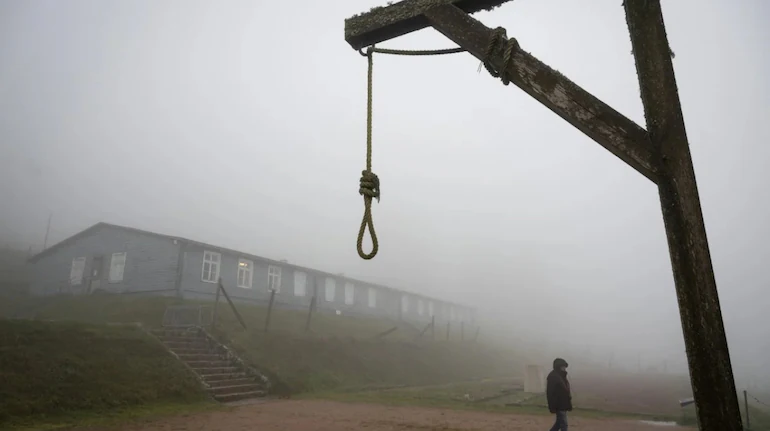
Roger Boulanger, the last known French survivor of the Natzweiler-Struthof concentration camp in eastern France, has died aged 100, bringing to a close the life of a direct witness to one of the darkest chapters of the country’s history during World War II. Boulanger died on Thursday, shortly after celebrating his 100th birthday, according to the association responsible for preserving the memory of the former Nazi camp.
Deported to Natzweiler-Struthof in 1943 after refusing forced conscription into the German army, Boulanger endured imprisonment under the Nazi regime before escaping during an evacuation march in April 1945. His experience reflected the persecution faced by people in territories annexed by Nazi Germany, particularly those who refused to serve in its military or resisted its occupation.
His death also marks a significant moment for Holocaust and World War II remembrance in France. As the final French survivor of the Struthof camp, Boulanger represented a living connection to the events that unfolded there more than eight decades ago.
Roger Boulanger Was Deported to Natzweiler-Struthof in 1943
Boulanger was a native of the Moselle region in northeastern France, an area that came under German control after Nazi Germany annexed Alsace and parts of Lorraine during World War II. Under German occupation, residents faced pressure to accept Nazi rule, while many were subjected to forced recruitment into the German military.
Boulanger refused to be conscripted into the German army. His refusal led to his arrest and deportation in 1943 to the Natzweiler-Struthof concentration camp, located in the Vosges Mountains in eastern France.
His imprisonment was part of a broader system of Nazi persecution targeting political opponents, resistance members, forced labourers and people considered enemies of the regime. Natzweiler-Struthof was not simply a detention facility. It formed part of a network of concentration camps in which prisoners were subjected to brutal working conditions, inadequate food, disease and systematic violence.
Boulanger was subsequently transferred to other Nazi camps. His survival through multiple stages of imprisonment reflected the extraordinary difficulties faced by prisoners as the Nazi camp system came under increasing pressure during the final months of the war.
How Boulanger Escaped During a Nazi Camp Evacuation in 1945
In April 1945, as Allied forces advanced and Nazi Germany’s defeat became increasingly unavoidable, prisoners were moved out of camps in an effort to prevent their liberation. These forced movements, commonly known as death marches, exposed already weakened inmates to further suffering.
Boulanger managed to escape during one such evacuation march. His escape came just weeks before Germany’s surrender in May 1945, which ended the war in Europe.
Evacuation marches were among the final atrocities of the Nazi concentration camp system. Prisoners were forced to travel long distances, often on foot, with little food or rest. Those unable to continue risked being beaten or killed. Many died from exhaustion, starvation, exposure or violence before reaching their destinations.
Boulanger’s escape allowed him to survive the final phase of Nazi imprisonment and return to civilian life after the war. His experience became part of the historical record of French victims of Nazi persecution.
Natzweiler-Struthof: The Only Nazi Concentration Camp on French Territory
Natzweiler-Struthof holds a particular place in France’s World War II history because it was the only Nazi concentration camp established on French territory during the war. It was located in the Alsace region, which Nazi Germany had annexed after the defeat of France in 1940.
The camp operated from 1941 to 1944. During that period, it became the centre of a wider network of sub-camps spread across territories controlled by Nazi Germany. Prisoners were exploited as forced labour, particularly for projects connected to the German war economy.
More than 50,000 people from over 30 nationalities are believed to have been held at Natzweiler-Struthof and its associated camps. Poles, Russians and French citizens formed the largest groups among the prisoners. Many inmates had connections to anti-Nazi resistance movements or had been targeted for political and other reasons.
The camp’s conditions were exceptionally harsh. Prisoners faced exhausting labour, starvation, disease, overcrowding and physical abuse. Around 17,000 inmates are estimated to have died across the camp system, illustrating the scale of suffering inflicted by the Nazi authorities.
The camp’s history also demonstrates how concentration camps supported the Nazi regime’s wider system of political repression and exploitation. Imprisonment was used not only to punish opposition but also to extract labour from people held under coercive and often deadly conditions.
Life After Liberation: Boulanger Helped Preserve the Memory of the War
After escaping, Boulanger eventually settled in Reims in eastern France. He married, raised three daughters and built a professional life as a German teacher.
Alongside his family and career, he devoted time to preserving the memory of World War II. His work helped keep the experiences of those who suffered under Nazi persecution in public awareness, ensuring that the history of the camps was not reduced to distant dates and statistics.
Survivors such as Boulanger played an important role in historical remembrance because their accounts connected later generations with the human experiences behind the historical record. Their testimony helped explain how political repression, forced recruitment, deportation and concentration camp imprisonment affected ordinary people and families.
His story was particularly significant because he belonged to a generation that experienced the Nazi occupation and the liberation of Europe firsthand. With fewer survivors remaining, preserving their accounts has become increasingly important for museums, memorial organisations, historians and educators.
Memorial Association Pays Tribute to the Last French Witness
The association dedicated to the Natzweiler-Struthof memorial announced Boulanger’s death in a message published on Facebook. It said his passing marked the end of an important chapter for the organisation, describing him as the final French witness to the Struthof camp.
The association also noted that he had celebrated his 100th birthday just two weeks before his death. His centenary had offered an opportunity to recognise a life shaped by survival, remembrance and the responsibility of sharing historical experiences.
Franck Leroy, president of France’s Grand Est region, also paid tribute to Boulanger. He said Boulanger’s life demonstrated the courage of people who refused to submit to Nazi brutality and stressed the importance of keeping his story alive.
The tributes reflect the significance of Boulanger’s death beyond his family and local community. His status as the last French survivor of Natzweiler-Struthof made him an important figure in the preservation of the camp’s history.
Why the Death of the Last French Survivor Matters for World War II Remembrance
The passing of Boulanger highlights a growing challenge for organisations responsible for documenting Nazi crimes: the gradual disappearance of the people who experienced them directly.
For decades, survivors have helped explain the realities of concentration camp imprisonment through personal accounts, public appearances and participation in commemorative events. Their testimony has given historical records a human dimension, showing how decisions made by authoritarian governments translated into arrests, forced labour, family separation and death.
As the survivor generation becomes smaller, memorial institutions increasingly depend on recorded interviews, personal documents, photographs and preserved testimonies to pass this history to younger generations. The challenge is not simply to retain information but to ensure that the circumstances behind these events remain understood.
Boulanger’s life also illustrates that resistance to Nazi rule took different forms. Refusing forced military service could carry severe consequences for people living in annexed territories. His arrest and deportation show how the Nazi authorities used imprisonment and coercion to enforce control over populations under their rule.
The Natzweiler-Struthof memorial remains an important place for understanding this history. Its preservation ensures that the suffering of prisoners and the wider system of Nazi persecution can be examined by future generations, even as the last direct witnesses pass away.
A Century-Long Life That Preserved a Difficult Chapter of French History
Roger Boulanger survived arrest, deportation, concentration camp imprisonment and a forced evacuation march before rebuilding his life in post-war France. He went on to become a husband, father and teacher, while continuing to help preserve the memory of the atrocities he had witnessed.
His death at 100 marks the loss of the last French survivor of Natzweiler-Struthof, but it does not end the responsibility to remember what happened there. The history of the camp, the people who suffered inside it and those who resisted Nazi rule remain essential to understanding the occupation of France and the wider crimes of the Nazi regime.
For France’s eastern Grand Est region and the Natzweiler-Struthof memorial community, Boulanger leaves behind more than the memory of survival. His life stands as a reminder that historical remembrance depends on preserving individual stories before the people who lived them are gone.
For breaking news and live news updates, like us on Facebook or follow us on Twitter and Instagram. Read more on Latest World on thefoxdaily.com.






COMMENTS 0