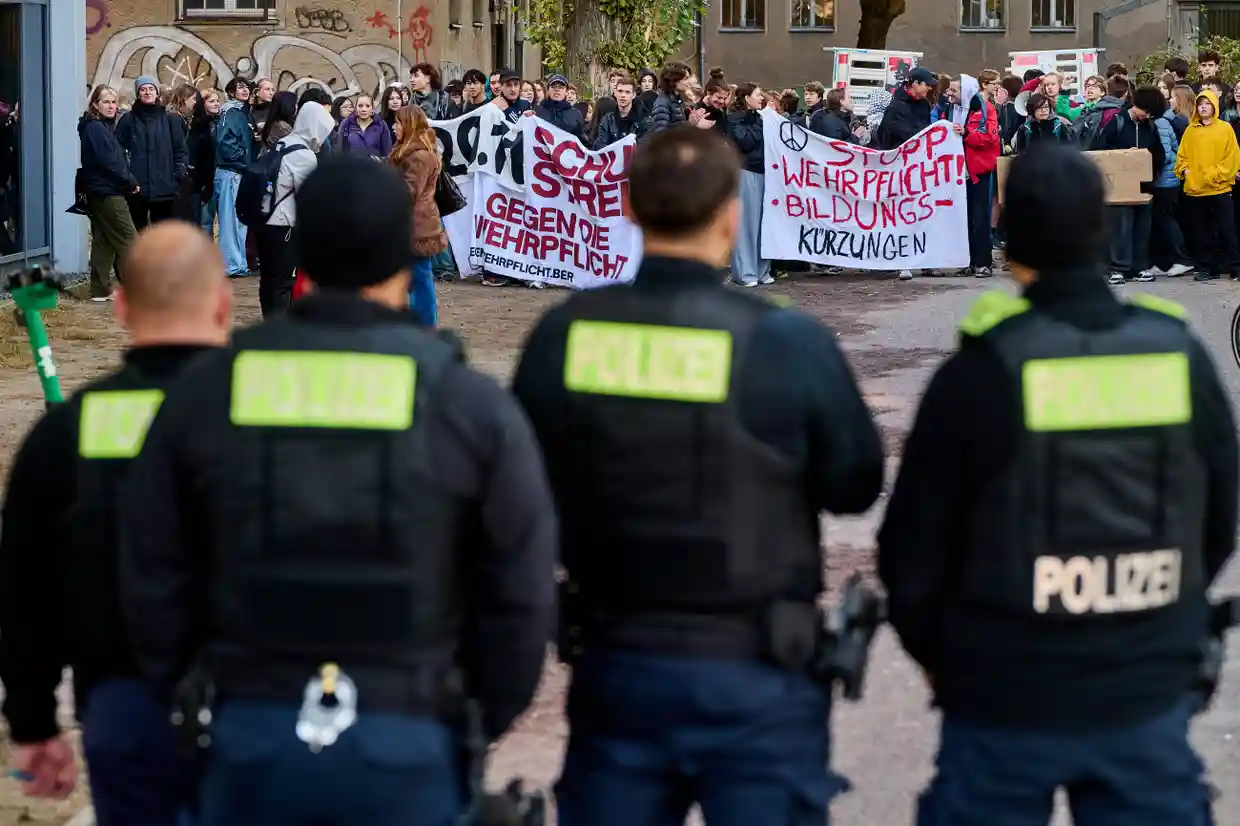
Cost-of-living protests are expected to spread across Germany and intensify again in France on Saturday, October 31, as young people, students, workers and activists prepare demonstrations over rising living costs, poor public services, housing shortages and education concerns. Authorities in both countries have stepped up security preparations amid fears that peaceful rallies could be followed by clashes, vandalism or looting.
The demonstrations come after weeks of student-led protests and wider public unrest across several European countries, including Italy, Spain, Portugal, Albania and France. While organisers say their movement is focused on social and economic demands, officials have warned of possible attempts by radical groups to exploit the gatherings.
In Germany, a youth-led initiative called Gen Z regelt has urged supporters to demonstrate in more than 30 cities. In France, activists and trade unions are preparing another round of rallies after large demonstrations last weekend, with police planning a substantial deployment to prevent disorder.
GEN Z REGELT CALLS FOR PROTESTS IN MORE THAN 30 GERMAN CITIES
The German initiative Gen Z regelt, which translates roughly as “Gen Z is sorting it”, has called on young people and supporters to take to the streets to demand greater investment in public services and action on issues affecting younger generations.
The group’s demands include increased spending on schools, stronger climate protection measures and more affordable housing. Organisers are also opposing proposals to bring back compulsory military service, an issue that has generated debate among young people in Germany.
Demonstrations have been planned in major cities, including Berlin, Cologne, Munich, Frankfurt and Hamburg. In Berlin, organisers expect around 10,000 participants, mainly school pupils, university students and their parents, to gather near the Brandenburg Gate on Saturday afternoon. A smaller gathering is also planned in the Mitte district later in the evening.
By Friday, more than 160,000 people had registered on the initiative’s website to indicate that they intended to attend the demonstrations. However, online registrations do not necessarily translate into actual attendance.
The organisers have repeatedly urged participants to remain peaceful, distancing their campaign from violence and property damage. In a message published online, the group said peaceful action was central to its objectives and that violence contradicted the principles of the movement.
GERMAN POLITICIANS DEBATE HOW TO RESPOND
The planned demonstrations have prompted different reactions from Germany’s political leaders. Alexander Throm, a member of the ruling conservative Christian Democratic Union’s parliamentary group, warned against scenes similar to those witnessed during unrest in France.
Writing in the business newspaper Handelsblatt, Throm said: “Scenes like those in France must be prevented at all costs.”
However, Felix Banaszak, co-leader of the opposition Green Party, cautioned against portraying the planned demonstrations as a security threat before they had taken place.
Speaking to the RND media group, Banaszak argued that rhetoric suggesting the protests were organised by criminal groups could unfairly discredit young demonstrators and potentially encourage radicalisation.
The disagreement reflects a broader debate over how authorities should distinguish between legitimate public demonstrations and activities that threaten public safety. While the government has a responsibility to prevent violence, critics have warned that treating youth-led movements with suspicion could undermine their right to peaceful protest.
BERLIN POLICE TO DEPLOY 1,500 ADDITIONAL OFFICERS
Berlin police chief Barbara Slowik Meisel said an additional 1,500 officers would be deployed in the German capital to manage the demonstrations and respond to any incidents.
Despite the extensive preparations, she said authorities had no concrete evidence that coordinated looting operations were being planned. The deployment is intended to ensure public safety and allow the demonstrations to proceed without serious disruption.
Security planning is also taking place in other German cities where rallies have been announced. Police are expected to monitor gathering points, demonstration routes and areas around public buildings and commercial districts.
Not all youth organisations have endorsed the initiative. The Federal Pupils’ Conference, a youth political lobbying organisation, has distanced itself from Saturday’s demonstrations, citing concerns about the campaign’s unclear organisational structure and the unpredictability of the events.
The organisation instead plans to hold a separate demonstration in Berlin on November 20, bringing together teachers and other youth movements. Its campaign is expected to focus on declining school performance and problems within the German education system.
FRANCE PREPARES FOR ANOTHER WAVE OF COST-OF-LIVING PROTESTS
France is also preparing for renewed demonstrations on Halloween, following a series of rallies over low wages, rising living costs and deteriorating public services. Students, trade unions and members of the Yellow Vests movement are among those mobilising for the protests.
Interior Minister Laurent Nuñez described Saturday as a high-risk day for public order. He said approximately 70,000 police officers and gendarmes, including specialised units, would be deployed across the country to prevent violence and protect public spaces.
Nuñez said authorities had identified calls on social media encouraging people to take part in violent Halloween gatherings. He warned that the greatest risk could emerge after authorised cost-of-living demonstrations had officially ended, when smaller groups might attempt to stage confrontations or disrupt public order.
According to the minister, some calls for demonstrations had come from sections of the labour movement, radical left-wing groups and more radical elements associated with the Yellow Vests movement. Messages circulating online included demands for a revolution, raising concerns among security officials.
Nuñez said peaceful demonstrations would be allowed where possible but warned that authorities would respond firmly to violence and other unlawful activity.
PARIS MARCHES FACE RESTRICTIONS AS POLICE TIGHTEN SECURITY
Security restrictions have been particularly significant in Paris, where authorities have limited the locations in which demonstrations can take place.
Two separate marches planned by trade unions and Yellow Vests activists through the city centre were banned. Police instead authorised a single march in the south-eastern part of the capital, away from some of the main central areas.
Organisers challenged the restrictions, but an appeal against the decision to exclude their marches from central Paris was rejected late on Friday night.
The restrictions are part of a wider effort to prevent clashes and protect shops and other businesses. Nuñez said measures introduced during the previous weekend would be reinforced, while authorities would continue to assess the security risks associated with individual demonstrations.
The French government has faced pressure to balance public safety with the right to protest. While officials have warned about potential violence, unions and activists argue that the demonstrations reflect genuine frustration over wages, living costs and the quality of public services.
410,000 PEOPLE JOINED FRENCH PROTESTS LAST WEEK
The renewed demonstrations follow a major protest mobilisation across France last Saturday. According to the Interior Ministry, approximately 410,000 people took part in marches and rallies nationwide.
A significant police presence helped prevent a repeat of the widespread violence and looting reported during the first major wave of unrest on October 17. However, the authorities remain concerned that further demonstrations could attract groups seeking confrontation.
The current movement brings together different groups with overlapping but not identical demands. Trade unions and Yellow Vests activists have focused on low wages, the Cost of Living and declining public services, while school and university students have raised concerns about education standards and learning conditions.
The combination of these groups has broadened the scope of the protests, turning them into a wider expression of dissatisfaction with economic pressures and public policy.
STUDENTS SAY GOVERNMENT MEASURES DO NOT GO FAR ENOUGH
Student representatives in France have criticised the government’s response to their demands, arguing that announced measures do not address the scale of the problems facing schools and universities.
Among the issues raised are the need to replace an outdated university admissions platform and improve school infrastructure. Government measures have included plans to address problems with the admissions system and provide loans to local authorities for school renovations.
However, student leaders say these steps are insufficient and have called for more substantial improvements to educational conditions. Their concerns include the quality of learning environments, access to opportunities and the resources available to educational institutions.
Trade unions have also called for a nationwide strike on November 5, extending the protest movement beyond the Halloween demonstrations.
WHY COST-OF-LIVING PROTESTS ARE SPREADING ACROSS EUROPE
The demonstrations in Germany and France form part of a broader wave of public dissatisfaction that has surfaced in several European countries. Although the immediate demands differ from one country to another, rising living costs, pressure on public services and concerns about opportunities for younger generations have emerged as recurring themes.
Housing affordability, education standards, wages and access to essential services have become important issues for students and working families. Younger demonstrators have also raised concerns about climate protection and government decisions that could affect their future prospects.
In Germany, the Gen Z regelt campaign has placed particular emphasis on schools, housing, climate policy and compulsory military service. In France, the demonstrations have brought together students, workers and Yellow Vests activists around concerns about living costs, wages and public services.
The scale and duration of the protests will depend partly on how governments respond to these demands and whether organisers can maintain peaceful participation. For now, authorities across both countries are preparing for large gatherings while attempting to prevent isolated incidents from escalating into wider unrest.
For breaking news and live news updates, like us on Facebook or follow us on Twitter and Instagram. Read more on Latest World on thefoxdaily.com.





COMMENTS 0