Hundreds of civilians have begun leaving the Russian-occupied Ukrainian city of Oleshky in southern Kherson region under a temporary ceasefire negotiated with the involvement of US First Lady Melania Trump. The evacuation, which began on Friday, October 30, followed months of severe shortages, damaged infrastructure and dangerous conditions that had left residents struggling to escape.
Russian and Ukrainian officials coordinated the humanitarian operation, which included transportation for people wishing to leave and deliveries of essential supplies for those remaining in the city. The Russian Defence Ministry said on Saturday that evacuees travelling towards Ukraine had reached the Belarusian border after being transported through Russian-controlled territory.
The operation is taking place under an unusual local truce between the two countries. The agreement temporarily suspended military activity around Oleshky to allow humanitarian assistance to enter and civilians to use designated evacuation routes. Melania Trump announced the agreement on October 23, saying she had worked directly with Russian and Ukrainian leadership to establish its terms. Reuters reported that the evacuation began on Friday, with residents transported in buses and ambulances. :chatgpt-content-reference{index=”0″}
Oleshky has remained under Russian occupation since the early stages of the full-scale invasion in 2022. Ukrainian authorities estimate that around 1,700 to 2,000 people, including approximately 50 children, remained in the city before the latest evacuation effort. Many had endured prolonged shortages of food, medicine, electricity and clean water.
What is happening in Oleshky?
Oleshky is located in Ukraine’s southern Kherson region, on the eastern bank of the Dnipro River and opposite the Ukrainian-controlled regional capital, Kherson. Its position close to the front line has exposed the town and its remaining residents to the consequences of sustained military activity.
Before the full-scale Russian invasion, Oleshky had a population of approximately 24,000. The majority of residents have since left, but those who remained faced increasingly difficult conditions as fighting intensified and access routes became dangerous.
The humanitarian operation began after Russia and Ukraine agreed to a temporary suspension of military activity in and around the town. The ceasefire was intended to create conditions for aid deliveries, mine clearance and civilian evacuation. It also allowed officials and humanitarian teams from both countries to enter the area and assess residents’ needs.
On Friday, teams accompanying the evacuation helped residents who wanted to leave while also delivering assistance to people who decided to remain. The operation involved 25 buses, with a combined capacity of approximately 750 seats, according to Ukrainian ombudsman Dmytro Lubinets. Ambulances and other vehicles also formed part of the wider humanitarian movement. :chatgpt-content-reference{index=”1″}
Ukrainian officials described the evacuation as an important opportunity for civilians who had been unable to reach safer territory for months. Davyd Arakhamia, a Ukrainian parliamentarian, said the Ukrainian delegation and evacuated residents had begun their journey.
The temporary ceasefire also brought a pause in military activity around parts of the wider Kherson region. Kherson city, which remains under Ukrainian control, has faced repeated drone attacks from Russian forces. The local truce around Oleshky was therefore significant for the humanitarian operation, although it did not represent a general suspension of fighting across Ukraine.
How did the evacuation take place?
The evacuation required coordination between Russian and Ukrainian officials because Oleshky is under Russian occupation and its direct route across the Dnipro River towards Ukrainian-controlled territory is not considered safe for civilian movement.
Residents leaving for Ukraine therefore had to follow a longer route through Russian-controlled areas. According to Ukrainian officials, the evacuation involved travelling through Crimea and towards Anapa in Russia’s Krasnodar region before continuing to Belarus.
The Russian Defence Ministry said on Saturday that evacuees had reached the Belarusian border after travelling from Anapa. From there, they were expected to continue by bus towards Ukraine. The route illustrates the difficulties civilians face when attempting to cross front lines in a heavily militarised region.
The evacuation was not limited to residents seeking to reach Ukrainian-controlled territory. Officials said people could choose their preferred destination, including areas under Russian control. The arrangement was intended to provide an opportunity for residents to leave according to their circumstances and wishes.
Russian and Ukrainian human rights officials were present during the operation. Lubinets travelled to Oleshky to accompany the Ukrainian side of the evacuation, while his Russian counterpart, Yana Lantratova, also participated. Their public appearance together was an unusual example of direct cooperation between representatives of the two countries during the ongoing war.
The two officials were seen speaking with residents and discussing arrangements for their departure. Videos shared by Lubinets’ office showed him greeting people and talking to groups preparing to leave. He also indicated that humanitarian assistance would continue to be provided to residents who chose to stay.
Why were the roads around Oleshky dangerous?
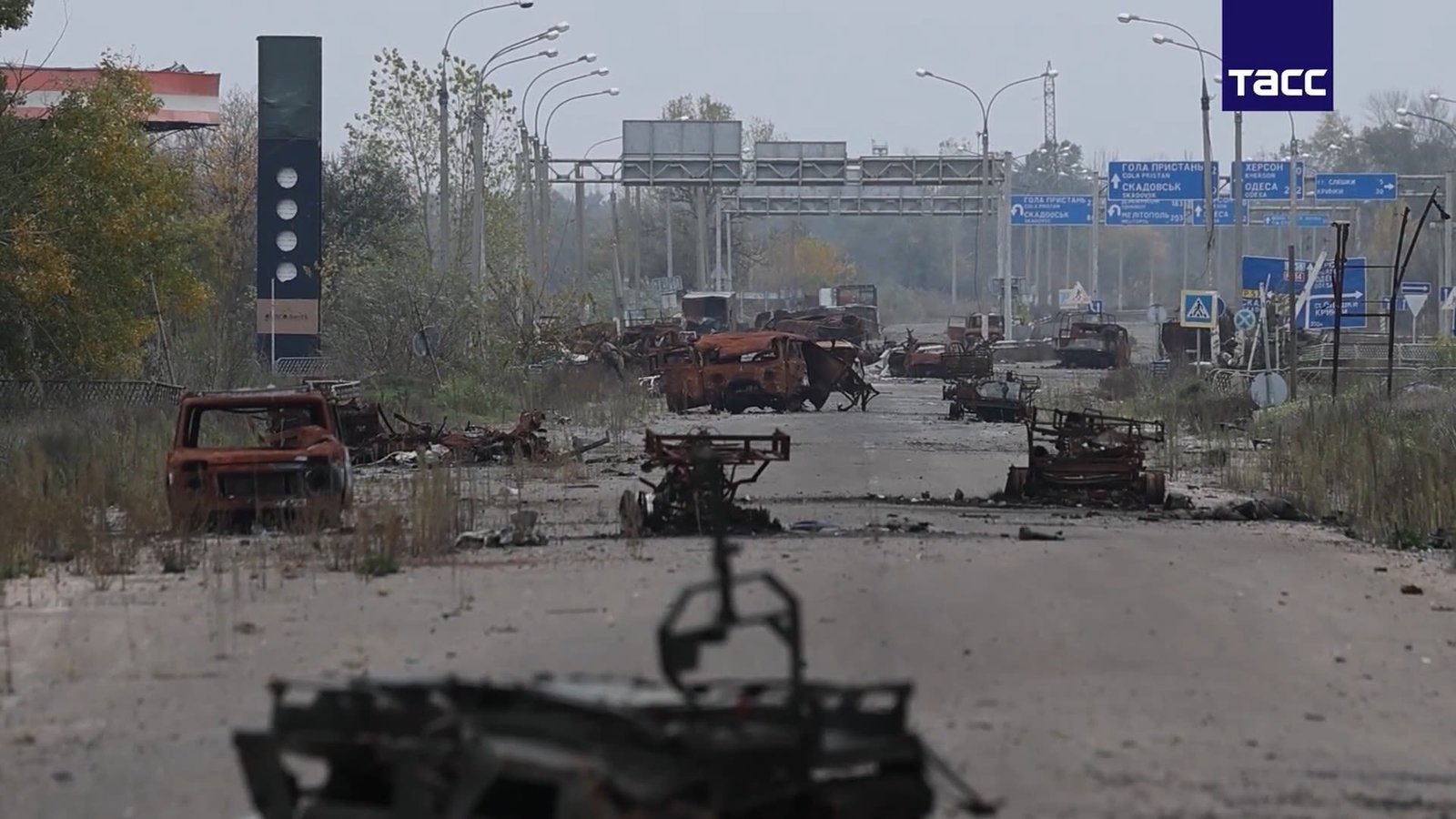
For months, residents faced severe restrictions on movement because roads leading out of Oleshky were affected by landmines, military debris and the threat of drone attacks. These dangers made ordinary travel extremely risky and prevented many civilians from reaching safer areas.
The ceasefire created an opportunity for demining teams to inspect and clear routes required for the humanitarian operation. Work began after the temporary truce came into effect, with Russian and Ukrainian authorities announcing that the planned clearance had been completed on Thursday.
However, the operation came at a cost. Authorities reported that two people involved in the route-clearing work were killed. Their deaths highlighted the continuing danger of operating in an area that has experienced prolonged fighting and remains close to active military positions.
Clearing a route does not automatically make an entire area safe. Mines and unexploded military equipment can remain outside designated passages, while drone activity and the possibility of renewed fighting continue to pose risks. The temporary evacuation corridor was therefore a limited arrangement rather than a permanent guarantee of safe movement throughout the region.
The difficulty of crossing the Dnipro River has also shaped the evacuation plan. The river separates Russian-controlled territory from Ukrainian-held positions in this part of Kherson, and a direct civilian crossing was not considered a viable option for the operation.
What was life like for residents trapped in Oleshky?
The humanitarian situation in Oleshky had deteriorated sharply in the months leading up to the ceasefire. Ukrainian authorities said the town had run out of many essential supplies, leaving residents without reliable access to food, electricity, gas, medicine and medical services.
Reports from the area described people struggling to obtain clean water and basic necessities. The absence of dependable electricity and other services made daily life especially difficult for older residents, people with health problems and families caring for children.
Ukraine’s Foreign Minister Andrii Sybiha had previously warned that civilians in the occupied town were facing severe hunger and shortages. He said reports indicated that some residents were surviving on grass and weeds because food was becoming increasingly difficult to find. He also highlighted the lack of medicine, clean water, electricity and medical care.
One woman who chose to remain in Oleshky described the exhaustion experienced by residents during an interview with Ukrainian television. She said people had spent long periods in darkness and that her circumstances had become too difficult to continue living there. She wanted to be reunited with her children.
Her account reflected the personal decisions facing families in the town. Leaving could mean abandoning homes, possessions and animals, while staying meant continuing to live with shortages and security risks. For some residents, the evacuation offered an opportunity to reunite with relatives after months of separation.
The town had also suffered extensive damage during the war. One of the most devastating events was the destruction of the Nova Kakhovka Dam in June 2023, which caused major flooding along the Dnipro River and affected settlements across the region.
Oleshky was among the areas affected by the flooding. Ukrainian authorities reported significant civilian losses, although the full scale of deaths and damage has been difficult to establish. Evidence has pointed towards Russian responsibility for the explosion that destroyed the dam, while Moscow has denied responsibility.
Subsequent fighting and continued military activity added to the destruction. Damaged buildings, disrupted infrastructure and restricted access to essential services contributed to the worsening conditions for those who remained.
Why did so many civilians remain in the occupied city?
Although many residents left Oleshky during the early stages of the invasion, thousands remained in the town or its surrounding area. The Institute for the Study of War, a US-based conflict research organisation, has noted that a significant proportion of the pre-war population managed to reach Ukrainian-controlled territory during the earlier period when escape routes were more accessible.
Others left later, while some remained because they were unable or unwilling to abandon their homes. Age, health, family responsibilities and the difficulty of travelling through dangerous territory all influenced individual decisions.
For older residents, leaving a familiar home after decades of living in the same place can be particularly difficult. Some people also faced the prospect of being separated from their pets and livestock, which became another reason to remain despite the deteriorating humanitarian conditions.
Oleshky’s location has made the situation especially complicated. The town sits near the Dnipro River, directly opposite Ukrainian positions. Its proximity to the front line has placed residents between opposing military forces, while the surrounding area has become important for military activity.
As fighting intensified, routes towards Ukrainian-controlled territory became increasingly dangerous. Travel deeper into Russian-controlled territory also became difficult as roads were mined and exposed to drone activity. The combination of these risks left civilians with few practical ways to leave.
Ukrainian authorities said Kyiv had made several earlier attempts to secure permission for civilian evacuations, but those efforts did not produce an agreement. President Volodymyr Zelensky accused Russia of mining access routes and preventing residents from leaving.
The temporary ceasefire changed the immediate circumstances by creating a period during which both sides agreed to facilitate humanitarian movement. However, the agreement does not resolve the wider question of occupation or determine the future status of the town.
Are all residents leaving Oleshky?
No. The evacuation is voluntary, and some residents have decided to remain in the town. Russian and Ukrainian authorities have not announced a final, verified number of people who have left, making it difficult to establish the exact scale of the operation.
Some residents were unable to travel because of personal circumstances. One woman interviewed by Ukrainian television said she wanted to leave but could not fly on an aircraft. She planned to remain in Oleshky with her husband.
Other older residents were reluctant to abandon their homes. Concerns about leaving animals behind also affected decisions, particularly for people who had spent years caring for pets or livestock and did not want to separate from them.
Officials from both countries said residents would be given an opportunity to choose whether they wanted to travel towards Ukraine or Russia. The presence of Lubinets and Lantratova was intended to support communication with residents and coordinate the humanitarian arrangements.
For those staying behind, the delivery of food, medicine and other supplies is an important part of the agreement. Lubinets said officials would seek to ensure that at least some humanitarian assistance reached people who did not take part in the evacuation.
The needs of those remaining are likely to continue beyond the immediate operation. A temporary ceasefire can create an opening for assistance, but long-term access to healthcare, electricity, clean water and reliable food supplies will depend on conditions after the truce ends.
Could the ceasefire help Russian troops resupply?
The humanitarian operation has also raised security concerns for Ukrainian forces. Oleshky is positioned close to the front line and has been used by Russian forces as a forward position in the Kherson region, according to assessments by the Institute for the Study of War.
Ukraine has used drones to target Russian military activity and disrupt supply routes in the area. These operations have taken place in a landscape where civilians are still present, increasing the risks for people living in the town.
A pause in military activity intended to facilitate evacuation and aid deliveries could also create opportunities for movement by military personnel or supplies. Ukrainian forces are therefore concerned about how the ceasefire might affect the military situation once it expires.
The distinction between humanitarian movement and military activity is central to the arrangement. The agreement is intended to protect civilians and enable assistance, not to change territorial control or establish a wider halt to the war.
The ceasefire is due to expire on Sunday, November 1. Its limited duration means that the humanitarian operation has to make progress within a short period. Ukrainian officials will also be watching whether the pause is respected and whether the evacuation routes remain safe.
How was Melania Trump involved in the ceasefire?
Melania Trump announced on October 23 that she had helped secure a temporary ceasefire between Russia and Ukraine specifically for Oleshky. According to the White House, she and her representative worked directly with leaders from both countries to establish the agreement’s objectives, procedures and timing.
Her office described her role as that of an “Exclusive Intermediary”. The stated purpose was to create a temporary suspension of military activity, allow humanitarian supplies to enter the town and establish a safe passage for civilians who wanted to leave.
Melania Trump said the humanitarian situation had become critical, with residents facing shortages of food, clean water and medical supplies. She also highlighted the dangers posed by mined roads and continuing military attacks.
Ukrainian officials had been raising concerns about the situation in Oleshky before the ceasefire announcement. Lubinets said Ukraine had been working to address the Humanitarian Crisis since late February, but that efforts began moving forward more substantially in September, with Melania Trump’s involvement.
The White House said the first lady’s attention was drawn to the situation during a private discussion at her Fostering the Future Together event in New York during the 81st session of the United Nations General Assembly.
Her involvement followed earlier efforts to help secure the return of Ukrainian children taken to Russia after the full-scale invasion. The White House said communication channels established during those previous reunification efforts helped facilitate discussions over the Oleshky humanitarian operation.
Pope Leo also urged cooperation between Russia and Ukraine. He expressed concern about conditions in Oleshky during a telephone conversation with Russian President Vladimir Putin and later spoke with Zelensky. He called for a local ceasefire that would allow civilians to leave and humanitarian aid to reach the town.
The operation therefore involved diplomatic engagement beyond the immediate military and humanitarian officials working on the ground. Nevertheless, the evacuation remains a limited humanitarian arrangement, and the role played by each intermediary should be distinguished from the decisions made by the Russian and Ukrainian authorities that agreed to the truce. :chatgpt-content-reference{index=”2″}
Does the Oleshky ceasefire improve the chances of a wider peace agreement?
The evacuation represents a rare instance of practical cooperation between Russia and Ukraine during the war, but it does not indicate that the two sides are close to reaching a comprehensive peace agreement.
The governments remain divided over major issues, including territory, Ukraine’s sovereignty and its future security arrangements. Russia has continued to press demands that Kyiv considers unacceptable, while Ukraine has maintained that any settlement must protect its independence and territorial interests.
US President Donald Trump’s administration has continued to pursue diplomatic engagement with Moscow and Kyiv. US envoy Steve Witkoff has held discussions with Zelensky and travelled to Russia for talks with Putin. Diplomatic efforts have included discussions about possible future meetings involving the leaders and their representatives.
However, the Oleshky arrangement should not be treated as evidence that the broader negotiations have made a decisive breakthrough. The Kremlin has described the cooperation as an isolated humanitarian case, rather than a model that automatically establishes the basis for a wider agreement.
Fighting has also continued in other parts of Ukraine while the local ceasefire has been in effect. The temporary pause around Oleshky does not cover the entire front line, and military activity elsewhere has continued to affect civilians and infrastructure.
For Ukraine, the immediate priority is to ensure that residents who want to leave can do so safely and that those who remain receive essential assistance. Officials have also expressed hope that similar local arrangements could be considered in other areas where civilians are trapped by fighting.
What happens after the temporary ceasefire ends?
The next major question is whether the humanitarian arrangements can continue after the ceasefire expires on November 1. The immediate operation has created an opportunity for civilians to leave, but the residents who remain will still face the consequences of occupation, damaged infrastructure and limited access to basic services.
The number of people successfully evacuated will be important in assessing the operation’s reach. Neither government has yet provided a complete figure, and the number of people who chose to remain is also unclear.
Continued humanitarian access will be particularly important for older residents, children and people who need regular medical treatment. Delivering food and medicine during the truce may provide temporary relief, but it cannot by itself address the wider crisis affecting the town.
There are also concerns about the security situation once military activity resumes. The location of Oleshky near the Dnipro River makes it strategically important, and the town remains close to opposing military positions.
For now, the evacuation has provided a limited opening for civilians who had spent months facing dangerous and increasingly difficult conditions. The involvement of Russian and Ukrainian officials, alongside Melania Trump’s diplomatic intervention and Pope Leo’s appeals, helped create the temporary arrangement that made the operation possible.
The humanitarian significance of the ceasefire will ultimately depend on how many people are able to reach safety, whether aid continues to reach those who remain and whether the temporary pause prevents further civilian suffering. Although the agreement does not bring the wider war closer to an immediate resolution, it has created a rare opportunity for cooperation focused on the protection of civilians in one of the conflict’s most difficult areas.
For breaking news and live news updates, like us on Facebook or follow us on Twitter and Instagram. Read more on Latest World on thefoxdaily.com.






COMMENTS 0