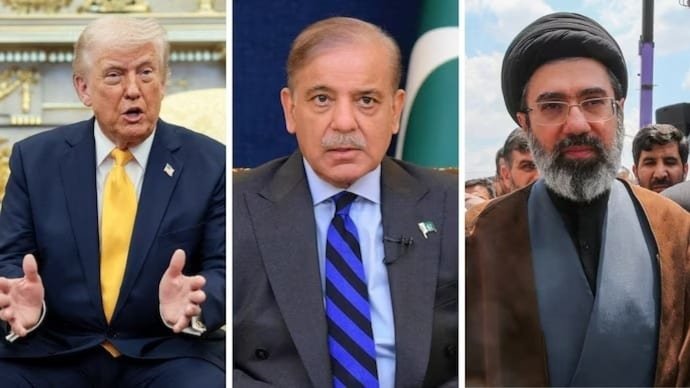
The prospect of a peace agreement between the United States and Iran has raised hopes that a conflict which reshaped Global Energy Markets, disrupted international trade, and heightened tensions across West Asia may finally be nearing an end.
Pakistan Prime Minister Shehbaz Sharif announced that negotiations between Washington and Tehran have reached their most advanced stage yet, with a final agreement potentially being signed within the next 24 hours. If completed, the accord would mark a major diplomatic breakthrough after more than three months of warfare that destabilised the region and sent shockwaves through the global economy.
Sharif’s statement suggests that both sides have moved significantly closer to a framework that could halt hostilities, reopen vital maritime routes, and create a roadmap for addressing longer-term disputes, including Iran’s nuclear programme and regional security concerns.
Why the Potential US-Iran Peace Deal Matters
The conflict between the United States and Iran evolved into one of the most consequential geopolitical crises of the decade.
What began as military operations targeting Iran’s leadership, strategic military infrastructure, and nuclear facilities quickly expanded into a broader regional confrontation with implications far beyond the Middle East.
The most immediate global consequence was the disruption of energy supplies.
Iran’s decision to close the Strait of Hormuz transformed a regional war into a worldwide economic concern. The narrow waterway serves as one of the most important maritime chokepoints on Earth, handling a significant share of global oil and liquefied natural gas shipments.
Any prolonged disruption in the strait has the potential to affect fuel prices, inflation, transportation costs, manufacturing expenses, and overall economic growth worldwide.
This explains why investors, governments, and businesses across continents have been closely monitoring every development in the negotiations.
The Road to a Possible Peace Agreement
According to statements from Pakistan’s leadership, diplomatic efforts intensified in recent weeks as both sides recognised the growing economic and strategic costs of continued conflict.
Pakistan has publicly positioned itself as one of the countries facilitating dialogue between Washington and Tehran.
Sharif stated that technical-level discussions are expected to follow immediately after the signing of the initial agreement, indicating that negotiators have likely agreed on a broad framework while leaving some implementation details for subsequent rounds.
The proposed agreement appears designed to achieve several immediate objectives:
- End active military hostilities.
- Reopen critical shipping routes.
- Reduce regional tensions.
- Create a mechanism for further negotiations.
- Provide economic relief measures.
- Restore stability to global energy markets.
While final details remain under negotiation, the emphasis appears to be on creating a sustainable pathway toward de-escalation rather than merely pausing the conflict.
The Strait of Hormuz: The World’s Most Important Energy Bottleneck
One of the most significant outcomes of any peace agreement would be the reopening and stabilisation of the Strait of Hormuz.
The strategic waterway connects the persian gulf with the Arabian Sea and serves as a critical route for energy exports from major oil-producing nations.
Whenever tensions rise in the region, global markets react immediately because disruptions in Hormuz can influence energy prices worldwide.
| Strategic Importance | Impact on Global Economy |
|---|---|
| Major oil export route | Influences crude oil prices globally |
| Key LNG shipping corridor | Affects natural gas markets |
| Vital maritime trade passage | Impacts shipping and logistics costs |
| Regional security flashpoint | Affects investor confidence and markets |
The closure of Hormuz during the conflict contributed to volatility across energy markets and reignited concerns about inflation in many economies already dealing with elevated costs.
A durable peace agreement could therefore have consequences far beyond West Asia.
How the Conflict Affected Global Energy Markets
Energy prices became one of the clearest indicators of the conflict’s economic impact.
Whenever shipping routes appeared threatened, oil traders priced in the risk of supply disruptions.
Higher crude prices often lead to higher transportation costs, which can eventually affect everything from airline tickets and freight charges to food prices and manufacturing expenses.
For energy-importing countries, prolonged instability creates additional economic challenges.
Many governments were forced to prepare contingency plans to manage potential supply shortages and inflationary pressures.
The possibility of a peace agreement has therefore generated optimism among policymakers and financial markets alike.
The Nuclear Question Remains Unresolved
Although a peace agreement would represent a major achievement, it is unlikely to resolve every dispute between the two countries immediately.
The most difficult issue remains Iran’s nuclear programme.
For years, nuclear negotiations have been at the centre of tensions between Tehran and Western powers. Concerns over uranium enrichment, inspections, verification mechanisms, and long-term compliance continue to shape diplomatic discussions.
Many analysts expect the initial agreement to focus primarily on ending hostilities and rebuilding trust, while more technical and politically sensitive nuclear negotiations continue separately.
This phased approach could allow both sides to secure immediate benefits while avoiding the collapse of talks over unresolved disagreements.
Pakistan’s Emerging Diplomatic Role
One of the lesser-discussed aspects of the crisis has been Pakistan’s effort to position itself as a diplomatic bridge between competing regional interests.
By publicly supporting negotiations and highlighting its role in facilitating dialogue, Islamabad appears eager to strengthen its international profile as a constructive regional actor.
The potential success of the negotiations could enhance Pakistan’s diplomatic standing and demonstrate the importance of regional mediation in resolving complex international conflicts.
Historically, countries that help facilitate peace agreements often gain significant diplomatic goodwill and strategic influence.
What a Peace Deal Could Mean for Global Markets
Financial markets typically respond positively to reduced geopolitical uncertainty.
If the agreement is finalised, several immediate effects could emerge:
- Lower volatility in oil markets.
- Improved investor confidence.
- Reduced shipping insurance costs.
- Greater stability in global trade routes.
- Easing inflation concerns tied to energy prices.
However, markets will also closely monitor implementation.
Investors generally view the signing of a peace agreement as only the first step. Long-term stability depends on compliance, verification mechanisms, and the ability of both sides to manage future disagreements peacefully.
Lessons From Previous US-Iran Diplomatic Efforts
The history of US-Iran Relations demonstrates that Diplomacy between the two nations is rarely straightforward.
Over several decades, periods of engagement have often alternated with periods of confrontation.
Past agreements have sometimes struggled due to political changes, differing interpretations, and shifting regional dynamics.
As a result, many observers remain cautiously optimistic rather than assuming that a signed agreement automatically guarantees lasting peace.
The success of any future arrangement will depend on whether both parties view cooperation as more beneficial than renewed confrontation.
Why This Could Be a Turning Point for West Asia
Beyond the direct relationship between Washington and Tehran, the agreement could reshape the broader regional security landscape.
Reduced tensions between the United States and Iran may create opportunities for wider diplomatic engagement involving neighbouring countries, regional organisations, and international institutions.
It could also lower the risk of unintended escalation, which has long been one of the most significant concerns in the region.
For businesses, investors, and governments, predictability often matters as much as peace itself. A more stable regional environment can encourage trade, investment, infrastructure development, and economic growth.
Future Outlook: What Happens After the Signing?
Even if the agreement is signed within the next 24 hours as suggested by Pakistan’s Prime Minister, the real challenge will begin afterward.
Implementation, verification, technical negotiations, and confidence-building measures will determine whether the accord evolves into a lasting peace framework or merely a temporary pause in hostilities.
The upcoming technical-level discussions are likely to focus on unresolved issues such as sanctions, nuclear activities, regional security arrangements, maritime operations, and economic cooperation.
The outcome of these negotiations will shape the future trajectory of US-Iran relations for years to come.
Conclusion
The announcement from Pakistan Prime Minister Shehbaz Sharif that a US-Iran peace deal could be signed within 24 hours marks one of the most significant diplomatic developments of the year.
After more than 100 days of conflict, rising geopolitical tensions, and severe disruptions to global energy markets, both sides appear closer than ever to an agreement that could restore stability to a strategically vital region.
While substantial challenges remain particularly regarding Iran’s nuclear programme the emerging framework offers a rare opportunity to reduce tensions, reopen critical trade routes, and create conditions for broader regional peace.
The signing of the agreement would not represent the end of the story. Rather, it would mark the beginning of a new and potentially transformative chapter in one of the world’s most complex geopolitical relationships.
For breaking news and live news updates, like us on Facebook or follow us on Twitter and Instagram. Read more on Latest World on thefoxdaily.com.





COMMENTS 0