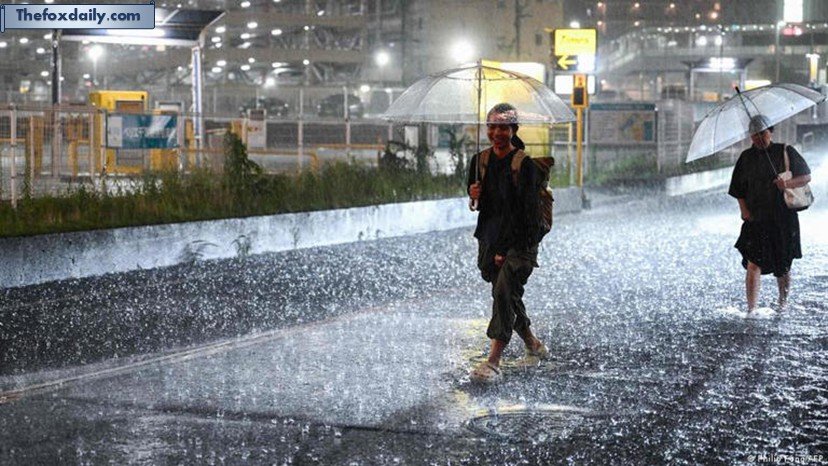
Record-breaking rainfall battered Chiba prefecture east of Tokyo overnight, triggering widespread flooding, transport disruptions and power outages while leaving at least four people dead and another missing. Thousands of residents and travellers were stranded as roads, railway lines and homes were inundated with muddy water.
Japan‘s Weather agency eased its highest-level heavy rain warning for more than a dozen municipalities in Chiba after conditions temporarily improved on Friday morning. However, authorities warned that the danger had not passed, with additional heavy rain forecast later in the day.
The scale of the rainfall was exceptional. Chiba City received 11.5 centimetres of rain in a single hour, while Sakura recorded 9.7 centimetres in an hour. Both measurements were described as all-time highs for the respective locations, underscoring the intensity of the overnight storm.
Four people confirmed dead as flooding spreads across Chiba
Chiba prefectural authorities said four people had died and another person remained missing following the flooding. The deaths were linked to vehicles and rapidly rising floodwater in several parts of the prefecture.
One man was found floating on a flooded road in Ichikawa city. In Sakura city, a woman was found trapped inside a flooded vehicle. Another person pulled from a flooded car in Kashiwa city was presumed dead.
The circumstances surrounding the missing person and the other fatalities were still being assessed by authorities. The deaths highlight the dangers posed by sudden flooding, particularly when roads and low-lying areas become submerged in a short period.
The heavy rain also caused extensive property damage. More than 80 homes were reported flooded, while authorities advised nearly 230,000 residents across Chiba prefecture to move to shelters.
Thousands stranded overnight as transport networks are disrupted
The flooding caused major disruption to rail services and roads, leaving thousands of people unable to continue their journeys.
At Soga train station, about 4,000 stranded passengers spent the night before the Ground Self-Defence Force sent buses to help move them. The station serves an important transport corridor and is also used by visitors travelling towards Tokyo Disney.
Tokyo Disney itself reported no damage, but the disruption around the wider transport network left travellers facing significant delays and uncertainty.
Narita airport was another major pressure point. Thousands of passengers became stranded there after train services connecting the airport with surrounding areas were suspended. For travellers WHO had arrived expecting to continue into Tokyo or other parts of the region, the interruption created a difficult overnight situation.
Hundreds of people also sought shelter overnight inside the Chiba prefectural government building as authorities responded to the worsening conditions.
Why the rainfall was so significant
The most striking feature of the event was not simply the amount of rain recorded over the night, but how quickly it fell.
Chiba City recorded 11.5 centimetres in one hour, while Sakura recorded 9.7 centimetres during the same period. Such intense hourly rainfall can overwhelm drainage systems, rapidly fill rivers and low-lying areas, and make roads dangerous within a very short time.
Japan Meteorological Agency official Takuya Hosomi said at a televised emergency news conference that unprecedented levels of rainfall had been recorded.
For residents, the combination of record hourly rainfall and saturated or flooded areas created a rapidly changing emergency. Roads that may have appeared passable earlier could become submerged, while vehicles could become trapped as water levels rose.
Power outages affect tens of thousands of homes
The flooding also affected electricity supplies across Chiba. About 23,000 homes remained without power on Friday morning, according to TEPCO Power Grid.
The figure represented an improvement from roughly 68,000 homes affected earlier, but the remaining outages added another layer of difficulty for residents already dealing with flooding and disrupted transport.
Power outages during severe flooding can complicate Emergency Response as well as daily life. Residents may face difficulties accessing information, charging phones or operating essential equipment. For authorities, restoring electricity safely can also be challenging when Infrastructure is surrounded by floodwater.
Residents warned that the danger may not be over
The easing of the highest heavy rain warning did not mean that the emergency had ended. Japan’s weather agency continued to warn that more rain could arrive later on Friday.
That warning was particularly important because the region was already dealing with flooded homes, damaged roads, disrupted rail services and power outages. Additional rainfall could increase water levels and make recovery efforts more difficult.
Authorities therefore faced a difficult balance: conditions had improved enough for some warnings to be lowered, but the possibility of renewed heavy rainfall meant residents still needed to remain alert.
How flooding can compound disruption in a densely connected region
The Chiba flooding illustrates how extreme rainfall can quickly become more than a local weather problem. Chiba is closely connected to the Tokyo metropolitan area through extensive road and rail networks, while Narita airport serves as a major international gateway.
When railway lines are suspended, the impact can spread beyond the flooded locations themselves. Passengers who cannot leave one station may accumulate at another, while airport travellers can be left without a reliable connection into the metropolitan area.
The overnight disruption at Soga station and the problems affecting passengers at Narita airport demonstrate this knock-on effect. Even locations that are not directly flooded can experience severe disruption when surrounding transport infrastructure becomes unusable.
For businesses, commuters and tourists, the consequences can continue even after rainfall stops. Transport operators must inspect tracks and infrastructure, emergency teams must clear affected routes, and authorities must assess whether roads and public facilities are safe to reopen.
What the flooding means for residents
For people living in the affected areas, the immediate priority remains safety rather than normal Travel or property recovery.
Residents who have been advised to evacuate face difficult decisions when conditions appear to improve temporarily. However, renewed rainfall can change the situation quickly, particularly in areas already affected by flooding.
The advice issued to nearly 230,000 residents shows the scale of the emergency. Evacuation recommendations do not necessarily mean that every resident will experience flooding, but they indicate that authorities considered conditions serious enough for people in affected areas to move to safer locations.
The flooding of homes and vehicles also demonstrates why rapidly rising water presents a particular danger. A road that becomes flooded can turn into a hazardous Environment for drivers and pedestrians, while water entering vehicles can leave occupants with little time to escape.
What happens next in Chiba
The next stage of the emergency will depend heavily on the rainfall forecast for later Friday. If additional heavy rain develops, authorities could face renewed flooding, further transport interruptions and additional pressure on evacuation centres.
If rainfall remains limited, attention is likely to shift towards assessing damage, restoring transport services, reconnecting electricity and helping residents whose homes have been flooded.
Railway operators will need to determine when routes can safely reopen, while road authorities will have to inspect areas affected by standing water and debris. Electricity restoration will similarly depend on whether damaged infrastructure can be safely accessed.
The missing-person search and investigations into the deaths will also remain important parts of the response.
Record rainfall leaves a wider warning
The Chiba disaster is a reminder of how quickly extreme rainfall can overwhelm transport systems, homes and urban infrastructure. The most serious consequences were not limited to the areas that received the heaviest rainfall; the disruption spread through roads, railway stations, an airport and electricity networks.
The immediate crisis is centred on keeping residents safe as more rain remains possible. But once conditions stabilise, authorities will also face the longer task of documenting the damage and assessing how infrastructure responded to rainfall that produced record hourly measurements.
For residents and travellers across the region, the message remains clear: a temporary reduction in rainfall does not necessarily mean that the flood threat has disappeared. With large areas already affected and additional rain forecast, conditions in Chiba could remain unsettled until authorities can confirm that water levels have fallen and transport and power networks are safe to restore.
At least four people have died, thousands have spent the night stranded and tens of thousands of homes have experienced power disruptions. The record rainfall has turned what began as an extreme weather event into a major emergency across Chiba, with the response now focused on preventing further loss of life and managing the consequences of the flooding.
For breaking news and live news updates, like us on Facebook or follow us on Twitter and Instagram. Read more on Latest India on thefoxdaily.com.






COMMENTS 0