
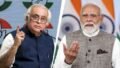
Union Parliamentary Affairs Minister Kiren Rijiju has taken a swipe at Congress leader Rahul Gandhi, listing seven suggestions that he says could help the Congress win more seats in Parliament. Rijiju urged the Leader of the Opposition to spend more time in India, respect senior leaders, take parliamentary debates seriously and end what he described as hostility towards the BJP, the Rashtriya Swayamsevak Sangh (RSS) and Prime Minister Narendra Modi.
In a post on social media platform X on November 4, Rijiju presented his suggestions as a checklist for improving the Congress party’s electoral performance. He also called on Gandhi to respect constitutional institutions and allow the Congress to function as a democratic organisation rather than being dominated by dynastic politics.
The remarks came amid an escalating political exchange between the BJP and Congress over Gandhi’s repeated challenge to Modi for an open public debate. Gandhi had questioned the Prime Minister over allegations involving foreign influence and other political issues, while BJP leaders argued that Parliament is the appropriate forum for such discussions. :chatgpt-content-reference{index=”0″}
Kiren Rijiju’s 7 Suggestions for Rahul Gandhi
Rijiju said the Congress could win more MPs if Gandhi followed seven suggestions concerning his political approach, conduct in Parliament and the internal functioning of his party.
Here are the seven points shared by the Union minister:
- Spend more time in India: Rijiju asked Gandhi to spend more time in the country and avoid what he described as frequent secret foreign vacations.
- Respect senior leaders: He advised Gandhi to respect senior politicians and learn from the experience and wisdom of elders, describing this as part of Indian tradition.
- Avoid people Rijiju describes as anti-India: The minister asked Gandhi not to meet individuals he characterised as anti-India and to stop promoting their agenda.
- End hostility towards the BJP, RSS and Modi: Rijiju urged Gandhi to end what he called deep hatred against the BJP, RSS and Prime Minister Narendra Modi, adding that the BJP should be treated as a political opponent rather than an enemy.
- Take Parliament seriously: He asked Gandhi to participate more seriously in parliamentary proceedings and allow MPs to take part in debates and discussions.
- Respect the Constitution and institutions: Rijiju called on the Congress leader to respect the Constitution of India and honour constitutional institutions.
- End dynastic politics: He urged Gandhi to allow the Congress to function as a democratic party and move away from dynastic politics.
The suggestions were political criticism from Rijiju, not an independently established assessment of the Congress party’s electoral prospects. His post framed the points as changes that could help the party increase its parliamentary representation. :chatgpt-content-reference{index=”1″}
Why Did Kiren Rijiju Target Rahul Gandhi?
Rijiju’s remarks came after Rahul Gandhi renewed his challenge to Prime Minister Narendra Modi for an open debate. The Congress leader had accused the Prime Minister of receiving foreign support and questioned the BJP’s allegations that the Opposition was working with foreign forces to undermine India’s interests.
Gandhi challenged Modi to debate the allegations at any venue and at any time. He also raised issues including the India-US trade deal, the Adani case and alleged foreign connections. The challenge was part of a wider political confrontation following Modi’s criticism of the Opposition as an obstructionist force. :chatgpt-content-reference{index=”2″}
The BJP rejected Gandhi’s approach and questioned why the Congress leader was demanding a public debate when Parliament provides a platform for elected representatives to question the government and discuss national issues.
Rijiju’s seven-point post extended that criticism beyond the debate challenge. By referring to Gandhi’s foreign visits, relationships with individuals he described as anti-India and the Congress’s internal structure, the minister sought to question the Opposition leader’s political strategy and leadership.
Rijiju Says BJP Should Be Treated as a Political Opponent, Not an Enemy
One of the most prominent points in Rijiju’s list was his appeal to Gandhi to change the way he approaches the BJP, RSS and Prime Minister Modi.
The minister wrote that Gandhi should end his alleged deep hatred towards these organisations and leaders and treat the BJP as a political opponent rather than an enemy. The remark reflects the BJP’s criticism of the tone of Congress attacks against the ruling party and its leadership.
The statement also highlights a wider disagreement over political rhetoric in India. The BJP has frequently accused opposition leaders of using personal attacks against its leadership, while Congress leaders have argued that strong criticism is part of their responsibility to question the government.
Rijiju’s suggestion was therefore both a criticism of Gandhi’s political language and an appeal for a different style of engagement between the ruling party and the Opposition.
Why Did Rijiju Ask Rahul Gandhi to Take Parliament More Seriously?
Rijiju also focused on parliamentary proceedings, asking Gandhi to allow MPs to participate in debates and discussions. The minister argued that Parliament should be used for substantive political exchanges rather than becoming a venue for repeated disruptions.
The BJP has criticised opposition protests and walkouts, saying they affect the functioning of the legislature and limit opportunities to discuss government policies. Rijiju has also argued that leaders who demand public debates should participate in discussions inside Parliament.
The Congress and other opposition parties, however, have used parliamentary protests and walkouts to register their objections to government decisions and raise issues they believe require attention. Such actions are part of the broader political dispute over how opposition parties should hold the government accountable.
Rijiju’s fifth suggestion directly connects to this disagreement: he wants Gandhi to encourage parliamentary participation and allow MPs to engage in discussions rather than relying primarily on confrontational political tactics.
Rijiju’s Remarks on Dynastic Politics in the Congress
The seventh point in Rijiju’s list targeted the Congress party’s internal leadership structure. He asked Gandhi to allow the party to function democratically and “smash dynastic politics”.
The BJP has repeatedly criticised the Congress for what it describes as family-based political leadership, arguing that senior positions and influence within the party remain concentrated around the Gandhi family.
The Congress has defended its leadership and political organisation, while its leaders have continued to contest the BJP’s criticism. Rijiju’s latest remarks brought the issue back into the political debate, linking the party’s internal structure with his argument about improving its electoral performance.
His suggestion raises a broader organisational question for the Congress: how can the party strengthen internal decision-making, encourage leadership development and provide greater opportunities for leaders beyond its established central leadership?
What Is the Background to Rahul Gandhi’s Public Debate Challenge to PM Modi?
Rahul Gandhi’s challenge to Modi followed the Prime Minister’s criticism of opposition parties, which he described as an obstructionist force rather than a constructive Opposition. Gandhi responded by accusing the Prime Minister of receiving foreign support and challenging him to discuss the allegations publicly.
Gandhi said the debate could take place at any venue and invited Modi to respond to questions about foreign influence, India’s financial system and other political matters. His challenge was intended to put the allegations into a public discussion, while the BJP questioned the need for a separate debate outside Parliament. :chatgpt-content-reference{index=”3″}
The disagreement also drew responses from other senior BJP leaders. Union Finance Minister Nirmala Sitharaman argued that Parliament was the appropriate place for debate and questioned Gandhi’s demand for a public discussion outside the legislature. :chatgpt-content-reference{index=”4″}
Rijiju’s seven-point advice came against this background. Instead of responding only to the debate challenge, he used the opportunity to raise broader questions about Gandhi’s political conduct, the Congress’s parliamentary participation and its internal leadership structure.
What the Seven-Point Advice Means for the BJP-Congress Political Exchange
Rijiju’s post reflects the continuing political confrontation between the BJP and Congress over leadership, parliamentary conduct and allegations of foreign influence. The two parties have offered sharply different interpretations of how political disagreements should be addressed and what constitutes responsible opposition.
For the BJP, the minister’s message is that the Congress should focus on parliamentary participation, respect for constitutional institutions and changes to its internal political structure. The seven points also allow the ruling party to challenge Gandhi’s leadership without directly accepting his demand for a public debate with Modi.
For the Congress, the demand for an open debate is connected to its effort to question the government on issues it considers important. The party’s use of parliamentary proceedings, public meetings and political demonstrations forms part of its opposition strategy.
Whether Rijiju’s suggestions influence the Congress’s political approach remains to be seen. His post, however, has added another layer to the ongoing exchange between the two parties, with the debate extending from Modi and Gandhi’s public challenge to questions about party organisation, parliamentary conduct and political rhetoric.
Conclusion
Kiren Rijiju’s seven-point advice to Rahul Gandhi has intensified the political exchange between the BJP and Congress. The Union minister urged the Congress leader to spend more time in India, respect senior leaders, avoid individuals he described as anti-India, reduce hostility towards the BJP and RSS, participate seriously in Parliament, respect constitutional institutions and move away from dynastic politics.
The remarks came after Gandhi challenged Prime Minister Narendra Modi to an open debate over allegations involving foreign influence and other political issues. While the BJP has argued that Parliament is the appropriate forum for such discussions, the Congress has continued to raise questions about the government’s decisions and political conduct.
For now, Rijiju’s seven-point list has become another talking point in the BJP-Congress confrontation, highlighting their competing views on political leadership, parliamentary democracy and the role of the Opposition.
For breaking news and live news updates, like us on Facebook or follow us on Twitter and Instagram. Read more on Latest India on thefoxdaily.com.





COMMENTS 0