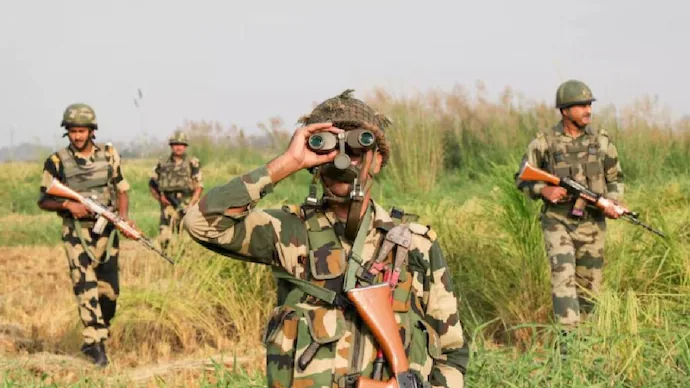
The Border Security Force has expanded its maritime security fleet with more than two dozen interceptor boats to strengthen surveillance along Gujarat’s sensitive coastline. The new vessels are designed to help BSF personnel identify suspicious movements, pursue fast-moving boats and respond more effectively to potential threats in coastal waters.
Gujarat occupies an important position in India’s maritime security framework because its coastline faces Pakistan and includes commercial ports, fishing communities, industrial facilities and strategically significant coastal areas. The movement of fishing boats and commercial vessels creates a busy maritime environment in which security agencies must distinguish legitimate activity from possible illegal operations.
The addition of interceptor boats is intended to improve the BSF’s ability to operate in this environment. Smugglers and individuals attempting illegal entry can sometimes use small fishing vessels to blend into ordinary maritime traffic. Such boats can change direction quickly and operate close to the shoreline, making them difficult to track using conventional patrol arrangements alone.
With the expanded fleet, the BSF aims to improve its ability to intercept suspicious vessels, conduct inspections and coordinate with other maritime security agencies when a situation requires additional action.
Why the BSF Is Adding More Interceptor Boats Along Gujarat’s Coast
The expansion reflects the operational challenges involved in securing a coastline that experiences regular movement of fishing boats, cargo vessels and other maritime traffic.
Unlike a conventional land border, a maritime frontier is constantly changing. Small vessels can approach from different directions, remain close to the coast or move through shallow waters where larger patrol ships may face operational limitations.
Security agencies must therefore maintain surveillance across different types of coastal terrain and respond quickly when suspicious activity is detected.
The new interceptor boats will give BSF personnel additional platforms to pursue vessels that may be involved in smuggling, unauthorised crossings or other suspicious activities. Their speed and manoeuvrability are particularly important when dealing with smaller boats that can change course rapidly.
Once a suspicious vessel is located, BSF crews can approach it, order it to stop and carry out an inspection. If the situation requires a wider investigation or enforcement action, the force can coordinate with other agencies responsible for maritime security, customs, policing and coastal surveillance.
The expanded fleet is also expected to improve the force’s ability to maintain a regular presence across vulnerable stretches of Gujarat’s maritime frontier.
How Interceptor Boats Will Help Track Suspicious Vessels
Interceptor boats are designed for rapid movement and close-range operations. Their primary advantage is the ability to reach a location quickly, pursue smaller vessels and operate in conditions where larger patrol ships may be less effective.
Smuggling operations often exploit the difficulty of monitoring busy coastal waters. A small boat carrying illegal goods can resemble an ordinary fishing vessel, particularly in areas where local fishermen regularly move between the shore and offshore fishing grounds.
In such circumstances, security personnel need to identify unusual behaviour rather than rely only on the appearance of a vessel.
Interceptor boats can help crews respond when a vessel behaves suspiciously, refuses to follow instructions or attempts to evade inspection. Their speed can reduce the time between detecting a possible threat and reaching the location.
They can also support patrol teams in monitoring areas that require frequent attention. By increasing the number of available vessels, the BSF can distribute its maritime resources more effectively and improve its ability to respond to multiple incidents.
Why Small Boats Can Be Difficult to Intercept
Small vessels present a particular challenge because they can operate close to the coastline and navigate through narrow or shallow stretches of water.
Fishing boats also form a significant part of normal maritime activity along Gujarat’s coast. This makes it necessary for security personnel to distinguish routine fishing movements from suspicious operations without unnecessarily disrupting legitimate livelihoods.
Some vessels may switch directions quickly, move towards shallow areas or use local maritime traffic to avoid attention. A patrol boat that cannot match their speed or manoeuvrability may struggle to maintain contact.
Interceptor boats are intended to address these limitations by giving BSF crews a faster response option. Their deployment can help security teams approach suspicious vessels before they move beyond an accessible patrol area.
Harami Nala: A Sensitive Stretch of the India-Pakistan Maritime Border
One of the important areas along Gujarat’s maritime frontier is Harami Nala, a sensitive creek region near the India-Pakistan border in the Kutch district.
The area is characterised by shallow waters, mudflats, tidal channels and difficult terrain. These geographical features create challenges for conventional security patrols and make continuous monitoring important.
Harami Nala has previously been associated with incidents involving suspected infiltration, abandoned boats and the movement of individuals across the border. Its complicated geography can make navigation difficult, particularly when tides and weather conditions change.
The region is also significant because the maritime boundary and surrounding creek systems are not always easy to monitor using conventional vessels. Security personnel must be able to operate in shallow channels and respond to unusual movements without becoming restricted by water depth or difficult terrain.
Additional interceptor boats could strengthen the BSF’s operational flexibility in such areas, although the effectiveness of their deployment will depend on the type of vessels, their operating range, crew training and the conditions in which they are used.
Why Gujarat’s Coastline Is Strategically Important for India
Gujarat has one of India’s most strategically significant coastlines. Its location along the Arabian Sea connects the state to major maritime trade routes and places it close to Pakistan’s coastline.
The state is home to important ports, industrial centres, energy infrastructure and extensive fishing activity. Commercial shipping and fishing vessels operate across its waters, creating a constant flow of maritime movement.
This economic importance also increases the need for strong coastal security. Ports and industrial facilities can be vulnerable to criminal activity, smuggling networks and other threats if maritime surveillance is inadequate.
Security agencies must therefore monitor not only the international maritime boundary but also approaches to ports, creeks, fishing areas and coastal settlements.
Commercial Ports and Industrial Infrastructure
Gujarat’s ports play a major role in India’s trade and industrial supply chains. Maritime routes support the movement of petroleum products, chemicals, containers, bulk commodities and other goods.
Any major security incident affecting these facilities could disrupt commercial operations and create wider economic consequences.
Coastal surveillance is consequently important for protecting infrastructure and ensuring that vessels operating near sensitive locations can be monitored effectively.
Fishing Communities and Maritime Traffic
Fishing is an important source of livelihood for coastal communities in Gujarat. Thousands of fishermen depend on the sea for their income, and their boats regularly operate in waters that also require security monitoring.
This creates an operational challenge for security agencies. Patrol personnel must identify suspicious movements while allowing legitimate fishing activity to continue without unnecessary interference.
Interceptor boats can help security teams approach vessels quickly and conduct checks when required. Their use may also improve communication between patrol units and fishing communities, particularly when fishermen report unusual activity or encounter problems at sea.
Interceptor Boats Will Also Support Search and Rescue Operations
The new vessels are not intended solely for security operations. The BSF can also deploy them to assist fishermen and other people facing emergencies in coastal waters.
Boats operating along Gujarat’s coastline can encounter engine failures, rough weather, navigation problems and accidents. Fishermen may become stranded after their vessels are damaged or lose power, while individuals can go missing during offshore operations.
Interceptor boats can help security personnel reach affected locations quickly and support search-and-rescue activities.
Their ability to move rapidly across coastal waters may be particularly useful when an emergency requires an immediate response. They can assist in locating stranded fishermen, reaching vessels involved in accidents and searching for people reported missing at sea.
This additional role is important because maritime security forces frequently operate in areas where civilian vessels are active. Their presence can therefore contribute to both national security and the safety of coastal communities.
Training BSF Personnel for Maritime Operations
Adding boats to the fleet is only one part of improving maritime security. Their effectiveness depends heavily on the ability of personnel to operate and maintain them safely.
BSF crews will receive practical training in boat handling, navigation and maintenance. The training is expected to prepare personnel for operating under changing weather and water conditions while moving through areas with regular maritime traffic.
Navigation is particularly important along Gujarat’s coastline because tidal conditions, shallow channels and changing water levels can affect where vessels can safely operate.
Personnel must also learn how to manoeuvre around fishing boats, commercial vessels and other patrol craft without creating unnecessary risks.
Maintenance training is equally important. Boats used for regular coastal patrols need to remain operational and reliable. Mechanical problems during an interception or emergency response could reduce the effectiveness of a patrol unit.
Hands-on training can help crews identify technical problems, carry out routine maintenance and operate their vessels more confidently during demanding assignments.
Why Different Types of Patrol Boats Are Needed
Gujarat’s coastline includes open waters, shallow creeks, tidal channels and areas with different navigational conditions. A single type of vessel cannot necessarily meet every operational requirement.
Larger patrol vessels can provide endurance and support operations over wider areas, while smaller boats can be more effective in shallow water and confined coastal stretches.
Interceptor boats add another capability by prioritising speed and rapid response. Their role is particularly relevant when security personnel need to pursue a suspicious vessel before it reaches a difficult-to-access area.
The BSF’s use of different vessel types reflects the need to match equipment with geographical conditions and operational requirements.
In areas such as Harami Nala, shallow waters and shifting tides can limit the movement of conventional vessels. Smaller boats with suitable designs can provide greater flexibility, although their actual performance depends on water depth, weather and the specific characteristics of the vessel.
How the BSF Fits Into India’s Coastal Security Network
The Border Security Force is one of several agencies involved in protecting India’s maritime borders. Its responsibilities include guarding sensitive coastal stretches and monitoring areas where illegal crossings or suspicious maritime activity may occur.
However, coastal security requires coordination among multiple organisations because threats can involve activities ranging from smuggling and illegal fishing to organised crime and potential infiltration.
The Indian Coast Guard plays a central role in maritime surveillance, search and rescue, law enforcement and the protection of India’s maritime interests. The Indian Navy also contributes to broader maritime security, particularly in relation to national defence and threats in surrounding waters.
State police, marine police, customs authorities and intelligence agencies also have responsibilities depending on the nature and location of an incident.
The expanded BSF fleet can strengthen this wider network by improving the force’s ability to identify and respond to suspicious activity in areas under its responsibility.
Effective coordination is essential because a suspicious vessel may require several types of response. A patrol crew may identify and intercept the boat, while other agencies may be needed to investigate the cargo, identify individuals or pursue criminal cases.
Lessons From Previous Maritime Security Threats
India’s coastal security framework received major attention following the November 2008 Mumbai terrorist attacks, when attackers travelled by sea before reaching the city.
The incident exposed vulnerabilities in maritime surveillance and demonstrated how the coastline could be exploited by groups seeking to enter the country through unconventional routes.
Subsequent security measures focused on improving coastal monitoring, strengthening coordination between agencies, expanding surveillance infrastructure and increasing the involvement of local fishing communities.
Gujarat’s proximity to Pakistan gives its maritime frontier particular importance in this broader security framework. The state has experienced security incidents involving suspicious boats and suspected cross-border activity, reinforcing the need for continuous monitoring.
Although the addition of interceptor boats does not eliminate every potential threat, it provides another operational tool for responding to suspicious movements and improving the coverage of vulnerable coastal areas.
What the New Boats Could Mean for Gujarat’s Coastal Security
The addition of more than 25 interceptor boats represents a strengthening of the BSF’s maritime response capabilities. The vessels are expected to improve the force’s ability to pursue suspicious boats, conduct inspections and assist other agencies during security operations.
Their deployment could be particularly useful in areas where small vessels can move quickly through shallow waters or blend into regular fishing traffic.
The expanded fleet may also improve emergency response capabilities by allowing BSF personnel to reach stranded fishermen and vessels in distress more quickly.
However, the long-term effectiveness of the expansion will depend on how the boats are deployed, the availability of trained crews, maintenance arrangements and coordination with other agencies.
Regular patrols, reliable communication systems, intelligence sharing and cooperation with fishing communities will remain essential components of maritime security.
Conclusion: A Stronger Maritime Shield for Gujarat
Gujarat’s coastline is important to India’s economy, maritime trade and national security. Its proximity to Pakistan, busy fishing routes, industrial infrastructure and difficult creek systems make coastal surveillance a continuous operational requirement.
The BSF’s decision to add more than two dozen interceptor boats is aimed at improving the speed and flexibility of maritime patrols. The new vessels will help personnel pursue suspicious boats, respond to possible infiltration and smuggling attempts, and support rescue operations during emergencies at sea.
The initiative also highlights the importance of specialised training and coordination in coastal security. Boats alone cannot prevent every threat, but properly trained crews and effective cooperation among security agencies can make maritime surveillance more responsive.
As India continues to strengthen the protection of its maritime frontiers, the expanded BSF fleet is expected to provide an additional layer of security along Gujarat’s sensitive coastline while supporting the safety of fishermen and other people who depend on the sea.
For breaking news and live news updates, like us on Facebook or follow us on Twitter and Instagram. Read more on Latest India on thefoxdaily.com.





COMMENTS 0