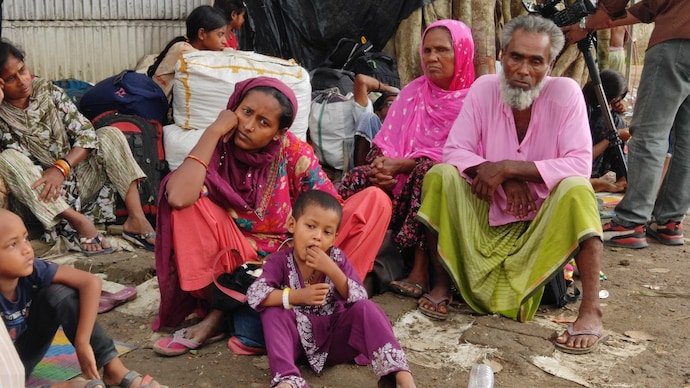
Illegal Immigration has once again emerged as one of the most significant political and Governance issues in eastern India after West Bengal Chief Minister Suvendu Adhikari announced that approximately 4,800 illegal immigrants had been deported to Bangladesh and another 836 individuals were awaiting repatriation.
The announcement comes amid intensified efforts to strengthen Border Security along India’s eastern frontier and reflects a broader national debate surrounding immigration, citizenship, demographic shifts, welfare distribution, and internal security.
Speaking at a BJP organizational meeting, Adhikari outlined a series of initiatives involving border fencing, beneficiary verification, healthcare expansion, welfare reforms, and census preparations, signaling that the state government intends to make governance and border management central themes of its administration.
The developments are significant not only for West Bengal but also for India’s wider border management strategy, given the state’s unique geographic position along one of the country’s most sensitive international boundaries.
West Bengal’s Strategic Border Challenge
West Bengal shares one of India’s longest international borders with Bangladesh. The state’s border stretches across densely populated districts, agricultural regions, rivers, forests, and urban settlements, creating complex challenges for security agencies.
For decades, governments at both the state and central levels have grappled with issues related to illegal immigration, cross-border smuggling, human trafficking, and border infrastructure.
The latest deportation figures highlight the scale of the challenge facing authorities.
According to the Chief Minister, individuals identified as illegal immigrants who do not qualify under existing citizenship provisions are being transferred to the Border Security Force (BSF) for repatriation under established Union government procedures.
Understanding the Deportation Numbers
The figures announced by the state government suggest a substantial administrative effort involving identification, verification, detention, and eventual deportation.
| Border Management Data | Figures Announced |
|---|---|
| Illegal Immigrants Deported | Approximately 4,800 |
| Awaiting Deportation | 836 |
| Border Requiring Fencing | 556 km |
| Land Handed to BSF for Fencing | Nearly 100 km |
| Survey Period for Census Exercise | August 1–15 |
Such operations typically involve cooperation between local administration, law enforcement agencies, intelligence units, immigration authorities, and the BSF.
The process generally requires authorities to establish nationality, verify documentation, and coordinate with relevant agencies before repatriation can occur.
Why the India-Bangladesh Border Remains a National Security Priority
Border security along the India-Bangladesh frontier has long been considered a strategic priority.
The region’s geography presents unique challenges. Rivers frequently alter their courses, settlements often exist close to the border, and economic disparities can encourage unauthorized migration.
Successive governments have invested heavily in:
- Border fencing projects
- Surveillance technology
- Border outposts
- Integrated check posts
- Floodlighting infrastructure
- Intelligence-sharing mechanisms
Authorities argue that stronger border management helps combat illegal immigration while also addressing concerns related to smuggling, trafficking networks, and national security.
The Importance of the Chicken’s Neck Corridor
One of the most strategically significant aspects of Adhikari’s remarks was his focus on the Siliguri Corridor, commonly known as the “Chicken’s Neck.”
This narrow stretch of land connects India’s northeastern states to the rest of the country.
At certain points, the corridor is only a few dozen kilometers wide, making it one of India’s most sensitive strategic regions.
Because of its geographic importance, infrastructure development, security measures, and border management initiatives in the surrounding areas receive special attention from policymakers.
Any disruption in this corridor could have implications for transportation, trade, logistics, and national security.
The Demographic Debate and Political Significance
The issue of demographic change has become a major political discussion in West Bengal and several other border states.
Political parties frequently debate migration patterns, population growth, electoral representation, and resource allocation.
Supporters of stricter immigration controls argue that unauthorized migration can place pressure on public services, welfare programs, housing, healthcare, and employment opportunities.
Critics, however, often caution against broad generalizations and emphasize the need for careful verification, due process, and adherence to legal safeguards.
The debate remains one of the most politically sensitive topics in the region because it intersects with questions of identity, citizenship, economics, and governance.
How Census and Delimitation Could Shape Future Politics
Another significant announcement involved preparations for the upcoming census exercise and future delimitation.
Census operations play a critical role in governance because they determine population data used for policymaking, resource allocation, infrastructure planning, and electoral representation.
Accurate census data helps governments assess:
- Population growth trends
- Urbanization patterns
- Housing requirements
- Healthcare needs
- Education infrastructure
- Employment opportunities
Delimitation, which may follow future census exercises, could potentially reshape electoral boundaries based on updated population figures.
This makes demographic data particularly important for both governance and Politics.
Annapurna Yojana and Welfare Delivery Reforms
Beyond immigration and border issues, the state government used the occasion to highlight welfare initiatives.
According to the Chief Minister, approximately 50 lakh women have received financial assistance through the Annapurna Yojana.
The scheme represents part of a broader effort to expand social welfare benefits while simultaneously strengthening verification procedures.
Governments across India increasingly face the challenge of balancing two priorities:
- Expanding welfare coverage
- Preventing fraud and duplication
Digital verification systems, Aadhaar-linked databases, direct benefit transfers, and beneficiary audits have become important tools in achieving these objectives.
The Growing Focus on Beneficiary Verification
One of the more noteworthy governance themes emerging from the announcement is the emphasis on verification.
Across India, governments are increasingly using technology-driven systems to ensure that welfare benefits reach eligible recipients.
Verification exercises often aim to identify:
- Duplicate records
- Ineligible beneficiaries
- Documentation inconsistencies
- Administrative errors
- Fraudulent claims
While such measures can improve transparency, they must also be implemented carefully to ensure that genuine beneficiaries are not excluded from essential support programs.
Healthcare Expansion Through Ayushman Bharat
Healthcare emerged as another major focus area.
The state government announced plans to implement the Ayushman Bharat scheme in coordination with the Union government.
Ayushman Bharat is among the world’s largest publicly funded health insurance initiatives and aims to provide financial protection against major medical expenses.
If fully implemented across West Bengal, the scheme could significantly expand healthcare access for millions of families.
| Healthcare Initiative | Expected Impact |
|---|---|
| Ayushman Bharat Coverage | Up to Rs 5 lakh annually per eligible family |
| Families Covered | Approximately 1.46 crore |
| Potential Beneficiaries | Around 6.5 crore people |
| National Health Mission Allocation | Rs 4,500 crore sanctioned |
Healthcare access has become a major electoral and governance issue across India, making such initiatives politically and socially significant.
Corruption Allegations and Governance Narrative
The Chief Minister also used the platform to reiterate allegations of corruption against the previous administration.
Anti-corruption campaigns often become central themes for governments seeking to demonstrate administrative reform and institutional accountability.
However, such allegations frequently remain subjects of legal proceedings, investigations, and Political Debate.
Ultimately, the credibility of anti-corruption efforts depends on transparent investigations, judicial processes, and institutional oversight.
The Broader National Context
The developments in West Bengal reflect broader trends visible across India.
Several key issues are increasingly shaping political discourse nationwide:
- Border security
- Immigration management
- Welfare delivery reforms
- Healthcare expansion
- Infrastructure development
- Administrative transparency
- Demographic planning
As states modernize governance systems and expand digital administration, these issues are becoming more interconnected than ever before.
Future Outlook
Looking ahead, West Bengal is likely to remain a focal point for discussions surrounding border security, demographic trends, welfare reform, and federal-state cooperation.
The success of ongoing deportation efforts, fencing projects, census operations, healthcare expansion, and beneficiary verification programs will influence both governance outcomes and political narratives in the years ahead.
Much will depend on effective coordination between state authorities, central agencies, and local administrations.
Conclusion
The announcement that approximately 4,800 illegal immigrants have been deported while 836 await repatriation highlights the growing importance of border management in West Bengal. However, the broader significance of the government’s agenda extends beyond immigration.
From border fencing and census preparation to welfare reforms, healthcare expansion, and governance modernization, the state appears to be pursuing a comprehensive administrative strategy aimed at addressing long-standing challenges.
Whether these initiatives achieve their intended outcomes will depend on implementation, transparency, and public trust. As West Bengal moves toward major policy milestones, including census operations and budget announcements, the state’s approach could serve as an important case study in balancing security, development, and welfare in one of India’s most strategically important regions.
For breaking news and live news updates, like us on Facebook or follow us on Twitter and Instagram. Read more on Latest India on thefoxdaily.com.






COMMENTS 0