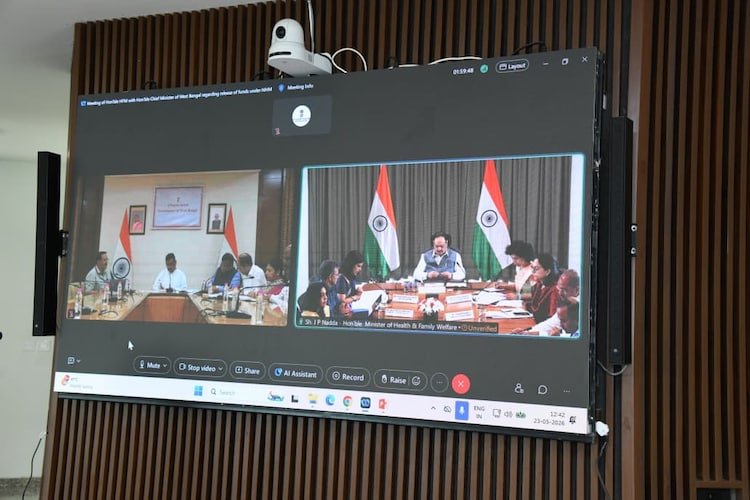
One of India’s biggest healthcare and political standoffs has finally come full circle.
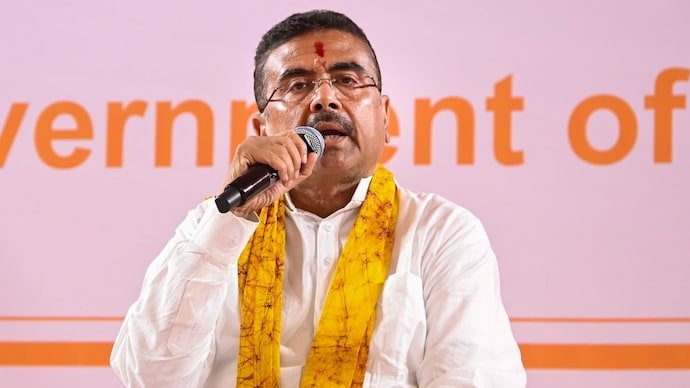
After nearly seven years outside the Centre’s flagship Ayushman Bharat health insurance programme, West Bengal is preparing to roll out Ayushman Bharat cards from July under the newly formed BJP government led by Chief Minister Suvendu Adhikari.
The announcement is far more significant than a routine administrative decision.
It represents a dramatic shift in the state’s healthcare strategy, a major political reset after the fall of the Trinamool congress government, and a potentially transformative moment for millions of families struggling with rising medical expenses.
For years, West Bengal remained one of the most high-profile states to stay out of Ayushman Bharat after the previous Mamata Banerjee-led government withdrew from the scheme in January 2019. The TMC government had instead promoted its own Swasthya Sathi programme, arguing that state-run healthcare coverage better served Bengal’s needs.
Now, with the BJP ending the TMC’s 15-year rule in the state, the healthcare equation has changed completely.
The new government says nearly six crore beneficiaries currently under Swasthya Sathi will be integrated into Ayushman Bharat, potentially creating one of the largest public healthcare coverage expansions in eastern India.
What Is Ayushman Bharat and Why Does It Matter?
Ayushman Bharat, officially known as the Pradhan Mantri Jan Arogya Yojana (PM-JAY), is India’s flagship Public health insurance scheme launched in 2018.
The programme was designed to provide financial protection against catastrophic healthcare expenses for economically vulnerable families.
Under the scheme, eligible families receive annual health insurance coverage for secondary and tertiary hospitalisation expenses across empanelled public and private hospitals.
The core objective is simple but ambitious: prevent families from falling into poverty because of medical bills.
That goal matters enormously in India, where out-of-pocket healthcare spending remains among the highest in the world.
Why West Bengal Initially Opted Out
The original withdrawal from Ayushman Bharat in 2019 was driven by both administrative and political factors.
The Mamata Banerjee government argued that its own Swasthya Sathi scheme already provided broad healthcare coverage and that adopting Ayushman Bharat would create duplication.
However, political tensions between the Centre and the state also played a major role.
The TMC government strongly objected to the branding and visibility associated with central welfare schemes. Disagreements reportedly emerged over credit-sharing, implementation control and the visibility of the Prime Minister’s image in scheme promotion.
In practical terms, the standoff became symbolic of the larger political rivalry between the BJP-led Centre and the TMC government in Kolkata.
Healthcare policy effectively became part of a much broader political battle.
What Changes Under the New BJP Government?
The new government under Chief Minister Suvendu Adhikari has made healthcare integration with central schemes a major priority.
The Ayushman Bharat rollout signals a larger effort to align West Bengal more closely with national welfare programmes.
According to the state government, nearly six crore beneficiaries currently covered under Swasthya Sathi will now receive Ayushman Bharat coverage.
This integration could offer several advantages:
- Portability of benefits across India
- Access to a larger national hospital network
- Greater central funding support
- Expanded healthcare infrastructure integration
- Reduced duplication between state and central schemes
One of the biggest practical advantages is portability.
Under Ayushman Bharat, beneficiaries from West Bengal working in other states may be able to access treatment more easily across India a major benefit for migrant workers and low-income families.
How Much Funding Is Involved?
The scale of the healthcare investment is substantial.
According to the state government, the Centre has earmarked a central share of Rs 976 crore for Ayushman Bharat implementation in West Bengal.
Additionally, previously unutilised allocations from earlier years may now be reimbursed following the policy reversal.
The state has also received significant allocations under the National Health Mission.
| Healthcare Allocation | Amount | Purpose |
|---|---|---|
| Ayushman Bharat Central Share | Rs 976 crore | Health insurance rollout |
| National Health Mission Allocation | Rs 2,103 crore | Healthcare infrastructure and services |
| Released NHM Funds | Rs 500 crore | Immediate programme implementation |
These figures highlight how healthcare has become one of the biggest battlegrounds for both Governance and political legitimacy.
What Happens to Swasthya Sathi?
One major question is whether Ayushman Bharat will replace Swasthya Sathi entirely or operate alongside it.
At the moment, the government appears focused on integrating beneficiaries rather than abruptly dismantling the state scheme.
This approach may help avoid disruption for existing beneficiaries while also allowing the administration to transition into the national framework more smoothly.
However, administrative integration could still prove complicated.
Merging beneficiary databases, hospital networks, reimbursement systems and eligibility frameworks across two large healthcare programmes is a significant logistical exercise.
The real test will come during implementation.
The Political Symbolism Is Enormous
The return of Ayushman Bharat carries major political implications beyond healthcare.
During the Assembly election campaign, the BJP repeatedly accused the previous TMC government of blocking central welfare schemes for political reasons.
The implementation of Ayushman Bharat is therefore being presented by the BJP as evidence that governance coordination between the Centre and the state has improved dramatically after the change in power.
For the BJP, the move also serves another strategic purpose: demonstrating that central schemes can now directly reach Bengal’s population without political resistance.
In many ways, the Ayushman Bharat rollout has become both a healthcare policy and a political message.
Why Healthcare Costs Are Becoming a Bigger Issue in India
The renewed focus on health insurance comes at a crucial time for India’s healthcare system.
Medical Inflation has been rising steadily across the country, making quality treatment increasingly expensive for ordinary families.
Even middle-class households often face severe financial pressure during major illnesses.
According to multiple public health studies over the years, healthcare expenses remain one of the leading causes of financial distress and debt among Indian households.
That is why public insurance programmes like Ayushman Bharat are politically and socially significant.
They address not just healthcare access, but also economic vulnerability.
The Jan Aushadhi Push Could Be Equally Important
Another major announcement that deserves attention is the proposal to establish 468 Pradhan Mantri Jan Aushadhi Kendras across West Bengal.
These government-backed medicine stores provide generic medicines at heavily discounted rates, often 70 to 80 percent cheaper than branded alternatives.
This may sound less dramatic than a large insurance programme, but it could have an enormous real-world impact.
In India, medicine costs form a major part of out-of-pocket healthcare spending.
Affordable medicine access can significantly reduce household medical expenses, especially for chronic illnesses such as:
- Diabetes
- Hypertension
- Heart disease
- Asthma
- Kidney disorders
If implemented effectively, the Jan Aushadhi expansion may become one of the most practical healthcare reforms in the state.
West Bengal’s Child Health and TB Challenges
The government also announced plans to improve child health outcomes in seven districts where under-five mortality remains high.
This is particularly important because healthcare debates often focus heavily on hospitals and insurance while overlooking preventive care and public health indicators.
Similarly, the planned TB-free campaign reflects India’s larger push to tackle tuberculosis more aggressively.
India continues to carry one of the world’s highest tuberculosis burdens despite years of public health efforts.
Strengthening coordination between central and state healthcare systems could improve disease surveillance, diagnostics and treatment coverage.
Can Ayushman Bharat Deliver on the Ground?
The biggest challenge is not announcing the scheme. It is execution.
Across India, public healthcare programmes often struggle due to:
- Hospital shortages
- Staff shortages
- Delayed reimbursements
- Administrative bottlenecks
- Awareness gaps among beneficiaries
- Uneven rural healthcare access
West Bengal’s government says recruitment of doctors, nurses and health personnel will be completed within three months, with healthcare coverage targeted to rise from 53 percent to 98 percent.
If achieved, that would represent a major expansion.
However, implementation capacity will determine whether the promises translate into meaningful improvements for patients.
The Bigger National Trend: Welfare Politics Is Evolving
The Bengal decision reflects a broader transformation happening across Indian Politics.
Welfare delivery has become increasingly central to electoral competition.
Political parties are no longer competing only on ideology or identity. They are competing on who can deliver healthcare, subsidies, infrastructure and welfare benefits more effectively.
Healthcare schemes like Ayushman Bharat now play a role similar to major economic reforms in earlier decades they shape political narratives, governance reputations and public trust.
In that sense, Bengal’s Ayushman Bharat return is part of a much larger national shift.
What Competitors Are Missing: This Is About Administrative Integration
Many reports are focusing mainly on the political angle.
But the deeper story is administrative integration.
The BJP government is attempting to bring West Bengal more directly into national governance frameworks after years of friction with the Centre.
This could affect not only healthcare, but also:
- Infrastructure funding
- Digital governance systems
- Welfare distribution
- Public health coordination
- Data integration
Ayushman Bharat may therefore become a template for wider Centre-state policy integration in Bengal.
Conclusion: A Defining Healthcare Shift for West Bengal
The return of Ayushman Bharat to West Bengal marks one of the most important healthcare policy reversals in recent Indian political history.
After nearly seven years outside the Centre’s flagship insurance programme, the state is now preparing for a major healthcare expansion that could affect millions of households.
The move reflects not only changing political leadership, but also growing recognition that healthcare security is becoming central to economic stability and public welfare.
If implemented effectively, the Ayushman Bharat rollout, combined with Jan Aushadhi expansion and broader health infrastructure investment, could significantly improve healthcare access across the state.
But success will depend less on announcements and more on execution, hospital readiness, staffing, transparency and long-term administrative coordination.
For millions of families in West Bengal, the real question is not which government gets credit.
It is whether affordable and reliable healthcare finally becomes easier to access when they need it most.
For breaking news and live news updates, like us on Facebook or follow us on Twitter and Instagram. Read more on Latest India on thefoxdaily.com.






COMMENTS 0