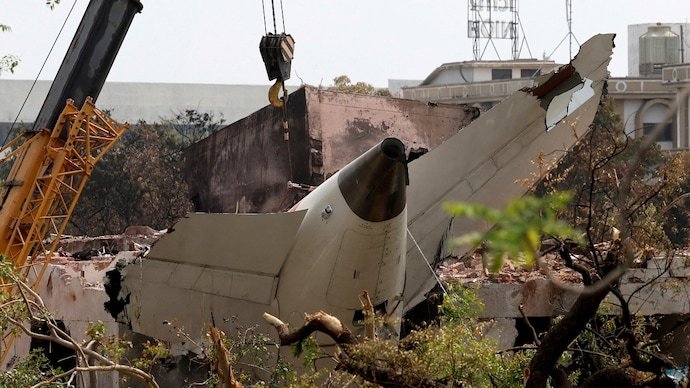
One year after the tragic Air India AI171 crash shocked India and the global aviation community, investigators say they are entering the final phase of a comprehensive inquiry aimed at answering one of the most important questions in modern Indian aviation: what caused a Boeing 787 Dreamliner carrying hundreds of passengers to fall from the sky moments after takeoff?
The disaster, which claimed 260 lives in Ahmedabad on June 12, 2025, remains one of the deadliest aviation accidents in India’s recent History. While investigators have made substantial progress examining flight data, aircraft systems, engine components, maintenance records, and operational procedures, authorities continue to stress that no final conclusions should be drawn until the Investigation is complete.
The Aircraft Accident Investigation Bureau (AAIB) has emphasized that every finding must be supported by scientific evidence, technical validation, and extensive analysis. That approach reflects international aviation standards designed to ensure that accident investigations focus on facts rather than speculation.
What Happened in the AI171 Crash?
Air India Flight AI171, a Boeing 787-8 Dreamliner operating a scheduled international service from Ahmedabad to London, crashed shortly after departure from Ahmedabad airport.
The aircraft struck a medical hostel building moments after takeoff, resulting in the deaths of 241 people onboard and 19 people on the ground. Only one passenger survived the accident, making it one of the rarest survival stories in aviation history.
The tragedy immediately triggered a large-scale investigation involving aviation experts, engineers, flight safety specialists, human factors analysts, aircraft manufacturers, and regulatory authorities.
Because the aircraft involved was a Boeing 787 Dreamliner, one of the world’s most technologically advanced commercial aircraft, the investigation attracted significant international attention.
Why the AI171 Investigation Matters Beyond India
Major aviation accidents rarely affect just one airline or one country.
Every significant crash investigation contributes to global Aviation Safety because findings often result in operational changes, pilot training updates, maintenance improvements, software modifications, or safety recommendations that benefit the entire industry.
The aviation sector operates on a principle known as “learning from failure.” Every accident becomes a source of valuable safety lessons designed to prevent future tragedies.
This is precisely why accident investigations often take many months or even years to complete.
Investigators must carefully separate contributing factors from root causes and distinguish between coincidence and actual evidence.
What Investigators Have Examined So Far
According to the AAIB, investigators have spent the past year conducting a detailed review of multiple evidence streams.
These include:
- Flight Data Recorder (FDR) information.
- Cockpit Voice Recorder (CVR) recordings.
- Aircraft system performance data.
- Engine component examinations.
- Maintenance records.
- Operational procedures.
- Crew-related information.
- Organizational and management factors.
- Technical documentation.
- Environmental and operational conditions.
The scope of the investigation demonstrates how modern aviation accident inquiries extend far beyond simply identifying a mechanical failure.
Today’s investigators analyze interactions between technology, human decision-making, maintenance systems, training procedures, organizational culture, and operational environments.
Understanding the Preliminary Findings
One of the most significant revelations from the preliminary investigation involved the aircraft’s fuel control switches.
The initial report indicated that the engine fuel control switches moved almost simultaneously from the “RUN” position to the “CUTOFF” position shortly after takeoff.
This action interrupted fuel flow to both engines.
However, aviation experts caution that this preliminary finding does not automatically explain why the switches moved or what chain of events led to the situation.
That distinction is critical.
Accident investigations focus not only on identifying what happened but also on understanding why it happened and whether multiple contributing factors played a role.
Why Aviation Investigations Take So Long
Many people wonder why investigators require more than a year to determine the cause of an accident.
The answer lies in the extraordinary complexity of modern aircraft.
A Boeing 787 generates vast amounts of operational data during every flight. Investigators must reconstruct events second by second, examining thousands of parameters and system interactions.
Additionally, accident investigators must:
- Verify all technical evidence.
- Conduct component testing.
- Review maintenance histories.
- Analyze pilot procedures.
- Examine manufacturer documentation.
- Assess environmental conditions.
- Consult international experts.
- Validate conclusions through independent review.
Rushing such a process could lead to incorrect findings and ineffective safety recommendations.
How Aircraft Accident Investigations Work
Modern accident investigations follow internationally recognized procedures established by the International Civil Aviation Organization (ICAO).
| Investigation Stage | Purpose |
|---|---|
| Evidence Collection | Secure wreckage, recordings, and documentation |
| Data Recovery | Extract flight and cockpit recorder information |
| Technical Analysis | Examine aircraft systems and components |
| Human Factors Review | Study crew actions and operational environment |
| Safety Assessment | Identify lessons and risk factors |
| Final Report | Publish findings and recommendations |
The primary objective is not to assign blame but to improve aviation safety.
This philosophy has helped commercial aviation become one of the safest forms of transportation in the world.
The Boeing 787 Dreamliner: A Highly Advanced Aircraft
The aircraft involved in the AI171 accident was a Boeing 787-8 Dreamliner, a long-haul wide-body jet known for its advanced technology and Fuel Efficiency.
The Dreamliner introduced several innovations to commercial aviation, including:
- Extensive use of composite materials.
- Advanced avionics systems.
- Sophisticated flight management computers.
- Enhanced fuel efficiency.
- Modern engine technology.
- Real-time aircraft health monitoring systems.
Because of these advanced systems, investigators often have access to a significant amount of technical data when analyzing incidents involving modern aircraft.
However, the same technological sophistication can also make investigations more complex.
The Human Factors Dimension
One aspect often overlooked in public discussions is the role of human factors analysis.
In aviation, human factors do not simply refer to pilot actions.
They include communication processes, training programs, cockpit design, workload management, maintenance practices, organizational culture, decision-making frameworks, and operational procedures.
Many major aviation accidents throughout history have resulted from a combination of technical and human factors rather than a single isolated failure.
This is why modern investigators examine entire systems instead of focusing solely on individual actions.
Lessons from Major Aviation Investigations
The aviation industry has repeatedly demonstrated that thorough investigations save lives.
Historical accident inquiries have led to:
- Improved cockpit warning systems.
- Enhanced pilot training requirements.
- Stronger maintenance procedures.
- Advanced aircraft software updates.
- Better air traffic control practices.
- New international safety regulations.
Many of the safety features passengers take for granted today exist because investigators carefully analyzed previous accidents and translated findings into practical improvements.
The Economic and Industry Impact of the AI171 Crash
Beyond the human tragedy, the AI171 disaster had broader implications for India’s aviation sector.
India is one of the world’s fastest-growing aviation markets, with millions of passengers flying every month and airlines rapidly expanding their fleets.
The investigation’s conclusions could influence:
- Airline operational procedures.
- Pilot training standards.
- Maintenance oversight.
- Regulatory frameworks.
- Aircraft inspection protocols.
- Future safety investments.
The findings may also contribute to global aviation safety discussions, particularly if investigators identify lessons applicable beyond India.
A Unique Insight: The Real Success of an Investigation Is Measured Years Later
Most media coverage focuses on identifying the cause of an accident.
However, aviation professionals often measure an investigation’s success differently.
The true value of an accident inquiry is determined by whether its recommendations prevent future accidents.
Some of the most influential aviation investigations in history became important not because they explained a tragedy but because they transformed safety standards worldwide.
In that sense, the AI171 investigation may ultimately be judged not by the report itself but by the improvements it inspires across the aviation ecosystem.
What Happens Next?
According to officials familiar with the investigation, the final report could be released within the coming months.
Before publication, investigators will continue conducting specialist examinations and technical evaluations wherever necessary.
The final report is expected to include:
- A detailed reconstruction of events.
- Analysis of contributing factors.
- Technical findings.
- Operational assessments.
- Safety recommendations.
- Lessons for the aviation industry.
Importantly, the report will be based on verified evidence rather than speculation or public assumptions.
Why Transparency Matters in Aviation Safety
Public confidence in aviation depends heavily on transparency.
When accidents occur, passengers, airlines, regulators, and manufacturers all need confidence that investigations will be independent, objective, and evidence-driven.
The AAIB has repeatedly emphasized that the inquiry remains focused solely on facts and scientific analysis.
This approach aligns with international best practices and helps ensure that safety improvements are based on reliable findings.
For families affected by the tragedy, transparency is equally important because it provides accountability and answers after a long period of uncertainty.
Future Outlook: What the Final Report Could Mean for Aviation Safety
As the AI171 investigation enters its final stage, the aviation industry is watching closely.
Whether the final findings point to technical issues, operational factors, procedural gaps, human factors, or a combination of causes, the report is likely to shape future safety practices.
India’s aviation sector is expected to continue expanding rapidly over the next decade, making strong safety systems more important than ever.
The lessons emerging from the AI171 tragedy could influence airline operations, pilot training, maintenance standards, and regulatory oversight for years to come.
Conclusion
One year after the Air India AI171 crash claimed 260 lives, investigators say significant progress has been made toward understanding what happened. The examination of flight recorder data, aircraft systems, engine components, maintenance records, and operational factors has brought the inquiry into its final phase.
Yet the AAIB’s message remains clear: conclusions must be based on evidence, not speculation.
The final report is expected to provide answers to one of India’s most devastating aviation disasters while offering valuable lessons that could strengthen aviation safety both nationally and internationally.
For the families who lost loved ones, the investigation represents a search for truth. For the aviation industry, it represents an opportunity to learn, improve, and ensure that the lessons of AI171 contribute to making air travel even safer in the future.
For breaking news and live news updates, like us on Facebook or follow us on Twitter and Instagram. Read more on Latest India on thefoxdaily.com.






COMMENTS 0