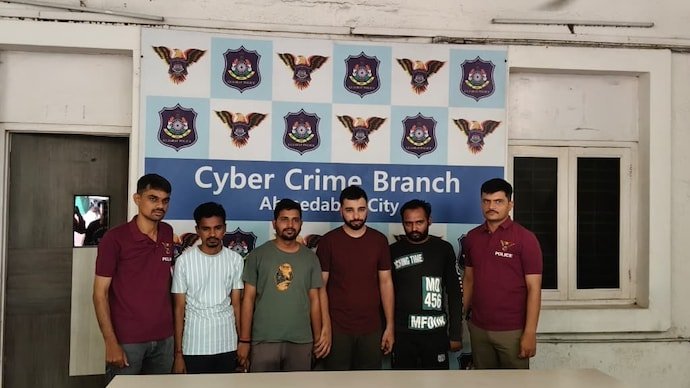
- The Case: When OTPs Suddenly Stopped
- How the Scam Worked: AI Meets Identity Theft
- Why This Case Is a Game-Changer
- The Weak Link: Not Just Technology, But Process
- Comparison: Traditional Fraud vs AI-Driven Fraud
- What This Means for Everyday Users
- How to Protect Yourself: Practical Steps
- The Bigger Picture: India’s Digital Future at a Crossroads
- What Needs to Change?
- Conclusion: A Wake-Up Call, Not a One-Off Incident
It started with something small but unsettling. A businessman in Ahmedabad noticed he hadn’t received a single OTP from his bank for two days. No alerts, no messages, nothing. In India’s digital ecosystem, where OTPs are the backbone of financial Security, that silence was a red flag.
What followed exposed a sophisticated cyber fraud operation that signals a dangerous new phase in digital Crime. A group of accused individuals allegedly used Artificial Intelligence to create deepfake videos of the victim, bypass Aadhaar biometric checks, and even take out a loan in his name all without his knowledge.
This isn’t just another fraud case. It’s a glimpse into how emerging technologies like AI are being weaponised and why traditional security measures may no longer be enough.
The Case: When OTPs Suddenly Stopped
The incident came to light when the victim realised that his usual stream of banking OTPs had abruptly stopped. That might sound like a minor glitch, but in reality, it was the first sign that control of his digital identity had been compromised.
Upon investigation, authorities discovered a chain of alarming events:
- The mobile number linked to his Aadhaar had been changed
- No OTP verification was triggered during this change
- His biometric identity had been manipulated
- A bank account was opened in his name
- A loan of ₹25,000 was taken without his consent
- His DigiLocker account was accessed for documents
In short, the attackers didn’t just breach one layer of security they systematically took control of his entire digital identity.
How the Scam Worked: AI Meets Identity Theft
This case stands out because of the method used. Investigators revealed that the accused leveraged AI Tools to create deepfake videos of the victim. These videos were then used to bypass Aadhaar’s biometric authentication systems.
Here’s how the operation unfolded step by step:
Step 1: Gathering Personal Data
The attackers obtained the victim’s Aadhaar number and other personal details possibly through data leaks or social engineering.
Step 2: Creating a Deepfake Identity
Using AI tools, they generated realistic video footage mimicking the victim’s face and expressions.
Step 3: Exploiting Insider Access
One member of the group, reportedly linked to a Common Service Centre (CSC), misused official access to Aadhaar systems to process changes.
Step 4: Changing the Registered Mobile Number
The gang altered the mobile number linked to Aadhaar effectively hijacking all future OTPs.
Step 5: Financial Exploitation
With full control, they opened a bank account, completed e-KYC verification, and secured a loan.
This wasn’t brute-force hacking. It was precision fraud blending Technology, access, and timing.
Why This Case Is a Game-Changer
India’s digital security framework relies heavily on two pillars:
- Biometric authentication (fingerprint/face recognition)
- OTP-based verification
This case shows that both can be bypassed under certain conditions.
That’s what makes it so significant.
Deepfake technology, once seen as a novelty or entertainment tool, is now capable of mimicking human identity closely enough to fool verification systems. When combined with insider access or procedural loopholes, the risk multiplies.
The Weak Link: Not Just Technology, But Process
It’s tempting to blame AI alone. But the reality is more nuanced.
This fraud succeeded due to a combination of factors:
- AI-generated deepfakes enabled biometric bypass
- Insider misuse allowed system-level changes
- Process gaps failed to trigger OTP alerts
In other words, the system wasn’t hacked it was outmanoeuvred.
Comparison: Traditional Fraud vs AI-Driven Fraud
| Aspect | Traditional Fraud | AI Deepfake Fraud |
|---|---|---|
| Method | Phishing, OTP scams | Identity replication using AI |
| Detection | Often detectable via alerts | Harder to detect in real-time |
| Skill Level | Moderate | High technical sophistication |
| Speed | Slower execution | Rapid, automated processes |
This shift marks a new era where fraud is no longer reactive but engineered with precision.
What This Means for Everyday Users
If a system as robust as Aadhaar can be manipulated, it raises an obvious question: how safe is your digital identity?
The answer isn’t simple but it does highlight the need for greater vigilance.
Most users assume that OTPs and biometrics are foolproof. This case proves they are not invincible.
How to Protect Yourself: Practical Steps
While the threat is evolving, there are still steps you can take to reduce risk:
- Lock your Aadhaar biometrics when not in use via the UIDAI portal
- Regularly check linked mobile numbers and update immediately if suspicious
- Monitor bank activity closely for unusual transactions
- Secure your DigiLocker account with strong authentication settings
- Avoid sharing personal data unnecessarily online
Think of it like locking your house even if you live in a safe neighbourhood.
The Bigger Picture: India’s Digital Future at a Crossroads
India has built one of the world’s most advanced digital identity ecosystems. Aadhaar, e-KYC, and digital banking have made services faster and more accessible.
But as systems become more advanced, so do the threats.
This case highlights a critical transition point:
- From manual fraud → to automated fraud
- From identity theft → to identity simulation
The challenge now is not just improving technology, but staying ahead of how it can be misused.
What Needs to Change?
Experts increasingly argue that future security systems must go beyond static verification methods.
Possible improvements include:
- Multi-layered authentication beyond OTP and biometrics
- AI-based fraud detection systems
- Stricter controls on access to sensitive infrastructure
- Real-time alerts for any identity-related changes
In short, the system must evolve as fast as the threats targeting it.
Conclusion: A Wake-Up Call, Not a One-Off Incident
The Ahmedabad deepfake fraud case is more than an isolated crime it’s a warning signal.
It shows how quickly the nature of cybercrime is changing, and how tools once seen as futuristic are already being used in real-world fraud.
For individuals, it’s a reminder to stay alert. For institutions, it’s a call to upgrade defenses. And for policymakers, it’s a signal that regulations must keep pace with technology.
Because in a world where your identity can be digitally recreated, security is no longer just about what you know or what you have it’s about how well the system can tell the difference between you and a machine pretending to be you.
For breaking news and live news updates, like us on Facebook or follow us on Twitter and Instagram. Read more on Latest India on thefoxdaily.com.






COMMENTS 0