- What Is the AGNI Warfare Simulator?
- Why the IAF Is Investing in Advanced Combat Simulation
- How AGNI Differs From Conventional Flight Simulators
- Rafale, Sukhoi and Mirage Pilots to Train in Shared Combat Scenarios
- Simulating Enemy Aircraft Like China’s J-10 and America’s F-22
- The Rise of Network-Centric Warfare
- Why Inter-Service Synergy Matters More Than Ever
- Virtual Reality and Mixed Reality Are Changing Military Training
- India’s Broader Military Modernisation Push
- How Global Militaries Are Using Similar Systems
- The Hidden Strategic Advantage of Simulation Warfare
- Challenges AGNI May Face
- Conclusion: AGNI Signals a New Era in Indian Military Training
The nature of warfare is changing faster than ever. Modern battles are no longer fought by isolated fighter jets operating independently in the sky. Today’s combat Environment is deeply interconnected, where fighter aircraft, drones, missiles, satellites, electronic warfare systems, and cyber operations work together in real time.
Recognising this transformation, the Indian Air Force (IAF) is moving to procure an advanced integrated warfare simulator called AGNI short for “Air combat, Ground planning and Network Integrated.”
Unlike traditional simulators designed around a single aircraft platform, AGNI aims to create a fully immersive multi-domain combat ecosystem where pilots, commanders, air defence controllers, and personnel from all three Military services can train together in realistic war scenarios.
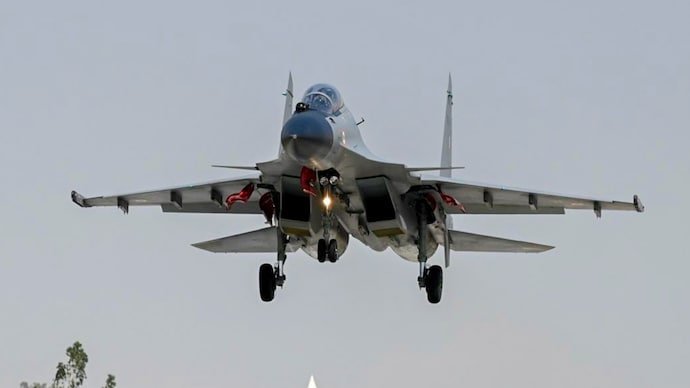
The system will reportedly include high-end simulator cockpits for frontline aircraft such as the Rafale, Sukhoi-30MKI, and Mirage 2000 while integrating drones, missile systems, virtual battlefields, and satellite-based operational environments.
More importantly, AGNI reflects a larger strategic shift inside India’s military thinking: future wars will be won not just by superior weapons, but by superior integration, faster decision-making, and better battlefield awareness.
What Is the AGNI Warfare Simulator?
AGNI is envisioned as a next-generation integrated combat simulation platform designed to replicate modern warfare conditions with unprecedented realism.
The simulator is expected to connect multiple combat assets into a single digital battlespace where participants can train simultaneously across different operational roles.
Unlike older training systems that focus only on flying aircraft, AGNI is designed to simulate:
- Air-to-air combat
- Air defence operations
- Electronic warfare
- Drone coordination
- Missile engagements
- Joint military operations
- Night and low-visibility combat
- Network-centric warfare environments
This means a Rafale pilot, an air defence commander, a naval operations officer, and a drone operator could all participate in the same virtual battle scenario simultaneously.
That level of integration mirrors how real wars are increasingly fought today.
Why the IAF Is Investing in Advanced Combat Simulation
Modern fighter jets are extraordinarily expensive to operate.
Flying a real Rafale or Sukhoi-30MKI for training purposes involves massive fuel consumption, maintenance costs, logistical preparation, and operational risk. Simulators allow militaries to train personnel intensively without incurring those costs repeatedly.
But AGNI goes beyond saving money.
The real objective is preparing pilots and commanders for highly complex combat environments where threats emerge from multiple directions simultaneously.
Future conflicts may involve:
- Swarms of armed drones
- Electronic jamming attacks
- Long-range precision missiles
- Cyber disruptions
- Satellite interference
- AI-assisted targeting systems
- Simultaneous air and naval operations
Traditional pilot training alone cannot fully prepare personnel for such conditions.
That is where AGNI becomes strategically important.
How AGNI Differs From Conventional Flight Simulators
Most conventional simulators are aircraft-specific. A pilot trains inside a cockpit replica focused mainly on flying techniques, navigation, emergency procedures, and weapon deployment.
AGNI is fundamentally different because it is designed as a battlefield simulation network rather than merely a flight trainer.
| Traditional Simulator | AGNI Multi-Domain Simulator |
|---|---|
| Single aircraft focus | Integrated battlefield environment |
| Limited mission scope | Multi-domain combat scenarios |
| Pilot-only training | Joint Army-Navy-Air Force participation |
| Basic weather simulation | Advanced satellite imagery and dynamic environments |
| Isolated operations | Network-centric warfare training |
| Limited adversary simulation | Replication of rival aircraft and tactics |
This transition reflects how militaries globally are modernising training systems to prepare for highly digitised warfare environments.
Rafale, Sukhoi and Mirage Pilots to Train in Shared Combat Scenarios
One of AGNI’s most important features is its ability to integrate multiple fighter platforms inside the same simulation architecture.
The system’s aerial warfare component will reportedly include advanced cockpits modelled after:
- Rafale fighter jets
- Sukhoi-30MKI aircraft
- Mirage 2000 fighters
This matters because real combat missions rarely involve only one type of aircraft.
In modern air campaigns, different fighters perform specialised roles:
- Air superiority missions
- Ground strikes
- Electronic warfare support
- Reconnaissance operations
- Air defence interception
Training these platforms together allows pilots to better understand cooperative tactics, communication protocols, and mission coordination under pressure.
That creates a more realistic preparation environment compared to isolated training exercises.
Simulating Enemy Aircraft Like China’s J-10 and America’s F-22
Another major feature of AGNI is its ability to replicate foreign combat aircraft and adversary tactics.
The simulator is expected to include virtual representations of:
- F-16 Fighting Falcon
- F-22 Raptor
- China’s J-10 fighter
- China’s J-11 fighter
This capability is extremely important in modern combat preparation.
Pilots need exposure to enemy aircraft behaviour, radar signatures, maneuvering styles, missile engagement patterns, and electronic warfare tactics before facing them in real-world scenarios.
By simulating adversarial platforms, AGNI allows Indian pilots to rehearse combat strategies against different threat profiles without ever entering actual combat.
It essentially becomes a digital war laboratory.
The Rise of Network-Centric Warfare
Perhaps the biggest strategic insight behind AGNI is India’s growing focus on network-centric warfare.
In older wars, military units often operated semi-independently. Today, success increasingly depends on how effectively different systems share information in real time.
Network-centric warfare involves:
- Instant data sharing
- Real-time battlefield awareness
- Integrated sensor networks
- Coordinated strikes across domains
- Faster command decisions
For example, a drone may detect an enemy target, transmit coordinates to a fighter aircraft, which then launches a precision missile while ground-based air defence systems monitor the surrounding airspace.
All of that can happen within minutes or even seconds.
AGNI appears designed to train military personnel precisely for these interconnected operational environments.
Why Inter-Service Synergy Matters More Than Ever
Historically, military branches around the world often trained separately.
But modern conflicts increasingly require seamless coordination between air, naval, and land forces.
India has been gradually pushing toward greater jointness among its armed forces, especially after recent security challenges and evolving regional threats.
AGNI directly supports that objective.
The simulator will reportedly allow Army, Navy, and Air Force personnel to train together inside the same operational environment.
This could improve:
- Joint mission planning
- Target coordination
- Communication efficiency
- Crisis response speed
- Operational familiarity across services
Such integration becomes particularly critical during high-intensity conflicts where decisions must be made rapidly and collaboratively.
Virtual Reality and Mixed Reality Are Changing Military Training
AGNI also reflects the growing role of immersive technologies in military preparation.
By combining:
- Virtual reality (VR)
- Mixed reality systems
- Motion-feedback technology
- Satellite imagery
- Electronic warfare environments
the simulator aims to create near-real combat conditions.
Pilots may experience:
- High-G maneuvers
- Night operations
- Low-visibility combat
- Fog and storm conditions
- Electronic jamming scenarios
- Missile engagement stress environments
This level of immersion helps improve muscle memory, reaction speed, and decision-making under pressure.
In military aviation, psychological preparedness can be just as important as technical skill.
India’s Broader Military Modernisation Push
AGNI fits into a larger defence modernisation effort currently underway in India.
Over the past decade, India has significantly increased investments in:
- Advanced fighter aircraft
- Drone technology
- Missile defence systems
- Cyber warfare capabilities
- Artificial intelligence applications
- Integrated theatre commands
The focus is increasingly shifting from platform-centric warfare to information-centric warfare.
That means battlefield dominance depends not only on possessing advanced weapons but also on integrating them intelligently.
Training systems like AGNI are therefore becoming as strategically important as the combat platforms themselves.
How Global Militaries Are Using Similar Systems
India is not alone in moving toward integrated combat simulation.
Major military powers are investing heavily in synthetic training environments.
| Country | Training Focus |
|---|---|
| United States | Joint all-domain simulation and AI-assisted warfare |
| China | Networked combat exercises and electronic warfare |
| Russia | Integrated missile-air defence coordination |
| United Kingdom | Virtual battlespace and coalition interoperability |
| India | Multi-domain integration through AGNI |
The global trend is unmistakable: military readiness increasingly depends on digital battle preparation.
The Hidden Strategic Advantage of Simulation Warfare
One often overlooked advantage of advanced simulators is strategic experimentation.
Military planners can test:
- New tactics
- Operational doctrines
- Weapon integration strategies
- Electronic warfare responses
- Command structures
without risking actual aircraft or personnel.
This creates an enormous advantage because future wars may evolve too quickly for conventional training cycles.
Simulators allow militaries to adapt rapidly.
In many ways, tomorrow’s wars may be shaped first inside virtual environments long before real combat begins.
Challenges AGNI May Face
Despite its potential, implementing a project as ambitious as AGNI will not be easy.
Key challenges may include:
- Integration between different military platforms
- Cybersecurity risks within simulation networks
- Software interoperability
- High Infrastructure costs
- Keeping simulations updated with evolving threats
Military simulation technology also evolves rapidly, meaning AGNI will require continuous upgrades to remain relevant.
Still, the long-term strategic benefits could far outweigh those challenges.
Conclusion: AGNI Signals a New Era in Indian Military Training
The Indian Air Force’s AGNI simulator project represents far more than an upgrade to pilot training infrastructure.
It signals India’s transition toward preparing for the realities of 21st-century warfare where air power, drones, cyber systems, satellites, electronic warfare, and joint operations function together inside a highly connected battlespace.
By integrating Rafale, Sukhoi, Mirage, missile systems, and multi-service coordination into a single training ecosystem, AGNI could dramatically improve India’s operational readiness for future conflicts.
More importantly, it reflects a growing understanding inside modern militaries worldwide:
The next generation of wars will not be won by isolated weapons platforms alone, but by who can process information faster, coordinate better, and adapt quicker in real time.
AGNI appears designed precisely for that future.
For breaking news and live news updates, like us on Facebook or follow us on Twitter and Instagram. Read more on Latest India on thefoxdaily.com.






COMMENTS 0