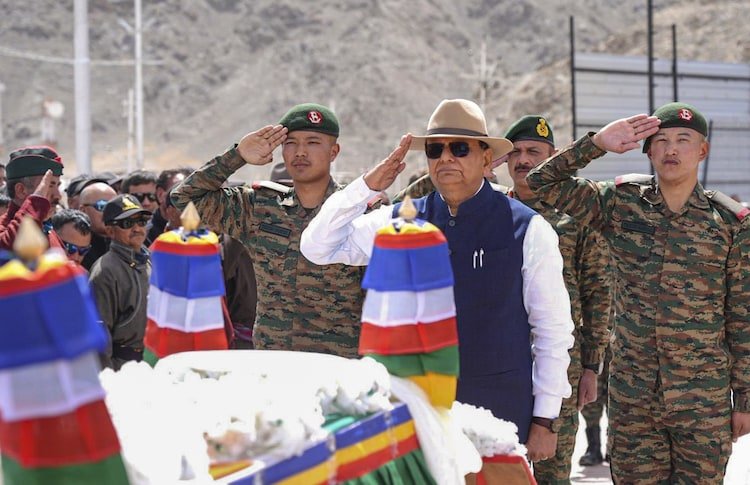
In recent years, the name Sonam Wangchuk has become synonymous with innovation, environmental activism, and Education reform. However, long before debates about Climate Change, sustainable development, and youth movements captured public attention, another Sonam Wangchuk was writing his name into Indian military History amid snow-covered peaks, enemy fire, and some of the world’s most hostile terrain.
Colonel Sonam Wangchuk, often referred to as the “Lion of Ladakh,” was one of the earliest heroes of the 1999 Kargil War. His leadership during a critical operation in the Batalik sector helped India secure strategically important positions and demonstrated the extraordinary capabilities of the Ladakh Scouts, the elite mountain warfare unit known as the “Snow Warriors.”
His story is not just about battlefield bravery. It is a story of leadership, resilience, patriotism, and the unique role that Ladakh’s people have played in defending India’s northern frontiers.
Who Was Colonel Sonam Wangchuk?
Born on May 11, 1964, in Sankar near Leh in Ladakh, Sonam Wangchuk grew up surrounded by the rugged Himalayan landscape that would later define his military career. The harsh climate, thin air, and challenging geography that characterize Ladakh often produce individuals accustomed to endurance and resilience.
Inspired by a family member serving in the armed forces, Wangchuk chose a military career and joined the Officers Training Academy in Chennai. After commissioning into the Indian Army, he became part of the Assam Regiment and later joined the Ladakh Scouts, a regiment specifically trained for mountain warfare and high-altitude operations.
Before Kargil, he had already gained valuable operational experience, including service with the Indian Peace Keeping Force (IPKF) in Sri Lanka. These experiences helped shape him into a battle-tested officer capable of making critical decisions under extreme pressure.
The Strategic Importance of the Kargil War
To understand Colonel Wangchuk’s contribution, it is important to appreciate the significance of the Kargil War itself.
In 1999, Pakistani soldiers and armed infiltrators occupied strategic heights along the Line of Control (LoC) in the Kargil region. By seizing elevated positions overlooking key supply routes, they sought to alter the military balance in the region.
India responded with Operation Vijay, a large-scale military campaign aimed at evicting the intruders and restoring control over the occupied positions.
The Conflict quickly became one of the most challenging mountain warfare operations in modern military history.
| Kargil War Facts | Details |
|---|---|
| Conflict Period | May–July 1999 |
| Indian Military Operation | Operation Vijay |
| Main Objective | Evict Pakistani intruders from Indian territory |
| Key Terrain | High-altitude mountain positions |
| Altitude of Major Battles | Often above 16,000–18,000 feet |
Soldiers fought in freezing temperatures, thin oxygen levels, steep cliffs, and constant enemy observation. Every advance required extraordinary physical and mental strength.
The Battle at Chorbat La
One of the earliest and most important operations during the conflict occurred in the Chorbat La area of the Batalik sector.
At the time, Major Sonam Wangchuk was tasked with securing a crucial ridge line near the Line of Control. The objective was clear: prevent further enemy infiltration and establish dominance over a strategically important sector.
The mission required moving through difficult terrain under cover of darkness while maintaining operational secrecy.
What appeared to be a challenging patrol soon turned into a life-or-death battle.
When the Patrol Was Ambushed
As Major Wangchuk and his troops advanced, they came under sudden and intense enemy fire from a well-positioned Pakistani force occupying higher ground.
Mountain warfare heavily favors defenders because they enjoy superior visibility, firing angles, and protection. An attacking force moving uphill is exposed and vulnerable.
The ambush placed Wangchuk’s unit in a dangerous position.
During the firefight, Havildar Tsewang Rigzin lost his life while displaying exceptional courage. He was later awarded the Vir Chakra posthumously.
At that moment, Major Wangchuk faced a difficult decision.
- Retreat and risk losing strategic ground.
- Launch a frontal assault against fortified positions.
- Develop an alternative approach under enemy fire.
His response would become one of the defining moments of the war.
Leadership Under Fire
Instead of allowing confusion or panic to spread, Major Wangchuk quickly reorganized his troops and formulated a counterattack.
Military leadership is often measured not during routine operations but during moments of crisis. Successful commanders must remain calm when circumstances deteriorate rapidly.
According to military accounts, Wangchuk led a daring flanking maneuver designed to outsmart the enemy position.
Operating in freezing temperatures and oxygen-deprived conditions, he personally led the assault.
The attack succeeded.
Indian troops overran the enemy position, killed enemy personnel, and captured valuable weapons, ammunition, and equipment.
The victory transformed a potentially disastrous situation into a strategic success.
Why Chorbat La Was a Turning Point
The significance of the operation extended beyond a single tactical victory.
Control of Chorbat La helped secure the broader sector and prevented further enemy consolidation along critical mountain routes.
The success also provided an important psychological boost during the early stages of the Kargil conflict.
Military historians often note that early battlefield victories can have an outsized impact on troop morale and operational momentum.
By helping secure the region, Major Wangchuk and his men demonstrated that determined and well-led Indian forces could overcome the challenges posed by high-altitude warfare.
The Ladakh Scouts: India’s Snow Warriors
Colonel Wangchuk’s story is inseparable from the legacy of the Ladakh Scouts.
Known as the “Snow Warriors,” the regiment specializes in operations in some of the world’s highest and harshest environments.
Their unique strengths include:
- Exceptional high-altitude endurance
- Knowledge of mountain terrain
- Cold-weather survival expertise
- Rapid mobility in difficult environments
- Specialized mountain combat training
The Kargil War showcased the critical role these capabilities play in protecting India’s northern borders.
Local knowledge and adaptation to the Environment often proved as important as conventional military strength.
The Maha Vir Chakra: Recognition of Extraordinary Courage
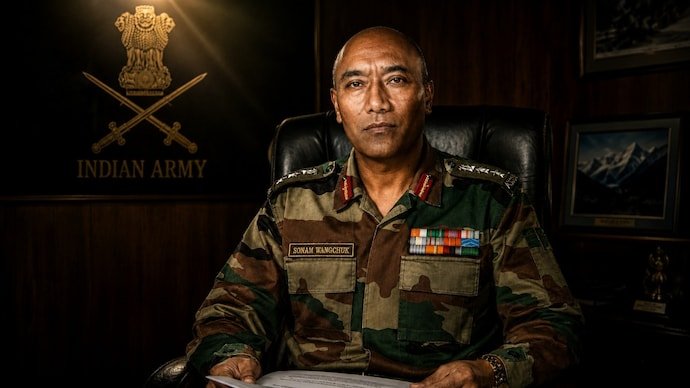
For his exceptional bravery, leadership, and devotion to duty, Major Sonam Wangchuk was awarded the Maha Vir Chakra (MVC).
The Maha Vir Chakra is India’s second-highest wartime gallantry award, ranking only below the Param Vir Chakra.
It is reserved for acts of conspicuous gallantry in the presence of the enemy.
| Military Honour | Significance |
|---|---|
| Maha Vir Chakra (MVC) | India’s second-highest wartime gallantry award |
| Awarded For | Exceptional bravery in combat |
| Conflict | Kargil War, 1999 |
| Recipient | Major (later Colonel) Sonam Wangchuk |
The award formally recognized not only his personal courage but also his ability to inspire and lead soldiers under the most demanding conditions.
A Humble Hero
One of the most remarkable aspects of Colonel Wangchuk’s legacy is the humility with which he carried his achievements.
Unlike many public figures, he rarely sought attention for his accomplishments.
Those who served with him frequently described him as calm, disciplined, and focused on collective success rather than personal recognition.
He consistently credited his soldiers and emphasized teamwork rather than individual heroics.
This leadership philosophy earned him respect both within the military and among civilians.
Life After Kargil
Following the war, Colonel Wangchuk continued serving in the Indian Army for nearly two more decades.
His career reflected the professionalism and dedication expected of senior military officers entrusted with safeguarding national Security.
After retiring in 2018, he remained an inspirational figure in Ladakh and across India.
His experiences during the Kargil War continued to serve as valuable lessons in leadership, courage, and service.
The Legacy of the Lion of Ladakh
Colonel Sonam Wangchuk passed away on April 10, 2026, following a heart attack at the age of 61.
His passing prompted tributes from military veterans, public officials, and citizens across the country.
For many Indians, he represented the best traditions of military service: courage without arrogance, strength without aggression, and patriotism without publicity.
His achievements remain part of the larger story of the Kargil War, a conflict that continues to shape India’s military doctrine and national consciousness.
What Modern India Can Learn From His Story
In an age dominated by Social Media visibility, Political Debate, and constant public attention, Colonel Sonam Wangchuk’s life offers a different lesson.
His legacy reminds us that some of the nation’s most important contributions occur far from headlines and cameras.
Leadership is not merely about visibility; it is about responsibility.
Patriotism is not only expressed through words; it is demonstrated through action.
And true courage often emerges in moments when success appears uncertain and sacrifice becomes unavoidable.
Conclusion
Colonel Sonam Wangchuk, the Lion of Ladakh, occupies a distinguished place in India’s military history. From the icy heights of the Kargil battlefield to his decades of service in the Indian Army, he embodied the values of courage, discipline, and selfless leadership.
His actions during the Battle of Chorbat La helped secure a critical sector during one of India’s most challenging military campaigns and earned him the Maha Vir Chakra, one of the nation’s highest honors for battlefield gallantry.
Today, his story remains a powerful reminder that heroes are often forged not in moments of comfort, but in moments of adversity. Long after the guns of Kargil fell silent, the legacy of Colonel Sonam Wangchuk continues to inspire generations of Indians and stands as a testament to the enduring spirit of those who defend the nation.
For breaking news and live news updates, like us on Facebook or follow us on Twitter and Instagram. Read more on Latest India on thefoxdaily.com.




COMMENTS 0