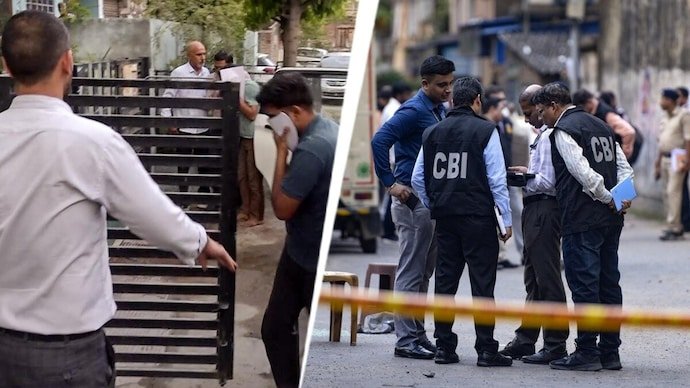
The NEET-UG 2026 Paper Leak was not, according to the CBI‘s chargesheet, a simple case of someone walking out of a printing facility with a finished question paper. Investigators allege that the examination material was compromised much earlier, during the confidential process used to prepare, translate and proofread the paper.
According to details of the chargesheet, three subject experts associated with the National Testing Agency’s examination process allegedly accessed questions before the May 3 examination. The material then moved through a chain involving private revision sessions, handwritten notebooks, photographs, digital files and Telegram messages.
The Investigation has now provided a detailed account of how the alleged leak travelled from the examination preparation process to selected candidates in Maharashtra and other states. The CBI has filed a chargesheet against 13 accused in the case, supported by digital forensic material, handwriting analysis, documents and other evidence. :contentReference[oaicite:0]{index=0}
The findings are significant because they show how a highly sensitive national examination can be compromised without the physical removal of a printed paper from a conventional printing location. They also raise questions about access controls during the stages before a question paper reaches an examination centre.
How the NEET-UG 2026 paper was allegedly accessed
The CBI’s investigation places the alleged beginning of the leak in April 2026, several weeks before the May 3 NEET-UG examination.
The agency has identified three subject experts WHO were involved in different parts of the question-paper preparation process. Pralhad Vithalrao Kulkarni, also known as PV Kulkarni, was associated with Chemistry. Manisha Gurunath Mandhare worked on Botany and Zoology, while Manisha Sanjay Havaldar handled Physics.
The alleged method was different from the stereotypical paper-leak scenario in which a complete printed question paper is physically removed from a secure facility. Instead, investigators say questions were accessed during confidential preparation work and subsequently reproduced through other means.
The Central Bureau of Investigation’s case says the extracted questions were eventually dictated, written down, photographed and converted into digital files before being distributed to intermediaries and candidates.
Secret revision sessions became the first major link
One of the most striking allegations in the chargesheet concerns private “special revision sessions” organised in Pune.
According to the CBI, Kulkarni and Biology expert Mandhare conducted unauthorised sessions at their residences during April. Rather than handing students a printed paper, the alleged method was to dictate the questions, multiple-choice options and correct answers.
The students attending the sessions wrote the material down in notebooks.
This method had an important advantage for those involved in the alleged conspiracy: there was no need to physically transport a complete question paper. Questions could be transmitted orally and reconstructed by people attending the sessions.
The CBI had earlier publicly stated that Kulkarni allegedly conducted special coaching classes in Pune during the last week of April and dictated questions, options and answers. The agency said the handwritten material later matched the actual May 3 examination paper. :contentReference[oaicite:1]{index=1}
Physics questions followed a different route
The investigation describes a separate pathway for the Physics questions.
According to the chargesheet, Havaldar allegedly dictated questions to Pune-based coaching faculty member Tejas Harshadkumar Shah. Shah wrote the material down manually and later photographed the handwritten pages.
The photographs provided a bridge between the physical notes and the wider digital distribution network. Investigators say the material was subsequently shared with Shivraj Motegaonkar, who runs the Renukai Career Centre in Latur, Maharashtra.
The CBI also examined the financial trail connected with the alleged movement of the questions. Investigators traced an online transfer by Shah to a mobile number registered in the name of Havaldar’s husband.
Such financial evidence is important to the investigation because it can potentially connect communication between individuals with the alleged exchange of money. However, allegations contained in a chargesheet remain subject to judicial proceedings and the accused are entitled to defend themselves in court.
Students were allegedly taken to a hospital to memorise questions
The alleged leak did not stop with handwritten notes.
The CBI says Kulkarni and Mandhare worked with Pune-based intermediary Manoj Bhagwanrao Shirure, a paediatrician, to organise sessions for selected candidates. Some candidates were allegedly taken to Siddhivinayak Hospital in Latur.
According to the investigation, the purpose was to give candidates access to the leaked question material and have them memorise it before the examination.
The alleged use of a hospital complex adds another unusual layer to the case. The CBI has claimed that the premises were used to facilitate access to examination material in April. The agency also recovered Rs 5 lakh in cash from a family member of Shirure during the investigation, according to the chargesheet details reported by news organisations. :contentReference[oaicite:2]{index=2}
The significance of this stage is that the alleged leak had already moved beyond the people who originally accessed the questions. It had become a mechanism for selectively preparing candidates before the national examination.
From Maharashtra to Rajasthan: the Telegram trail
The alleged circulation then expanded beyond Maharashtra.
According to the chargesheet, Nashik-based Shubham Khairnar established contact with Yash Yadav in Gurugram. The leaked question sets were converted into PDF files and transmitted through Telegram.
Yadav allegedly forwarded the PDFs to Mangilal Biwal in Jaipur in return for an amount reported in the chargesheet as between Rs 10 lakh and Rs 12 lakh.
Biwal then allegedly printed physical copies and distributed the material among people connected with NEET preparation, including family members appearing for the examination, candidates associated with coaching centres and private tutors.
This created a chain with several distinct stages:
- Questions were allegedly accessed during the confidential preparation process.
- Some questions were dictated during private sessions.
- Candidates and intermediaries wrote the material in notebooks.
- Handwritten pages were photographed in at least one part of the alleged network.
- The material was converted into PDFs.
- Telegram was used to move the digital material between states.
- Physical copies were subsequently produced for further distribution.
The case therefore illustrates how information can rapidly change form as it moves through a criminal network: from confidential examination content to oral instructions, handwritten notes, photographs, digital files and printed documents.
Forensic evidence became a key part of the CBI case
One of the most important elements of the investigation is the forensic examination of the handwritten material.
The CBI has relied on analysis by the Central Forensic Science Laboratory and handwriting examination by the Government Examiner of Questioned Documents. Investigators say the questions recorded in notebooks seized during searches matched questions contained in the actual NEET-UG question paper used on May 3.
That evidence is important because it connects material allegedly created before the examination with the paper ultimately used by candidates.
The chargesheet also includes digital evidence and financial transactions. Taken together, the CBI says these strands help establish the movement of the questions from their alleged source to intermediaries and candidates.
The agency’s chargesheet reportedly contains evidence from hundreds of witnesses and hundreds of documents and material objects, demonstrating the scale of the investigation. :contentReference[oaicite:3]{index=3}
Why the May 3 exam had to be cancelled
NEET-UG is one of India‘s largest and most consequential entrance examinations. The 2026 examination was conducted on May 3, but the National Testing Agency later cancelled it after receiving complaints and inputs concerning unauthorised circulation of examination material.
The CBI registered its case on May 12 following a written complaint from the Department of Higher Education. The central agency said the investigation was intended to determine the nature and extent of the alleged irregularities and identify those involved. :contentReference[oaicite:4]{index=4}
More than 22.7 lakh candidates had appeared for the May 3 examination, according to reports on the CBI chargesheet. The cancellation therefore affected a huge number of students, including candidates who had no connection to the alleged leak. :contentReference[oaicite:5]{index=5}
A re-examination was subsequently held on June 21, while the results were declared in July. The decision meant that students had to repeat preparation for a high-stakes examination after already completing the original test. :contentReference[oaicite:6]{index=6}
The wider problem exposed by the investigation
The most important lesson from the CBI’s account is that examination security does not begin when question papers are printed.
A question paper can be compromised at several points before it reaches an examination centre. Translators, subject experts, proofreaders, technical personnel and other authorised individuals may need access to examination material as part of the preparation process.
That creates a difficult security problem. The system must allow enough people to perform specialised tasks while ensuring that no individual can exploit access to confidential questions.
The alleged NEET-UG 2026 leak highlights the importance of controls during this early stage. Secure printing alone cannot prevent a leak if questions are already compromised before printing.
What the case means for NEET aspirants
For students, the consequences extend far beyond the cancellation of one examination.
NEET candidates typically spend months preparing for the test, often combining school education with intensive coaching. A paper leak can undermine the basic principle on which the examination is built: that every candidate receives the same questions under the same conditions without anyone obtaining advance access.
When an examination is cancelled, honest candidates are forced to repeat the process. They may have to rearrange school schedules, coaching plans, Travel arrangements and other commitments. The uncertainty can also affect admission timelines.
That is why paper security is not merely an administrative issue. It directly affects the credibility of the selection process for medical education.
What the CBI chargesheet establishes and what remains to be decided
The chargesheet represents the investigating agency’s allegations and the evidence it says supports those allegations. It is not the same as a final judicial finding of guilt.
The accused persons will have the opportunity to challenge the evidence and present their defence during the legal proceedings. Ultimately, the court will determine criminal liability based on the evidence presented in the case.
What is already clear from the investigation is that authorities have identified an alleged multi-stage network rather than a single isolated act. The CBI has accused 13 people in its first chargesheet and has supported its case with forensic, documentary, financial and digital evidence. :contentReference[oaicite:7]{index=7}
The key question now: can exam security be redesigned?
The NEET-UG paper leak has exposed a vulnerability that cannot be solved simply by increasing security at examination centres. The alleged compromise occurred before candidates entered the exam hall.
Future examination systems will therefore need to pay close attention to the entire question-paper lifecycle, from question creation and translation to storage, transmission, printing and final distribution.
Access should be tightly controlled, digital activity should be auditable and confidential material should be segmented wherever possible so that a single person does not have unnecessary access to large portions of an examination.
The investigation also demonstrates why forensic trails matter. Handwriting analysis, digital records and financial transactions can help investigators reconstruct how confidential material moved between people and locations.
The final legal outcome of the NEET-UG 2026 case remains pending. But the CBI’s account has already changed the understanding of how the alleged leak happened. Rather than a single dramatic breach immediately before the examination, investigators describe a chain that began during confidential preparation, moved through secret sessions and handwritten notes, crossed state borders through digital communication and ultimately reached selected candidates.
For millions of students, the central issue is straightforward: a national entrance examination can only command trust when every candidate has a genuinely equal opportunity to compete. The NEET-UG case now puts the security of that principle under intense scrutiny.
For breaking news and live news updates, like us on Facebook or follow us on Twitter and Instagram. Read more on Latest India on thefoxdaily.com.






COMMENTS 0