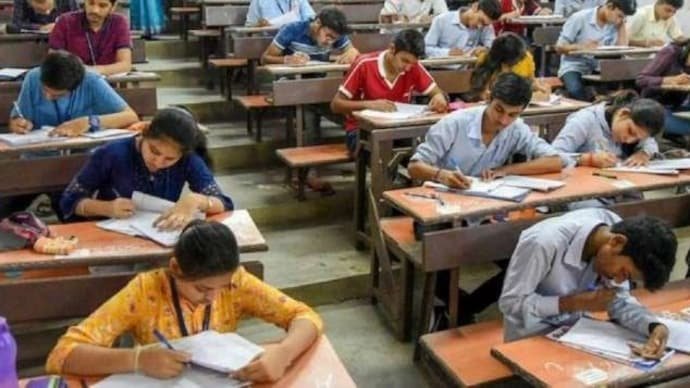
India‘s examination system is once again under the microscope. In a development that could have long-term implications for how competitive examinations are conducted and regulated, a parliamentary panel has asked the National Testing Agency (NTA) a deceptively simple question: What exactly constitutes a Paper Leak?
The question comes amid continuing concerns about examination integrity following the NEET-UG Controversy and broader debates about transparency, accountability, and Governance in India’s rapidly expanding testing ecosystem.
While discussions about paper leaks often dominate headlines, there has been surprisingly little clarity regarding the official definition of a leak, how authorities classify Security breaches, and what standards are used to determine whether an examination’s integrity has been compromised.
The Parliamentary Committee on Education, Women, Children, Youth and Sports is now attempting to address these gaps by demanding detailed explanations from both the NTA and the Central Board of Secondary Education (CBSE).
Why the Definition of a Paper Leak Matters
At first glance, defining a paper leak may appear straightforward. However, in modern examination systems that involve digital platforms, encrypted question banks, multiple examination centres and complex logistics, the issue is far more complicated.
A key challenge lies in distinguishing between:
- Actual unauthorised access to examination papers before the test.
- Questions circulated through coaching networks based on predictions.
- Insider leaks involving examination personnel.
- Technical breaches affecting digital examination systems.
- Question paper reconstruction through memory-based sharing after exams.
The parliamentary panel’s request suggests lawmakers want a clear benchmark that can be applied consistently across future controversies.
Without a universally accepted definition, disputes often emerge over whether a breach qualifies as a leak or merely an irregularity.
The Growing Importance of the NTA in India’s Education System
The National Testing Agency was established in 2018 with the objective of creating a specialised, professional and transparent examination body capable of conducting large-scale entrance examinations across the country.
Since then, the agency has become responsible for some of India’s most important examinations, including:
- NEET (National Eligibility cum Entrance Test)
- JEE Main
- CUET (Common University Entrance Test)
- UGC-NET
- Several other national-level entrance examinations
Millions of students now depend on these examinations every year to secure admission into higher education institutions.
As a result, public confidence in the NTA has become directly linked to confidence in India’s merit-based educational system.
Any perception of unfairness or inadequate security can have consequences that extend far beyond a single examination cycle.
The NEET-UG Controversy: A Turning Point
The parliamentary panel’s latest questions cannot be viewed separately from the NEET-UG controversy that sparked nationwide concern.
NEET is one of the world’s largest medical entrance examinations, attracting millions of aspirants annually. Because admission to medical colleges is highly competitive, even minor irregularities can trigger widespread anxiety among students and parents.
The controversy raised important questions about:
- Examination security protocols.
- Question paper handling procedures.
- Response mechanisms after allegations emerge.
- Coordination between investigative agencies and examination authorities.
- Student grievance redressal systems.
One of the parliamentary committee’s central concerns is whether the NTA conducted its own internal Investigation alongside external probes by law enforcement agencies.
This distinction matters because robust institutions are expected not only to cooperate with investigations but also to possess independent mechanisms for identifying vulnerabilities and implementing corrective measures.
The Key Questions Parliament Wants Answered
The committee’s questionnaire extends well beyond the issue of paper leaks.
Lawmakers are seeking a comprehensive understanding of how the NTA functions, how decisions are made, and what reforms have been implemented following recent controversies.
| Area of Inquiry | Information Sought |
|---|---|
| Paper Leak Definition | Official definition and classification criteria |
| Historical Incidents | Details of any breaches since 2018 |
| NEET Investigation | Internal inquiry measures undertaken by NTA |
| Staffing Structure | Recruitment and workforce details |
| Governance | Annual reports and operational transparency |
| Reforms | Status of expert committee recommendations |
This broad approach indicates that Parliament is examining not just individual incidents but also the institutional framework governing national examinations.
The K. Radhakrishnan Committee and Examination Reforms
A significant aspect of the ongoing review involves the recommendations of the high-level expert committee headed by former ISRO chairman K. Radhakrishnan.
The committee was tasked with identifying weaknesses in India’s examination system and proposing solutions to strengthen credibility, transparency and security.
Its recommendations reportedly focused on three broad areas:
- Organisational restructuring.
- Examination process reforms.
- Advanced technology and Cybersecurity measures.
The parliamentary panel has now requested a detailed implementation status report on all recommendations.
This is particularly important because reforms often receive attention when announced but less scrutiny during implementation.
The effectiveness of any reform ultimately depends on execution rather than intent.
Why Examination Integrity Is a National Issue
Examination controversies are often viewed primarily as education-related issues. In reality, they have much broader social and economic implications.
Competitive examinations determine access to:
- Medical education.
- Engineering institutions.
- Government jobs.
- Professional careers.
- Scholarships and higher education opportunities.
When trust in examinations declines, confidence in merit-based advancement also weakens.
This can create long-term challenges for social mobility and institutional credibility.
For millions of students who spend years preparing for competitive examinations, fairness is not merely an administrative requirement it is the foundation of the entire system.
CBSE’s On-Screen Marking System Also Faces Questions
Alongside its examination of the NTA, the parliamentary committee is scrutinising CBSE’s On-Screen Marking (OSM) system.
The review focuses on procurement decisions, technical specifications and tender modifications related to the digital evaluation platform.
The OSM system represents part of a broader trend toward digitisation in educational assessment.
Digital evaluation offers several advantages:
- Faster result processing.
- Reduced logistical costs.
- Standardised evaluation workflows.
- Improved tracking and monitoring.
- Enhanced scalability.
However, digitisation also introduces new challenges involving software integrity, vendor selection, cybersecurity and data protection.
The parliamentary panel appears interested in understanding whether modifications made during the tendering process affected transparency or competition.
The Procurement Governance Question
One of the most significant aspects of the CBSE review involves procurement governance.
Public institutions increasingly rely on private technology vendors to manage critical educational infrastructure.
This creates several important questions:
- How are vendors selected?
- What due diligence procedures are followed?
- How are conflicts of interest identified?
- What safeguards ensure technical reliability?
- How is accountability maintained?
Experts often argue that examination security is only as strong as the weakest link in the system.
That weakest link may not necessarily involve question papers themselves but could include software platforms, procurement processes or operational oversight mechanisms.
A Global Perspective on Examination Security
India is not alone in facing examination integrity challenges.
Countries around the world have experienced controversies involving leaked papers, compromised testing systems and digital security breaches.
International best practices increasingly emphasize:
- End-to-end encryption.
- Multi-layer authentication.
- Independent security audits.
- Real-time monitoring systems.
- Transparent post-incident investigations.
Many advanced testing agencies also conduct regular stress testing and simulated breach exercises to identify vulnerabilities before actual incidents occur.
As India’s examination system grows larger and more technologically complex, adopting such practices may become increasingly important.
The Missing Debate: Public Trust
One aspect often overlooked in discussions about paper leaks and examination controversies is public trust.
Even when investigations conclude that systems functioned correctly, delayed communication or inadequate transparency can create lasting doubts among students and parents.
In today’s digital Environment, rumours and misinformation spread rapidly.
This means examination authorities must not only maintain secure systems but also communicate clearly, quickly and credibly whenever concerns arise.
Public trust is built through transparency, accountability and consistent responses to emerging issues.
What Happens Next?
The responses submitted by the NTA and CBSE will likely shape the next phase of parliamentary scrutiny.
Lawmakers are expected to assess whether existing safeguards are sufficient and whether further legislative, regulatory or administrative reforms are necessary.
Potential outcomes could include:
- Stronger examination security standards.
- Enhanced institutional oversight.
- Improved procurement guidelines.
- Greater transparency requirements.
- Expanded accountability mechanisms.
The findings could also influence how future examination controversies are investigated and resolved.
Conclusion: Defining Accountability in India’s Examination Ecosystem
The parliamentary panel’s demand for a clear definition of a paper leak represents more than a technical inquiry. It reflects a broader effort to establish accountability, transparency and consistency within India’s examination ecosystem.
By questioning the NTA’s handling of alleged irregularities, seeking updates on reform implementation and examining CBSE’s digital evaluation infrastructure, lawmakers are addressing concerns that affect millions of students across the country.
The larger issue is not merely whether a leak occurred in a particular examination but whether institutions possess the systems, safeguards and governance structures needed to prevent future controversies.
As India continues expanding access to higher education and competitive examinations, maintaining trust in the integrity of these processes will remain essential. The answers provided by the NTA and CBSE in the coming days could become an important milestone in shaping the future of examination reform, institutional accountability and public confidence in India’s education system.
For breaking news and live news updates, like us on Facebook or follow us on Twitter and Instagram. Read more on Latest Education on thefoxdaily.com.






COMMENTS 0