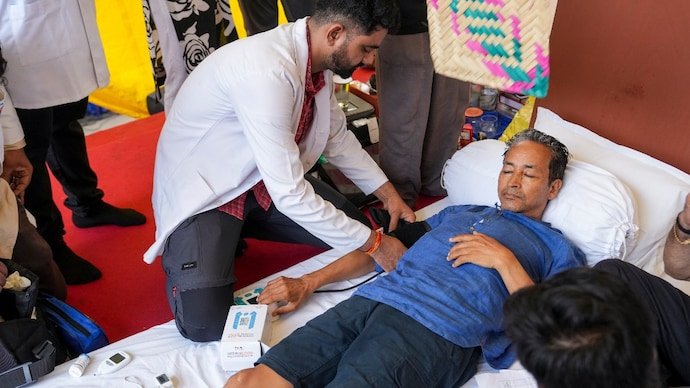
Education reformer and climate activist Sonam Wangchuk has become the focus of an intense legal, medical and public debate after a Public Interest Litigation (PIL) sought the intervention of the Delhi High Court to provide immediate medical treatment and, if necessary, authorize force-feeding to prevent a potentially life-threatening situation.
According to the petition, Wangchuk’s prolonged hunger strike has led to significant Weight Loss and declining Health indicators, prompting concerns that continued fasting could place his life at serious risk. The case has also reignited broader discussions about the legal limits of hunger strikes, the ethical questions surrounding force-feeding, and the government’s responsibilities when peaceful protesters refuse food.
The development comes amid ongoing protests demanding accountability over the alleged NEET-UG paper leak and broader reforms in India‘s examination system.
Key Highlights
| Issue | Details |
|---|---|
| Protester | Education reformer and activist Sonam Wangchuk. |
| Current Situation | Indefinite hunger strike over education-related demands. |
| Legal Development | PIL filed before the Delhi High Court seeking urgent medical intervention. |
| Main Request | Hospitalization and medical care, including force-feeding if required. |
| Core Issue | Balancing an individual’s right to protest with the state’s duty to protect life. |
Why the PIL Was Filed
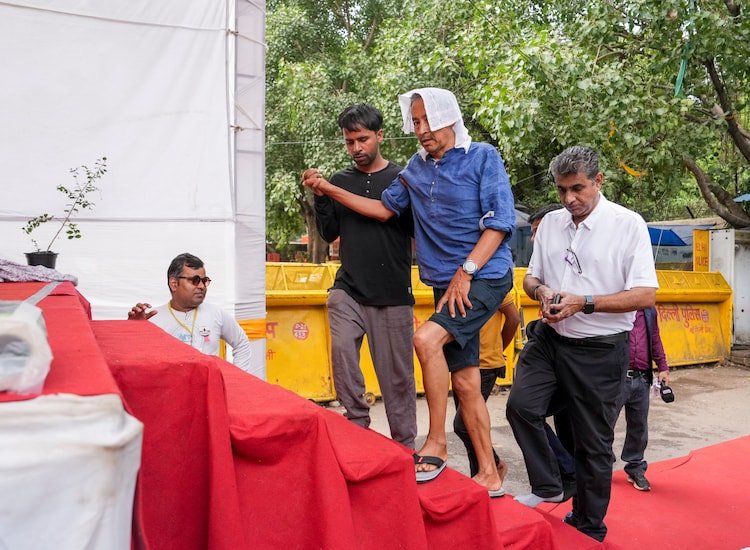
The Public Interest Litigation argues that Sonam Wangchuk’s health has deteriorated to a point where immediate medical attention is necessary. According to the petitioner, prolonged fasting without nutritional intake could result in irreversible health complications if urgent action is not taken.
The petition reportedly requests the Delhi High Court to direct the Central Government and the Delhi Government to shift Wangchuk to a medical facility where doctors can monitor his condition and administer life-saving treatment if required.
The petitioner has also argued that protecting life is a constitutional obligation and that authorities should intervene before the situation becomes irreversible.
Health Concerns During the Hunger Strike
Medical updates shared by those associated with the protest indicate that Wangchuk has experienced significant physical weakness after continuing his indefinite fast.
According to information made public during the protest:
- He has reportedly lost approximately 8.5 kilograms.
- His blood pressure has declined.
- He is experiencing dizziness and physical weakness.
- Walking even short distances has become increasingly difficult.
- Medical professionals have been monitoring his condition at the protest site.
Health experts generally note that prolonged fasting without adequate nutrition can affect multiple organs and requires close medical supervision, particularly after several weeks.
What Is Sonam Wangchuk Demanding?
The current hunger strike forms part of a larger protest centered on alleged irregularities in the NEET-UG examination and demands for greater accountability within India’s education system.
The protest organizers have raised several demands, including:
- Greater transparency in national entrance examinations.
- Comprehensive education reforms.
- Compensation for families reportedly affected by examination-related tragedies.
- Political accountability over the alleged examination paper leak controversy.
The movement has also announced further demonstrations aimed at drawing attention to its demands.
The NEET-UG Controversy Explained
The NEET-UG examination serves as India’s primary entrance test for undergraduate medical admissions and is taken annually by millions of students.
Allegations of paper leaks and examination irregularities have generated widespread public debate over recent years, leading to calls for stronger examination security, greater transparency, and institutional reforms.
The controversy has affected public confidence in competitive examinations and has become an important policy issue involving students, parents, educational institutions, and government agencies.
Who Is Sonam Wangchuk?
Sonam Wangchuk is widely recognized as an engineer, education innovator, and environmental activist known for promoting sustainable development and educational reforms.
He has received international recognition for initiatives involving:
- Alternative education models.
- Innovation in cold desert technologies.
- Climate adaptation.
- Sustainable infrastructure.
- Community-based development in Ladakh.
His educational work also inspired the fictional character Phunsukh Wangdu in the Bollywood film 3 Idiots, bringing wider public attention to his contributions.
Can the State Force-Feed a Hunger Striker?
The PIL has also raised a legally sensitive issue—whether authorities can intervene medically when an individual voluntarily undertakes an indefinite hunger strike.
Indian courts have, over the years, examined cases involving prolonged fasting and custodial hunger strikes by balancing two important constitutional considerations:
- An individual’s autonomy and right to peaceful protest.
- The state’s responsibility to preserve life and maintain public order.
There is no automatic rule requiring force-feeding in every hunger strike. Decisions generally depend on the specific facts of each case, medical evidence, and judicial directions.
The Ethical Debate Around Force-Feeding
Medical ethics organizations around the world have long debated whether force-feeding competent adults WHO voluntarily refuse food is appropriate.
Supporters argue that:
- Saving life should be the highest priority.
- Medical intervention prevents irreversible harm.
- The state has a duty to protect citizens.
Critics contend that:
- Force-feeding may violate personal autonomy.
- Peaceful protest is a democratic right.
- Medical decisions should respect informed consent whenever possible.
The issue therefore sits at the intersection of constitutional law, medical ethics, and Human Rights.
Public and Political Reactions
The hunger strike has drawn attention from academics, education activists, opposition leaders, and members of the Film Industry.
Images showing Wangchuk receiving medical assistance at the protest site have circulated widely on social media, generating renewed debate about education reforms and the government’s response.
Supporters argue that the protest reflects growing frustration over examination integrity, while others emphasize the need to safeguard the protester’s health regardless of political differences.
Timeline of Key Events
| Date/Period | Development |
|---|---|
| June 28 | Sonam Wangchuk begins an indefinite hunger strike. |
| Following Days | Medical monitoring continues as health concerns emerge. |
| Mid-July | PIL filed before the Delhi High Court seeking urgent medical intervention. |
| Upcoming | Protest organizers plan additional demonstrations, including a march toward Parliament. |
Why the Case Matters Beyond One Protest
This case extends beyond the health of one individual. It raises broader questions about democratic protest, institutional accountability, examination reforms, and the responsibilities of governments during prolonged public demonstrations.
It may also contribute to future legal discussions on how authorities should respond when peaceful protests evolve into medical emergencies.
What Happens Next?
The Delhi High Court is expected to consider the PIL and determine whether immediate judicial intervention is warranted. Depending on the medical evidence presented, the court could seek reports from health authorities, request independent medical assessments, or issue directions regarding Wangchuk’s treatment.
Meanwhile, protest organizers have indicated that demonstrations will continue unless their demands receive an official response. The coming days are therefore likely to be significant both legally and politically.
Conclusion
The PIL concerning Sonam Wangchuk’s hunger strike has brought together complex questions involving Constitutional Rights, medical ethics, Education Reform, and public accountability. While the immediate concern remains his deteriorating health, the legal proceedings may also establish important precedents regarding how democratic institutions respond when peaceful protests evolve into life-threatening situations.
As the Delhi High Court considers the petition, the focus will remain on balancing an individual’s right to peaceful dissent with the state’s constitutional responsibility to protect life. Regardless of the legal outcome, the case has already intensified national conversations about examination reforms, public protest, and institutional accountability in India’s education system.
For breaking news and live news updates, like us on Facebook or follow us on Twitter and Instagram. Read more on Latest India on thefoxdaily.com.






COMMENTS 0