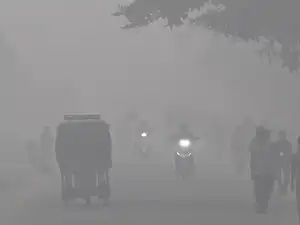
Delhi’s air quality remained in the ‘very poor’ category on Saturday, November 14, with the overall Air Quality Index (AQI) recorded at 367. The reading marked a modest improvement from 373 on Friday, but pollution levels continued to pose health concerns for residents across the national capital.
Weather forecasts indicating possible rain in the coming days have raised hopes of some relief. Rainfall can help remove a portion of airborne pollutants, although any improvement is expected to be marginal and may depend on wind speed, atmospheric conditions and the intensity of precipitation.
Vehicular emissions and agricultural stubble burning remain important contributors to Delhi’s pollution. Data from the Decision Support System (DSS) showed that transport accounted for 20.5% of the city’s pollution load, while stubble burning contributed 13.3%.
The latest readings underline the persistent challenge of controlling Air Pollution in Delhi during the post-monsoon and winter period, when emissions can accumulate under unfavourable weather conditions.
Delhi AQI Improves Slightly but Remains in Very Poor Category
The AQI of 367 on Saturday represented a small decline from Friday’s reading of 373. However, the improvement was not significant enough to change the overall air quality classification.
Under India’s air quality classification system, an AQI between 301 and 400 falls in the very poor category. Prolonged exposure at these levels can cause respiratory discomfort and increase health risks, particularly for people with existing lung or heart conditions, children and older adults.
The monitoring data also showed considerable variation across locations. While some areas recorded severe pollution, others remained in the very poor, poor or moderate categories.
The distribution of monitoring stations reported in the latest assessment was:
- Severe: 17 monitoring stations.
- Very poor: 38 monitoring stations.
- Poor: 3 monitoring stations.
- Moderate: 1 monitoring station.
These readings indicate that pollution was widespread across the capital, with several locations experiencing conditions worse than the citywide average.
Rain Forecast Raises Hopes of Limited Pollution Relief
Forecast rainfall over the coming days could provide some relief from the persistent pollution. Rain can wash suspended particles out of the atmosphere, temporarily reducing the concentration of certain pollutants near the ground.
However, rainfall does not address the sources of pollution themselves. If vehicle emissions, industrial activity, construction dust and crop residue burning continue, pollution levels can rise again after the weather system moves away.
Wind conditions will also play an important role in determining how quickly air quality changes. Stronger winds can disperse pollutants, while stagnant air allows emissions to accumulate over the city.
The expected improvement should therefore be viewed as a possible short-term break rather than a lasting solution. Delhi’s air quality will continue to depend on both weather patterns and efforts to reduce emissions from local and regional sources.
Vehicular Emissions Remain Delhi’s Largest Pollution Contributor
According to the Decision Support System, vehicular transport was the largest identified contributor to Delhi’s pollution on Saturday, accounting for 20.5% of the estimated pollution load.
Vehicles release pollutants through fuel combustion, exhaust emissions and other transport-related activities. Heavy traffic, frequent congestion and the large number of vehicles operating across the metropolitan region add to the pollution burden.
The transport sector’s contribution highlights the importance of reducing emissions from road traffic. Measures such as improving public transport, encouraging cleaner vehicles, managing congestion and enforcing pollution-control rules can help address this source over the longer term.
Transport emissions are particularly important because they are generated within the urban region. Unlike some seasonal pollution sources, vehicle use continues throughout the year, making it a persistent challenge for air-quality management.
Stubble Burning Adds to Delhi-NCR Pollution
Stubble burning contributed an estimated 13.3% of Delhi’s pollution load on Saturday, according to DSS data. The practice involves setting fire to crop residue left in fields after harvesting, releasing smoke and fine particulate matter into the atmosphere.
Although these fires occur largely outside Delhi, their emissions can travel across state boundaries and affect air quality in the national capital, depending on wind direction and atmospheric conditions.
Satellite observations detected crop-residue-burning incidents across several states. The reported figures included 246 incidents in Madhya Pradesh, 214 in Punjab, 33 each in Uttar Pradesh and Rajasthan, and 11 in Haryana.
These figures point to continued agricultural-fire activity across the region. However, the impact on Delhi’s air quality depends not only on the number of fires but also on their location, timing, size and the movement of air masses.
Stubble burning is a seasonal contributor rather than the sole explanation for Delhi’s pollution. Its relative contribution can change from day to day as local emissions, weather conditions and regional pollution sources vary.
PM10 Identified as the Primary Pollutant on Saturday
PM10 was identified as the primary pollutant affecting Delhi on Saturday. PM10 refers to inhalable particulate matter with a diameter of 10 micrometres or less. These particles can enter the respiratory system and cause health problems, particularly when exposure is prolonged.
Particulate pollution can originate from several sources, including road dust, construction activity, vehicle emissions, industrial operations and the burning of agricultural residue.
Fine particles can remain suspended in the air, especially when weather conditions limit their dispersion. Their concentration and composition can vary across neighbourhoods depending on nearby emission sources and local meteorological conditions.
Monitoring the dominant pollutant helps authorities understand the nature of the pollution episode and identify the sources that may require greater attention.
Why Delhi’s Air Quality Remains a Seasonal Challenge
Delhi regularly experiences a deterioration in air quality during the post-monsoon and winter months. Several factors combine during this period, making it difficult for pollutants to disperse.
Lower temperatures, changing wind patterns and periods of stagnant air can contribute to the accumulation of particulate matter near the surface. Regional emissions from agricultural fires can add to pollution already generated by vehicles, industries, construction and other urban activities.
The problem is not limited to Delhi’s administrative boundaries. The wider National Capital Region includes several interconnected urban and industrial areas, meaning pollution can move between neighbouring districts and states.
Addressing the problem therefore requires coordination between Delhi and surrounding states. Measures focused only on one city may have limited results if significant pollution sources continue operating elsewhere in the region.
Health Risks as AQI Stays Above 300
An AQI of 367 falls within the very poor category, a range associated with a risk of respiratory discomfort on prolonged exposure. People with asthma, chronic obstructive pulmonary disease and other respiratory conditions may be particularly vulnerable.
Children and older adults can also face greater health risks during periods of elevated pollution. Even otherwise healthy people may experience symptoms such as coughing, throat irritation, breathing discomfort or eye irritation.
Residents can take practical precautions while pollution levels remain high:
- Limit outdoor activity: Avoid prolonged or strenuous exercise outdoors, particularly near busy roads and areas with visible smoke.
- Use suitable masks: A well-fitting N95 or equivalent respirator can help reduce exposure to fine airborne particles when outdoors.
- Keep indoor air cleaner: Close windows during periods of heavy pollution and use an air purifier with an appropriate particle filter if available.
- Protect vulnerable people: Children, older adults and people with existing heart or lung conditions should take additional care.
- Follow official updates: Check air-quality advisories and local health guidance before planning outdoor activities.
People experiencing significant breathing difficulty, chest discomfort or worsening respiratory symptoms should seek medical attention rather than relying only on home precautions.
What to Expect in the Coming Days
Delhi’s air quality is expected to remain a concern in the immediate future, even if rainfall brings a temporary improvement. The forecast precipitation may help reduce airborne particles, but the extent of relief will depend on how much rain falls and whether favourable winds follow.
Transport emissions and seasonal agricultural fires will remain important factors to watch. Changes in wind direction could also affect how much pollution from neighbouring states reaches the capital.
The latest AQI reading of 367 shows that Delhi has not yet moved out of the very poor category. While the decline from Friday’s 373 offers a slight improvement, residents are likely to remain exposed to unhealthy air until pollution levels fall more substantially.
Rain may provide a brief respite, but sustained improvement will require consistent action against vehicle emissions, stubble burning, road dust and other sources across the wider region. For now, monitoring air quality and following health precautions remain essential for people living in Delhi-NCR.
For breaking news and live news updates, like us on Facebook or follow us on Twitter and Instagram. Read more on Latest India on thefoxdaily.com.






COMMENTS 0