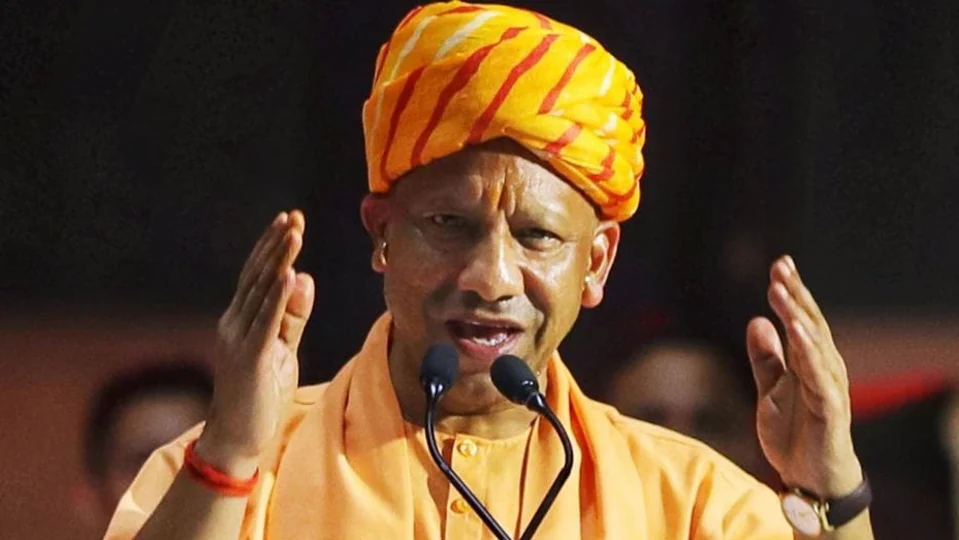
Uttar Pradesh Chief Minister Yogi Adityanath has defended the widespread use of firecrackers during Diwali, saying the resulting rise in Air Pollution would eventually subside. His remarks come amid deteriorating air quality across several cities in the state, with pollution levels reaching the ‘very poor’ category in parts of the National Capital Region.
Speaking at an official event in Lucknow on Wednesday, where appointment letters were distributed to newly selected junior assistants in the revenue department, Adityanath questioned why critics of firecrackers were not equally vocal about corruption and the alleged pollution of public institutions in the past.
The chief minister’s comments have brought renewed attention to the debate over festival celebrations, firecracker use and public health. While pollution levels in Lucknow improved after winds dispersed some of the accumulated pollutants, several other cities continued to record poor or very poor air quality following Diwali.
Yogi Adityanath Says Diwali Pollution Will Eventually Subside
Defending the use of firecrackers during Diwali, Adityanath argued that a temporary rise in pollution should not become a reason to criticise public celebrations while other forms of wrongdoing receive less attention.
“No one is saying anything to those who polluted the system with their corrupt deeds. If the public lights firecrackers one day, then pollution is a problem. It will subside too. That is not a problem,” the chief minister said.
His remarks appeared to contrast the criticism of firecracker use with what he described as a lack of similar public concern over corruption during previous administrations.
The statement comes after reports of thick smoke across Lucknow and other parts of Uttar Pradesh during Diwali night. Reduced visibility also raised concerns about road safety, with visibility reportedly falling to around 200 metres at midnight in some areas.
Adityanath’s position places the emphasis on the temporary nature of pollution following celebrations. However, air-quality data from the days surrounding Diwali show that pollution levels rose across several cities, highlighting the environmental and health concerns associated with concentrated firecracker use.
Lucknow AQI Rose for Three Consecutive Days After Diwali
Lucknow experienced a steady deterioration in air quality over the days following Diwali. Data from the Central Pollution Control Board (CPCB) showed that the city’s Air Quality Index (AQI) increased from 207 on November 7 to 233 on November 8 and 245 on November 9.
The improvement came after winds helped disperse pollutants accumulated in the atmosphere. By Tuesday, Lucknow’s AQI had fallen to 172, placing it in the moderate category.
The readings indicate that the city experienced a significant pollution spike around the festival period before weather conditions helped improve air quality. However, the decline in AQI does not mean that all pollution-related risks disappeared.
According to CPCB data cited in the report, Lucknow has six air-quality monitoring stations. Its historical readings also show a recurring post-Diwali deterioration: since 2015, the city’s air quality has been worse on the day after Diwali than on the preceding day, based on the CPCB’s 4 pm bulletins.
This pattern has kept the relationship between firecracker use and post-festival pollution in focus, particularly in cities where weather conditions can allow smoke and particulate matter to accumulate.
Ghaziabad, Noida and Meerut Record Very Poor Air Quality
The pollution increase was not limited to the state capital. Several cities in Uttar Pradesh recorded poor or very poor AQI levels around Diwali, according to CPCB figures.
On Diwali, the AQI readings included:
- Ghaziabad: 344, classified as very poor.
- Noida: 318, classified as very poor.
- Greater Noida: 299, classified as poor.
- Meerut: 295, classified as poor.
The situation remained concerning on the following day, with Ghaziabad recording an AQI of 324 and Noida reaching 332, both in the very poor category. Greater Noida recorded 252, while Meerut registered 269, placing both cities in the poor category.
The figures show that pollution remained elevated in several urban centres even after Diwali celebrations had ended. Ghaziabad and Noida continued to record particularly high readings, while Greater Noida and Meerut also experienced air quality levels associated with health concerns.
What Poor and Very Poor AQI Levels Mean for Health
The CPCB uses different AQI categories to communicate the level of air pollution and its potential health effects. The classification helps people understand how air quality may affect them, particularly those who spend extended periods outdoors.
An AQI between 201 and 300 falls under the poor category. At these levels, prolonged exposure can cause breathing discomfort for most people, including those who do not normally experience respiratory problems.
The very poor category covers AQI readings between 301 and 400. Prolonged exposure to air in this range can cause respiratory illness even among healthy people, according to the CPCB classification.
These risks are particularly relevant for children, older people and individuals with existing respiratory or cardiovascular conditions. High pollution levels can make outdoor activities more difficult and increase exposure to harmful airborne particles.
For residents of cities such as Ghaziabad and Noida, where readings crossed 300 after Diwali, the very poor classification indicated a heightened public-health concern. Even where AQI levels subsequently declined, residents could still face exposure to pollution from other urban sources.
Firecracker Smoke and the Wider Pollution Debate
Firecracker use during Diwali is a recurring subject of debate in India because celebrations can produce a concentrated release of smoke and particulate matter over a relatively short period.
The impact can become more pronounced when weather conditions do not allow pollutants to disperse quickly. Low wind speeds and other atmospheric conditions can contribute to the accumulation of smoke near the ground, affecting visibility and air quality.
However, urban air pollution is not caused by a single source. Vehicle emissions, construction dust, industrial activity and other sources also contribute to poor air quality. Their relative contribution can vary between cities and across different days.
The AQI figures reported after Diwali demonstrate the deterioration in air quality around the festival, but the readings alone do not establish the precise share of pollution caused by firecrackers compared with other sources.
Adityanath’s remarks have nevertheless revived the discussion about whether temporary festival-related pollution should be treated differently from the longer-term air-quality problems affecting urban areas.
Yogi Adityanath Contrasts the Situation With the Period Before 2017
During the same speech, Adityanath also compared the current situation in Uttar Pradesh with conditions before the BJP came to power in the state in 2017.
He claimed that major festivals were frequently accompanied by communal tensions and riots under previous governments, leaving people feeling insecure during religious and cultural celebrations.
Listing festivals across different communities, including Holi, Diwali, Vijayadashami, Janmashtami, Shivratri, Christmas, Eid, Guru Parv and Makar Sankranti, the chief minister argued that the security situation had changed since 2017.
“Before 2017, whenever any festival approached, be it Holi, Diwali, Vijayadashami, Janmashtami, Shivratri, Christmas, Eid, Guru Parv or Makar Sankranti, riots would begin. Every person felt insecure,” he said, according to PTI.
His comments presented the government’s record on law and order as part of a wider defence of its approach to public celebrations. The comparison was a political claim made by the chief minister and was separate from the air-quality data recorded after Diwali.
Why the Pollution Debate Remains Important for Uttar Pradesh
The latest AQI readings highlight the continuing challenge of managing air pollution in Uttar Pradesh’s major urban centres. While Lucknow’s air quality improved after winds dispersed some pollutants, cities including Ghaziabad and Noida continued to record very poor readings.
The issue extends beyond the immediate period of Diwali celebrations. Repeated episodes of poor air quality can affect public health, reduce outdoor visibility and place additional pressure on healthcare services, particularly during periods when several pollution sources operate simultaneously.
Adityanath has argued that the pollution caused by one day of celebrations will subside. The improvement in Lucknow’s AQI after November 9 shows how weather conditions can influence pollution levels over a short period. However, the high readings across other cities demonstrate that the wider air-quality challenge cannot be assessed through the state capital’s recovery alone.
The debate now involves two concerns: the freedom to celebrate festivals and the need to reduce exposure to harmful air pollution. Any assessment of the situation requires attention to both the temporary effects of firecracker use and the longer-term sources contributing to poor air quality across the state.
For breaking news and live news updates, like us on Facebook or follow us on Twitter and Instagram. Read more on Latest India on thefoxdaily.com.






COMMENTS 0