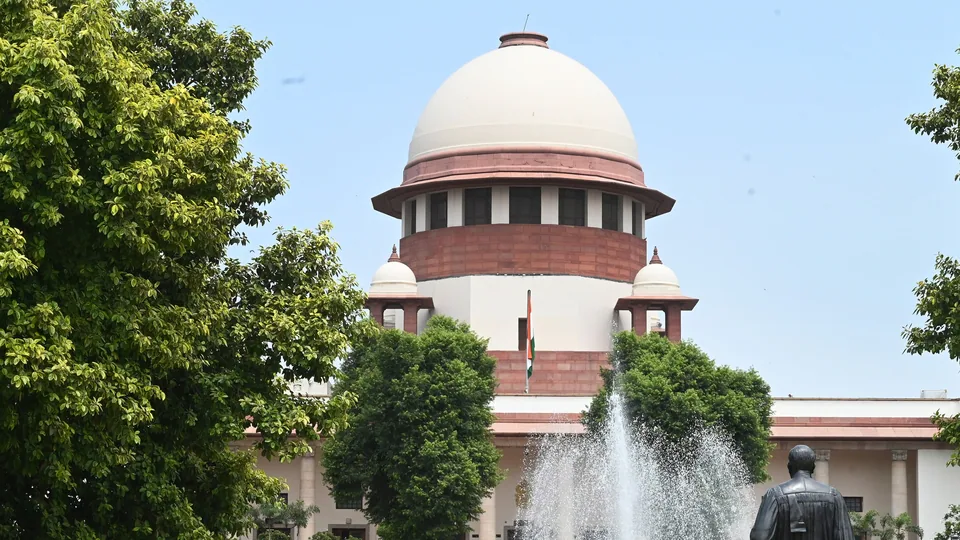
Delhi’s air quality is likely to deteriorate further after Diwali, Supreme Court judge Vikram Nath observed on Wednesday while hearing a request to reschedule a court matter to November 17. His remarks, made during a light-hearted exchange with senior advocate Indira Jaising, drew attention to the persistent pollution challenges faced by the national capital during the festival season.
The conversation took place as the Supreme Court prepared to consider whether firecrackers should be permitted in Delhi and the National Capital Region during Diwali. The issue was scheduled for a hearing before a separate bench led by Justice MM Sundresh on Thursday, with the court expected to examine competing concerns over Public health, religious sentiments and festival celebrations.
Delhi’s Air Pollution regularly becomes a major public concern around Diwali, when emissions from firecrackers can add to an already challenging environmental situation. The Supreme Court has been monitoring the issue through ongoing proceedings, while retailers have sought permission for a regulated period during which firecrackers could be sold and used.
Supreme Court judge comments on Delhi’s post-Diwali air quality
Justice Vikram Nath made the observation while considering a request from Indira Jaising, WHO appeared virtually before the court. Jaising sought an adjournment of the matter until November 17, prompting the judge to discuss the likely condition of Delhi’s air before and after Diwali.
Justice Nath remarked that the air would be very bad after Diwali. He initially indicated that November 3 could be an alternative date, suggesting that the environment would be cleaner if the matter were heard before the festival rather than afterward.
Jaising responded that Delhi’s air quality would not be good even before Diwali, describing the festival period as an extremely polluted time in the capital. She requested that the matter be listed on November 17 instead.
The exchange continued as Jaising noted that the judges themselves had to endure the poor air quality. Since she was participating through videoconferencing, Justice Nath quipped that she had the advantage of remaining at home and protecting herself from pollution, while the judges could not stay home.
Although the conversation was light-hearted, it reflected a serious and recurring problem. Air pollution in Delhi raises concerns about the health and well-being of residents, particularly children, older people and those with existing respiratory or other health conditions.
The remarks also came at a significant moment in the legal debate over firecrackers. The Supreme Court has previously imposed restrictions on their sale and use across Delhi and the surrounding National Capital Region. The question before the court is how to address pollution while considering requests to allow fireworks during the festival.
Supreme Court to consider Diwali firecracker restrictions
The question of whether firecrackers should be permitted during Diwali was scheduled to be considered by a bench headed by Justice MM Sundresh on Thursday. The proceedings are connected to the Supreme Court’s continuing scrutiny of air pollution and earlier petitions seeking restrictions on fireworks.
One of the central proceedings stems from a petition filed by advocate MC Mehta. The Supreme Court has been monitoring pollution-related concerns through this matter, including issues associated with activities that can worsen air quality in the national capital.
A separate petition was filed in 2015 by three young children seeking a complete ban on firecrackers. The petition highlighted concerns about the harmful effects of fireworks on children, older people and individuals who experience breathing difficulties or other health complications.
These proceedings have placed the court at the centre of a difficult debate. Restrictions on firecrackers are intended to address public health and environmental concerns, while those seeking permission to use them argue that Diwali celebrations and religious sentiments should also be considered.
Under earlier Supreme Court orders, the bursting, sale and distribution of firecrackers have been prohibited in Delhi, with restrictions extending to the National Capital Region. However, the court provided a limited window for the sale and use of crackers during Diwali last year, seeking to balance public health considerations with festival-related practices.
Fireworks retailers have again asked the court to consider a similar arrangement this year. Their request includes allowing sales on specified dates and regulating the times during which firecrackers can be burst, with the process remaining under judicial monitoring.
The court’s decision is important because it will determine whether a limited and regulated exception to the restrictions can be permitted. Any arrangement would need to account for the potential impact on air quality alongside the arguments presented in favour of allowing fireworks during the festival.
Why Delhi’s air pollution becomes a major concern around Diwali
Delhi’s air quality is affected by multiple sources of pollution, and the festival season can intensify public concern about the conditions residents face. Firecrackers release pollutants into the atmosphere, potentially adding to emissions from other sources. The extent of the resulting deterioration can vary according to weather conditions and other factors.
Pollution is particularly concerning because poor air quality can aggravate breathing problems and affect people who are more vulnerable to environmental exposure. Children, older adults and people with respiratory conditions are among those who may face greater health risks when pollution levels rise.
The impact is not limited to the immediate period when fireworks are used. The persistence and movement of pollutants depend on atmospheric conditions, including wind and the ability of the air to disperse emissions. As a result, the environmental consequences of firecracker use can differ from one occasion to another.
These concerns explain why the issue has continued to attract judicial attention. The Supreme Court’s proceedings seek to address the relationship between individual celebrations and the broader public interest in cleaner air and protection from pollution-related health risks.
At the same time, a court order governing firecrackers does not by itself resolve Delhi’s wider air pollution problem. The city’s air quality is influenced by several sources, meaning that restrictions on fireworks form only one part of the broader environmental debate.
The challenge for policymakers and the judiciary is to assess the potential contribution of firecrackers to pollution without overlooking the wider range of measures needed to improve air quality. That includes examining emissions, enforcement of existing restrictions and the effectiveness of alternatives intended to reduce pollution.
Supreme Court calls for a practical and pragmatic approach
Earlier in October, the Supreme Court indicated that firecracker restrictions required a “practical and pragmatic” approach. The court stressed that religious sentiments should not be hurt, while also emphasising the need to protect citizens’ health.
The approach reflects an attempt to consider competing concerns rather than treating the issue as a simple choice between an unrestricted use of firecrackers and a complete prohibition. The court has highlighted the potential role of green crackers, which are designed to be less harmful than conventional fireworks.
However, the use of alternatives does not remove the need to examine their actual environmental impact. A meaningful assessment requires attention to their formulations, emissions and the conditions under which they are manufactured, sold and used.
The Centre has submitted formulations for improved firecrackers developed with the involvement of technical and scientific organisations, including the Council of Scientific and Industrial Research–National Environmental Engineering Research Institute (CSIR-NEERI), the Petroleum and Explosives Safety Organisation (PESO) and the Central Pollution Control Board (CPCB).
According to the material described in the proceedings, experts have presented formulations for next-generation joined crackers intended to produce less pollution than conventional joined firecrackers, commonly known as laris.
Researchers are also studying ways to reduce the use of barium in firecrackers. The work includes open-ground testing at multiple locations across the country to examine the proposed formulations.
These technical efforts form part of the wider debate over whether improvements in firecracker design can reduce environmental harm sufficiently to support a limited, regulated use. Their significance depends on the evidence about emissions and the effectiveness of the proposed alternatives.
Green crackers and the challenge of enforcement
Green crackers have been presented as a possible way to reduce some of the pollution associated with conventional fireworks. Their role in the Supreme Court’s deliberations reflects the search for a compromise that takes environmental concerns into account while acknowledging the demand for festival celebrations.
Nevertheless, allowing a category of supposedly less-polluting firecrackers raises practical questions about identification, Manufacturing standards and compliance. For restrictions to work as intended, authorities need to distinguish permitted products from prohibited ones and ensure that sales and use follow the applicable rules.
Regulating the timing of fireworks presents another challenge. A limited window for bursting crackers may help define when their use is permitted, but its effectiveness depends on compliance and enforcement. If restrictions are not followed, the intended limits may not prevent additional pollution.
The court must also consider the evidence supporting any proposed relaxation. The involvement of scientific and regulatory bodies can help inform that assessment, but the final decision must take account of the available findings and the public health concerns raised in the proceedings.
For residents, the central question is whether any permitted use of firecrackers can be managed without imposing an unacceptable burden on air quality and public health. For retailers and people seeking to celebrate with fireworks, the question is whether a clearly defined arrangement can be permitted under the court’s restrictions.
What the Supreme Court’s decision could mean
The hearing scheduled for Thursday was expected to address retailers’ requests for permission to sell and burst firecrackers during specified periods around Diwali. The court’s decision would determine whether a limited arrangement could be made this year under judicial supervision.
A regulated window could offer a middle path between a complete ban and unrestricted use, but its practical consequences would depend on the conditions imposed and how effectively they are enforced. A decision allowing certain products or timings would not necessarily mean that all firecrackers could be sold or used freely.
Equally, retaining strict restrictions would reflect the importance placed on public health and pollution control. The precise outcome would depend on the arguments and evidence considered by the bench, rather than Justice Nath’s comments during the separate hearing about the likely condition of Delhi’s air after Diwali.
The wider issue will remain relevant beyond the immediate festival. Delhi’s recurring air quality challenges require sustained attention to pollution sources, environmental standards, monitoring and enforcement. Firecracker restrictions are one element of that effort, but their effectiveness must be assessed alongside other measures aimed at reducing emissions.
Justice Nath’s observation that Delhi’s air would become much worse after Diwali captured the concern surrounding the festival period. The Supreme Court’s forthcoming deliberations will determine how the law balances the demand for firecrackers with the need to protect the health of people living in Delhi and the wider National Capital Region.
For breaking news and live news updates, like us on Facebook or follow us on Twitter and Instagram. Read more on Latest India on thefoxdaily.com.






COMMENTS 0