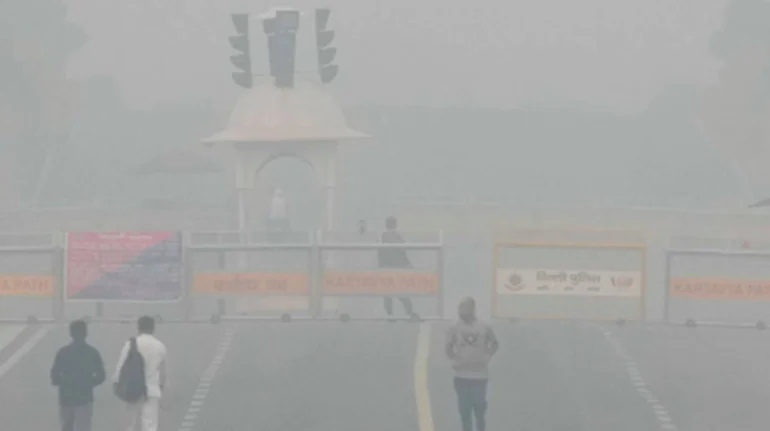
Residents and businesses across Delhi-NCR have received some relief from pollution-related restrictions after the Commission for Air Quality Management (CAQM) revoked Stage III measures under the Graded Response Action Plan (GRAP) on November 17, 2026. The decision followed an improvement in Delhi’s air quality, with the daily Air Quality Index (AQI) falling to 204.
The CAQM Sub-Committee on GRAP reviewed the latest pollution situation and observed a downward trend in Air Pollution levels. Following the assessment, it decided that the additional restrictions imposed under Stage III were no longer necessary at the prevailing AQI level.
However, the withdrawal does not mean that all pollution-control measures have ended. Restrictions under GRAP Stages I and II will remain applicable across the National Capital Region, along with the measures prescribed in the commission’s October 30 order.
Why Did CAQM Withdraw GRAP Stage III Restrictions?
The decision was based primarily on the improvement in Delhi’s air quality. The capital’s daily AQI dropped to 204, indicating a considerable improvement compared with the pollution levels recorded when Stage III restrictions were introduced.
Stage III measures had been enforced on November 6, when Delhi’s AQI reached 382. The reading placed the city in the very poor category and raised concerns about further deterioration in air quality.
The restrictions were introduced as part of an emergency response to reduce pollution sources and prevent the situation from worsening. After reviewing the subsequent decline in pollution levels, the CAQM sub-committee decided to withdraw the additional curbs.
The commission’s decision reflects the graded nature of GRAP. Restrictions are tightened when air quality deteriorates and can be relaxed when pollution levels improve, depending on the prevailing conditions and forecasts.
What Was GRAP Stage III and Which Restrictions Have Been Lifted?
GRAP Stage III is activated when air pollution reaches the severe category or when conditions indicate that pollution could worsen. It introduces additional restrictions on activities that contribute to emissions and dust pollution.
Some of the key measures associated with Stage III include restrictions on certain construction and demolition activities and curbs on the operation of specified categories of vehicles.
The withdrawal of Stage III means these additional restrictions will no longer apply under that stage. Construction and infrastructure activities that were affected by the Stage III order may receive relief, subject to the remaining GRAP requirements and other applicable environmental rules.
Similarly, vehicle restrictions introduced specifically under Stage III have been withdrawn. However, this should not be interpreted as permission for every vehicle to operate without restrictions. Measures under Stages I and II and existing transport-related regulations continue to apply.
GRAP Stage I and Stage II Restrictions Remain in Force
Although Stage III has been revoked, the CAQM has made it clear that lower-stage pollution-control measures will continue across Delhi-NCR.
Stage I and Stage II include measures intended to reduce pollution from road dust, construction activity, vehicles, industrial operations and other emission sources. These restrictions remain important even when air quality improves because pollution can rise again if preventive action is relaxed too quickly.
The measures prescribed in the CAQM’s October 30 order will also continue to apply. Residents, vehicle owners, construction companies and industrial establishments must therefore follow the restrictions relevant to their activities.
The continuation of the lower stages indicates that the commission is seeking to maintain control over pollution levels rather than treating the latest improvement as the end of the seasonal air-quality challenge.
What Does an AQI of 204 Mean for Delhi Residents?
Delhi’s AQI reading of 204 falls within the poor air quality category under India’s national air-quality classification system. Although this is an improvement from the very poor conditions recorded earlier in November, it does not indicate that the air is clean or harmless.
Air pollution can still affect people’s health at this level, particularly children, older adults and individuals with respiratory or cardiovascular conditions. People who are sensitive to pollution may experience breathing discomfort or other symptoms during periods of elevated AQI.
The difference between the latest reading and the November 6 level of 382 is significant from the perspective of pollution management. However, an AQI of 204 remains high enough to require continued monitoring and preventive action.
Residents should avoid unnecessary exposure to heavily polluted outdoor environments, particularly during periods when local air quality worsens. People experiencing breathing difficulties should follow appropriate medical advice.
Why Delhi-NCR Continues to Face Seasonal Air Pollution
Air pollution in Delhi-NCR is influenced by several factors that can combine to produce high pollution levels, particularly during the winter months. Vehicular emissions, construction dust, industrial activity, waste burning and other local sources contribute to the region’s pollution burden.
Weather conditions can make the situation worse. During colder months, low wind speeds and atmospheric conditions that limit the dispersion of pollutants can allow emissions to accumulate closer to the ground.
Pollution in the wider region also affects Delhi’s air quality. Emissions from neighbouring cities and surrounding areas can contribute to the overall pollution concentration, making coordination between NCR authorities important.
This is why GRAP applies across Delhi-NCR rather than focusing exclusively on the national capital. Effective pollution control requires action from multiple state governments, municipal bodies, transport authorities and industrial regulators.
Will GRAP Stage III Restrictions Be Reimposed?
The withdrawal of Stage III restrictions does not guarantee that the measures will remain lifted throughout the season. GRAP is designed to respond to changing air-quality conditions, and the CAQM can reimpose higher-stage restrictions if pollution levels deteriorate again.
The commission’s sub-committee will continue to assess AQI readings, weather conditions and pollution forecasts. If the situation worsens, authorities may activate additional measures to limit emissions and reduce exposure to hazardous air.
For businesses and residents, this means that the current relief should be viewed as conditional. Construction companies, transport operators and other affected sectors may need to prepare for restrictions to return if air quality declines.
Delhi Gets Temporary Relief, but Pollution Control Measures Continue
The CAQM’s decision to revoke GRAP Stage III restrictions marks an improvement in Delhi-NCR’s pollution situation after the capital recorded an AQI of 382 on November 6. The subsequent decline to 204 allowed authorities to withdraw the additional curbs on selected construction activities and vehicle categories.
However, the air quality remains in the poor category, and the continuation of Stage I and Stage II measures shows that the pollution challenge is far from over.
The coming days will be important in determining whether the improvement can be sustained. Weather conditions, regional emissions and local pollution sources will continue to influence the AQI.
For now, Delhi-NCR residents and businesses can benefit from the relaxation of Stage III restrictions, but continued compliance with lower-stage measures remains essential. The priority is to prevent another sharp rise in pollution and avoid the need for stricter emergency restrictions.
For breaking news and live news updates, like us on Facebook or follow us on Twitter and Instagram. Read more on Latest India on thefoxdaily.com.






COMMENTS 0