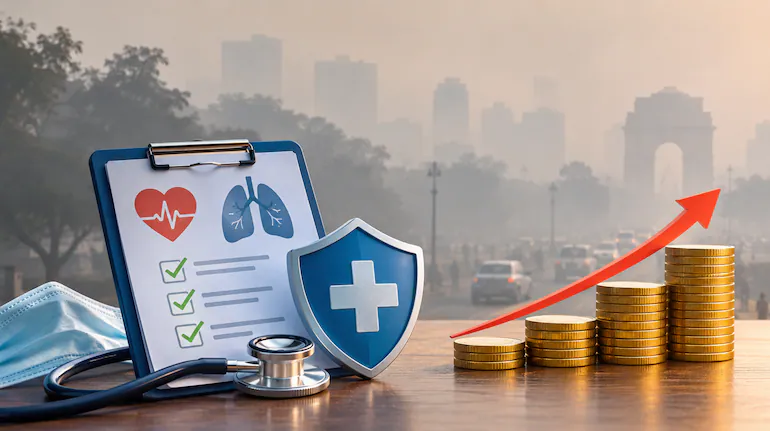
Health Insurance claims linked to pollution-related illnesses have increased more than fourfold over the past three years, highlighting the growing health and financial burden of deteriorating air quality in India. Working professionals account for 59% of these claims, while cardiovascular conditions make up the largest share at 43.5%, according to a report.
The findings point to the impact of pollution on people across different age groups and locations. The burden is not limited to major metropolitan areas, with Tier-2 and Tier-3 cities together accounting for 55% of pollution-linked health insurance claims.
Key Highlights
- Pollution-linked health insurance claims increased 4.34 times over three years.
- Working professionals account for 59% of the reported claims.
- Cardiovascular conditions represent 43.5% of pollution-linked claims.
- Tier-2 and Tier-3 cities together contribute 55% of the claims.
- Senior citizens are also among the groups bearing a significant health and financial burden.
Pollution-Linked Health Insurance Claims Rise 4.34 Times
The reported 4.34-fold increase in pollution-linked health insurance claims over three years indicates a sharp rise in the number of claims associated with illnesses linked to environmental pollution.
Pollution can affect health through prolonged exposure to polluted air and other environmental contaminants. Poor air quality is associated with respiratory problems and can also contribute to cardiovascular risks, particularly among people with existing health conditions.
The increase in insurance claims also draws attention to the financial consequences of pollution-related illnesses. Medical consultations, diagnostic tests, hospitalisation and ongoing treatment can add to household Healthcare expenses.
Working Professionals Account for 59% of Claims
Working professionals account for 59% of the pollution-linked health insurance claims highlighted in the report. This suggests that a substantial share of the reported burden falls on people in their working years.
Regular exposure to traffic emissions, industrial pollution and poor urban air quality can increase health risks for people who spend significant time commuting or working in polluted environments.
Health problems can also affect productivity, lead to missed working days and increase medical expenses. For households that depend on regular employment income, an unexpected hospitalisation can create additional financial pressure.
Cardiovascular Conditions Make Up 43.5% of Claims
Cardiovascular conditions account for 43.5% of pollution-linked health insurance claims, making them the largest category identified in the report.
Air Pollution can affect the cardiovascular system through exposure to fine particulate matter and other harmful pollutants. These pollutants may contribute to inflammation, increased blood pressure and other factors associated with heart and blood vessel diseases.
People with existing cardiovascular conditions may face additional health risks when exposed to polluted air. The reported share highlights why pollution-related health concerns extend beyond coughing, breathing difficulties and other visible respiratory symptoms.
Tier-2 and Tier-3 Cities Account for 55% of Claims
One of the notable findings is the geographical distribution of pollution-linked health insurance claims. Tier-2 and Tier-3 cities together account for 55% of the claims, indicating that the reported burden extends well beyond India’s largest metropolitan centres.
Air pollution is not limited to major cities. Industrial activity, construction dust, vehicle emissions, waste burning and other local sources can affect air quality in smaller urban centres as well.
The figures suggest that healthcare and financial planning around pollution-related illnesses need to consider smaller cities alongside metropolitan areas. However, the reported claim share does not establish that pollution levels or individual health risks are identical across these locations.
Senior Citizens Also Face a Significant Health Burden
Senior citizens are another group identified in the report as bearing a substantial burden from pollution-linked illnesses. Older people can be more vulnerable to environmental exposure, particularly when they have existing respiratory or cardiovascular conditions.
Age-related health conditions may require regular medical monitoring, medication and hospital treatment. Pollution exposure can complicate the management of existing illnesses and increase the need for healthcare services.
The report’s findings underline the importance of considering the healthcare needs of older people when assessing the wider impact of environmental pollution.
What the Findings Mean for Health Insurance Costs
The rise in pollution-linked claims highlights the connection between environmental conditions and healthcare spending. When more people require treatment for pollution-associated illnesses, insurers may face changes in claim volumes and the types of medical expenses being covered.
For policyholders, the findings are a reminder to understand their health insurance coverage, including hospitalisation limits, exclusions, waiting periods and other policy conditions. Coverage varies by insurer and individual plan, so customers should review their policy documents rather than assume every pollution-related illness is automatically covered.
The figures also highlight the importance of preventive healthcare. Reducing exposure to polluted environments where possible, following local air-quality advisories and seeking medical attention for persistent symptoms can help people manage health risks.
Conclusion
The 4.34-fold rise in pollution-linked health insurance claims over three years highlights the growing health and financial consequences associated with environmental pollution. Working professionals account for 59% of claims, cardiovascular conditions represent 43.5%, and Tier-2 and Tier-3 cities together contribute 55%.
The findings show that pollution-related health concerns extend across age groups and beyond major metropolitan areas. As claim numbers rise, preventive healthcare, awareness of environmental risks and a clear understanding of health insurance coverage will remain important for individuals and families.
For breaking news and live news updates, like us on Facebook or follow us on Twitter and Instagram. Read more on Latest Business on thefoxdaily.com.





COMMENTS 0