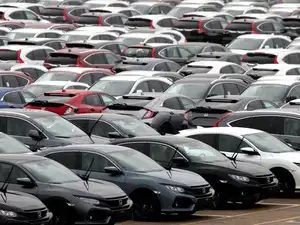
The Supreme Court has indicated support for restricting vehicles that do not meet BS-VI emission standards in Delhi as part of efforts to tackle the capital’s persistent Air Pollution problem. The court has also raised concerns over the limited contribution of neighbouring states, emphasising that improving air quality requires coordinated action across the National Capital Region and surrounding areas.
The observations underline the importance of reducing vehicular emissions while ensuring that pollution-control measures are not limited to Delhi alone. The court is considering steps that could restrict the movement of older, more polluting vehicles, particularly commercial vehicles entering the city.
Supreme Court Considers BS-VI-Only Vehicle Restrictions
The court is contemplating measures that would favour vehicles complying with Bharat Stage VI (BS-VI) emission standards in Delhi. These standards are designed to reduce harmful emissions from vehicles and are among India’s strictest automotive emission regulations.
Restricting the entry of vehicles that do not meet BS-VI requirements could help reduce pollution from road transport. Commercial vehicles have drawn particular attention because they contribute to traffic-related emissions and frequently operate across state borders.
However, the proposal is still under consideration. The precise categories of vehicles that could face restrictions, along with the implementation mechanism and timeline, will depend on further proceedings and directions from the court.
Neighbouring States Asked to Step Up Pollution-Control Efforts
The Supreme Court has expressed concern over what it described as the passive role of neighbouring states in addressing Delhi’s air pollution. It stressed that states surrounding the national capital cannot remain on the sidelines when pollution levels affect the wider region.
Advocate generals representing Punjab, Haryana and Uttar Pradesh have been asked to report on the measures being taken by their respective state governments to improve air quality.
The court’s focus on these states reflects the regional nature of Delhi’s pollution problem. Air quality is influenced by several factors beyond the capital’s administrative boundaries, making cooperation between neighbouring governments essential.
Commercial Vehicle Entry Could Face Restrictions
One of the measures being considered is a possible prohibition on the entry of certain commercial vehicles into Delhi if they do not comply with BS-VI emission standards.
Such restrictions could affect goods carriers and other commercial vehicles travelling into the capital from neighbouring states. If implemented, the measure would make emission compliance an important condition for commercial transport operations entering Delhi.
However, the court has not yet announced a final restriction or provided detailed rules covering vehicle categories, exemptions or enforcement. Further clarification will be necessary before transport operators and vehicle owners can understand the full implications.
Why BS-VI Emission Standards Matter
Bharat Stage VI is India’s advanced vehicle emission standard, introduced nationwide in April 2020. It significantly tightened permissible limits for pollutants emitted by vehicles compared with the earlier BS-IV standards.
BS-VI vehicles use improved engine technology and emission-control systems to reduce pollutants such as nitrogen oxides, particulate matter and hydrocarbons. These improvements are particularly important in urban areas, where high traffic density can contribute to poor air quality.
Restricting older, less compliant vehicles could therefore form part of a broader strategy to control transport-related pollution. However, vehicle restrictions alone cannot address every source of poor air quality.
Regional Coordination Remains Essential
The Supreme Court’s observations highlight the need for a coordinated approach involving Delhi and its neighbouring states. Pollution-control policies, vehicle regulations and enforcement measures need to work together across state borders to deliver meaningful improvements.
By seeking reports from Punjab, Haryana and Uttar Pradesh, the court is looking for greater accountability from governments whose decisions and activities can influence regional air quality.
What Happens Next?
The next steps will depend on the responses submitted by the advocate generals and the court’s subsequent directions. The possibility of restricting non-BS-VI vehicles, particularly commercial vehicles entering Delhi, remains under consideration.
For vehicle owners and transport businesses, any final order could have implications for the use of older vehicles and interstate commercial movement. Until detailed directions are issued, the proposed restrictions should not be treated as an implemented ban.
The proceedings reflect the Supreme Court’s continued focus on Delhi’s air pollution and its expectation that neighbouring states take a more active role. A coordinated regional effort, supported by effective enforcement, will be important in addressing the capital’s long-standing air quality challenges.
For breaking news and live news updates, like us on Facebook or follow us on Twitter and Instagram. Read more on Latest Automobile on thefoxdaily.com.






COMMENTS 0