
The Madhya Pradesh government has approved a series of policy decisions, including the removal of the two-child norm for state government employees and the establishment of six special courts under the Narcotic Drugs and Psychotropic Substances (NDPS) Act. The decisions were taken at a cabinet meeting held in the Gandhi Sagar region on Wednesday, November 18.
The cabinet’s decision on the two-child restriction means disciplinary proceedings initiated against government employees solely because they have more than two living children will be discontinued. Chief Minister Mohan Yadav said the change would provide relief to government servants who were previously subject to the restriction.
The meeting also approved special NDPS courts in Indore, Mandsaur, Neemuch, Singrauli, Bhopal and Rewa. In another decision, the cabinet cleared the establishment of Shri Radhe University in Morena, with the institution scheduled to commence operations in the 2027-28 academic session.
Two-Child Rule Removed After Nearly 25 Years
The two-child restriction had been part of Madhya Pradesh’s civil service framework since January 26, 2001. Under the earlier provisions, having a third child after the specified date could affect eligibility for government employment. Serving employees could also face disciplinary action for having more than two living children.
The cabinet approved amendments to the Madhya Pradesh Civil Services (General Conditions of Service) Rules, 1961, and the Madhya Pradesh Civil Services (Conduct) Rules, 1965, to remove the relevant provisions.
The change has implications for both government job applicants and existing employees. Candidates will no longer be disqualified from state government recruitment solely because they have more than two children. For serving employees, the restriction will no longer be treated as a ground for disciplinary action.
Importantly, the cabinet has also decided to discontinue disciplinary proceedings against employees that were initiated solely on the basis of having more than two living children. The decision is intended to provide relief to workers who faced action under the earlier service rules.
What Chief Minister Mohan Yadav Said
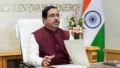
Explaining the decision, Chief Minister Mohan Yadav said the earlier policy had created difficulties for government employees and that the restriction was no longer justified.
“The previous policy, which imposed a two-child restriction, created various difficulties for government employees. We have removed the two-child restriction, which will provide significant relief to government servants. When the rest of society has been given this exemption, whether a person has three or four children, why should government employees be subjected to such constraints,” Yadav said.
The decision marks a change in the state’s approach to family-size restrictions in public employment. Its implementation will depend on the formal amendments to the relevant service rules.
Six Special NDPS Courts Approved to Speed Up Drug Cases
Alongside the service-rule changes, the Madhya Pradesh Cabinet approved six special courts under the Narcotic Drugs and Psychotropic Substances (NDPS) Act. The courts are intended to speed up the disposal of cases involving drug trafficking and the illegal narcotics trade.
The six locations selected for the special courts are:
- Indore
- Mandsaur
- Neemuch
- Singrauli
- Bhopal
- Rewa
The decision comes amid the government’s stated focus on tackling drug abuse and trafficking. Specialised courts are expected to help cases under the NDPS Act move through the judicial process more quickly by providing dedicated judicial capacity for such matters.
Yadav said the approval was linked to the campaign against drug abuse being pursued under the guidance of Prime Minister Narendra Modi and the national objective of making India drug-free by 2029.
“Under the campaign being conducted against drug abuse under the guidance of Prime Minister Narendra Modi, and keeping in view the goal of making the country drug-free by 2029, we have approved the establishment of six new special NDPS courts in Madhya Pradesh to ensure swift action against illegal drug trade and trafficking,” the chief minister said.
He added that the courts in Indore, Mandsaur, Neemuch, Singrauli, Bhopal and Rewa would help ensure the expedited resolution of cases related to narcotics.
Shri Radhe University Approved in Morena
The cabinet also approved the establishment of Shri Radhe University in Morena district. The institution is expected to begin operations from the 2027-28 academic session.
The proposed university is part of the state’s wider plans to expand educational opportunities and strengthen access to higher education. Its establishment is expected to provide students in Morena and surrounding areas with another option for pursuing university-level studies.
Yadav said the government was working towards expanding educational and healthcare infrastructure across Madhya Pradesh. He referred to his earlier announcement about plans to establish 12 new medical colleges and skill universities in the state.
According to the chief minister, skill universities would introduce employment-oriented courses aimed at improving access to professional training and job opportunities.
Announcing the approval for the Morena institution, Yadav said, “In this direction, we have approved the establishment of a new university, Shri Radhe University, in Morena. The university to commence operations from the academic session 2027-28.”
He described the university as an important development for the region’s education and healthcare sectors. However, the institution’s name and the broader medical college expansion plans should be distinguished: the cabinet announcement specifically identifies Shri Radhe University as the new university approved in Morena.
What the Madhya Pradesh Cabinet Decisions Mean
The three decisions address different areas of the state’s administration and public services. Removing the two-child restriction changes the eligibility and conduct framework for government employment, while the six special NDPS courts are intended to strengthen the handling of drug-related cases.
The approval of Shri Radhe University, meanwhile, adds to the government’s stated plans to expand higher education and employment-oriented training opportunities.
For government employees and job aspirants, the most immediate change is the removal of family-size restrictions from the relevant service rules. For the criminal justice system, the proposed special courts are intended to improve the pace at which narcotics cases are heard. In Morena, the university’s planned opening in 2027-28 will be the next major milestone to watch.
The cabinet meeting at Gandhi Sagar on November 18 therefore produced decisions covering government employment, drug enforcement and education. Their eventual impact will depend on the implementation of the rule amendments, the establishment and functioning of the special courts, and the development of the new university ahead of its planned academic launch.
For breaking news and live news updates, like us on Facebook or follow us on Twitter and Instagram. Read more on Latest India on thefoxdaily.com.





COMMENTS 0