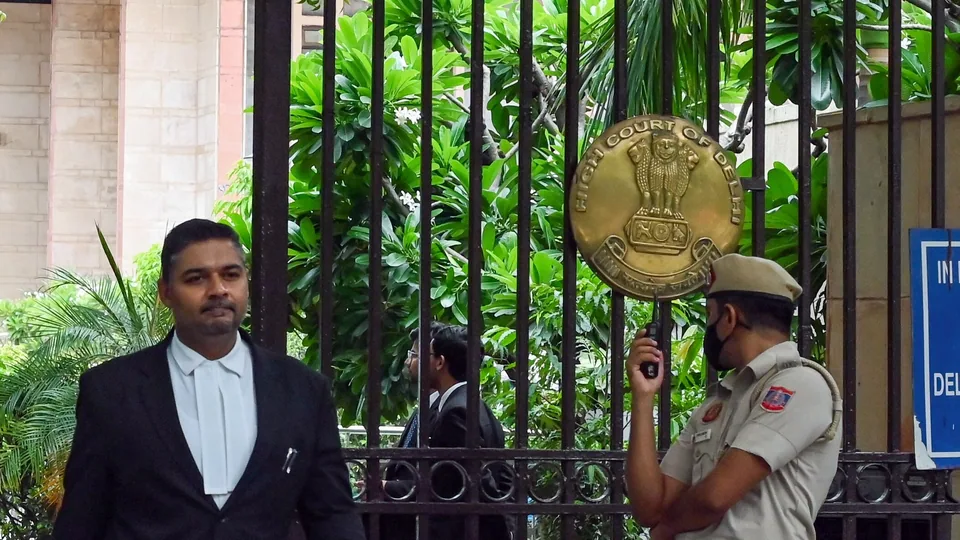
A Delhi fast-track court on Wednesday ordered the framing of charges against 14 people accused in the NEET-UG 2026 question paper leak case, marking a significant step towards the trial in one of the country’s major examination-related investigations.
Special Judge Ajay Gupta of the Rouse Avenue Courts directed that charges be framed under several provisions relating to criminal conspiracy, cheating, criminal breach of trust and destruction of evidence. The accused will also face charges under the Prevention of Corruption Act and the Public Examinations (Prevention of Unfair Means) Act, 2024.
The court additionally framed a charge under Section 63 of the Copyright Act, which deals with infringement of copyright or other rights, against all the accused based on the prosecution’s submissions.
The Central Bureau of Investigation (CBI) has alleged that three subject experts contracted by the National Testing Agency (NTA) misused their access to confidential examination material. According to the agency, the questions were passed to middlemen and coaching operators, who allegedly arranged access for candidates in exchange for money.
A detailed order explaining the court’s reasoning is yet to be made available. The matter has been scheduled for November 21, when all 14 accused will appear physically before the court from judicial custody and formal charges will be framed.
NEET-UG 2026 paper leak case: Trial to proceed on a daily basis
The court has indicated that the case will be heard on a fast-track basis. In keeping with the court’s mandate for expeditious disposal, Judge Ajay Gupta said the trial would proceed daily from November 25, 2026, when witnesses are scheduled to begin testifying.
The case is the first paper leak matter assigned to the fast-track court since its creation on July 23 this year. The daily proceedings are intended to ensure that the trial moves forward without unnecessary delays.
The November 21 hearing will mark the next formal stage, with the accused appearing in person and charges being formally framed. The subsequent witness examination will allow the prosecution to begin presenting the evidence it has collected during the investigation.
It is important to note that an order to frame charges does not amount to a finding of guilt. The allegations against the 14 accused will have to be tested during the trial, and the prosecution will be required to establish its case through evidence.
What happened in the NEET-UG 2026 paper leak case?
The NEET-UG examination was conducted on May 3, 2026, with approximately 22 lakh candidates appearing for the medical entrance test. The examination was intended to determine admission eligibility for undergraduate medical courses across India.
However, allegations of a question paper leak emerged, raising concerns about the security and fairness of the examination process. The NTA cancelled the examination on May 12, 2026, after which a re-examination was conducted on June 21.
The cancellation and subsequent re-examination affected millions of candidates who had prepared for the test. Apart from the immediate disruption to students, the allegations also raised questions about the protection of confidential examination material and the safeguards used by agencies responsible for conducting large-scale competitive examinations.
The CBI registered its case on May 12 following a complaint from the Department of Higher Education under the Union Education Ministry. The first arrests were made the following day, on May 13.
As the investigation progressed, the agency examined alleged links between examination experts, coaching operators and intermediaries across Maharashtra, Rajasthan and Haryana.
CBI chargesheets name 14 accused in the case
The CBI has named the 14 accused in two chargesheets. The first chargesheet was filed on July 28 and named 13 people, including three subject experts associated with the NTA, two individuals linked to coaching institutes and several alleged intermediaries.
The agency subsequently filed a supplementary chargesheet on October 14 against Sheshrao Bajrang Suryawanshi, also known as Raj Suryawanshi, a tea seller from Maharashtra.
According to the investigation, the alleged paper leak involved multiple stages, beginning with access to confidential examination questions and extending to their circulation among intermediaries and candidates.
The CBI has relied on substantial documentary and witness material to support its allegations. The agency said its investigation involved:
- 360 witnesses whose statements have been relied upon by the prosecution.
- 422 documents collected and examined during the investigation.
- 43 material objects included as part of the evidence.
The agency has not named any government official or NTA office-bearer as an accused so far. Its chargesheets maintain that the alleged leak was facilitated by the subject experts and a network of private individuals involved in the conspiracy.
How the alleged NEET paper leak conspiracy operated
According to the CBI’s chargesheet, the alleged conspiracy originated with three subject experts engaged by the NTA for examination-related work. The agency has accused them of misusing their access to confidential questions before the May 3 examination.
The three experts named in the chargesheet are:
- Manisha Gurunath Mandhare: The Biology subject expert.
- Pralhad Vithalrao Kulkarni: The Chemistry subject expert.
- Manisha Sanjay Havaldar: The Physics subject expert.
The CBI alleges that the experts obtained confidential questions and helped make them available to people outside the examination system. The agency’s investigation also identified alleged weaknesses in the security arrangements at the NTA premises.
Pralhad Kulkarni allegedly copied 135 Chemistry questions
The CBI has described Pralhad Vithalrao Kulkarni as the alleged mastermind and source of the question paper leak. According to the chargesheet, he wrote down all 135 Chemistry questions, including their answer options, on small slips of paper while working in the NTA’s confidential section.
The agency alleges that Kulkarni concealed the handwritten slips while leaving the premises. He is also accused of memorising comparatively simpler questions and writing them down later at his hotel.
The investigation further identified security shortcomings at the NTA premises. The CBI flagged the absence of frisking procedures for experts entering and leaving the confidential section, which it said created an opportunity for confidential material to be taken out.
Manisha Mandhare and Manisha Havaldar allegedly obtained subject questions
The chargesheet also describes the alleged roles of the Biology and Physics experts.
Mandhare allegedly used her familiarity with NCERT textbooks to identify the chapters and paragraphs corresponding to the examination questions. The agency claims that this helped connect the questions with relevant study material.
Havaldar allegedly noted down Physics questions after returning to her accommodation in Delhi. The CBI has included these allegations as part of its account of how confidential examination material was allegedly obtained before the test.
The prosecution’s case is that the three experts’ access to examination-related material allowed the questions to enter a distribution network outside the NTA’s authorised process.
Coaching operators and middlemen allegedly circulated leaked questions
After examining the alleged role of the subject experts, the CBI traced a network of coaching operators and intermediaries who allegedly arranged access to the questions for candidates in return for money.
The investigation identified several individuals in Maharashtra and other states who allegedly helped obtain, circulate or distribute examination-related material. Messaging platforms, mobile phones and printed question sets became important parts of the investigation.
Shivraj Motegaonkar allegedly procured Chemistry questions for ₹5 lakh
One of the key accused is Shivraj Raghunath Motegaonkar, who runs Renukai Chemistry Classes in Maharashtra’s Latur.
The CBI alleges that Motegaonkar procured Chemistry questions for approximately ₹5 lakh. Investigators reportedly recovered 136 handwritten questions from his mobile phone, of which 111 allegedly matched the NTA’s master question sets.
The alleged match between the recovered handwritten material and the official question sets forms an important part of the agency’s case regarding the circulation of confidential examination content.
Questions allegedly circulated through a hospital in Latur
Another accused, Dr Manoj Bhagwanrao Shirure, allegedly facilitated the circulation of examination questions through his hospital premises in Latur.
According to the chargesheet, candidates were allegedly given access to the material at the hospital. The group reportedly included Motegaonkar’s son.
The CBI’s allegations suggest that private premises were used as part of the distribution network, allowing selected candidates to access examination-related material before the test.
Telegram and WhatsApp chats helped investigators trace the network
The CBI also examined the alleged circulation of question papers through messaging platforms, including Telegram and WhatsApp. The investigation identified intermediaries operating across Maharashtra, Rajasthan and Haryana.
Forensic examination of seized mobile phones reportedly helped investigators recover deleted conversations, photographs and PDF files containing examination-related questions.
These digital records were used to examine communication between the alleged participants and trace how examination material moved between different individuals. The agency also identified a separate distribution channel involving middlemen who allegedly arranged accommodation and printed question sets for candidates in Maharashtra.
Supplementary chargesheet reveals alleged role of a tea seller
The supplementary chargesheet filed on October 14 brought another alleged distribution channel into the investigation. It names Sheshrao Bajrang Suryawanshi, also known as Raj Suryawanshi, who ran a tea stall called Malak Chah outside a coaching centre in Pune.
According to the CBI, Suryawanshi approached two NEET aspirants who were discussing their examination preparations and allegedly offered to arrange the question paper for ₹4.5 lakh.
The agency further alleged that the examination paper was eventually leaked to eight other aspirants through the accused.
The allegations point to a distribution network that allegedly extended beyond examination experts and coaching operators to individuals who could approach candidates directly. The supplementary chargesheet added another alleged route through which confidential questions reached students.
What charges have been framed against the 14 accused?
The court has ordered the framing of charges under multiple legal provisions based on the prosecution’s case. These include offences relating to criminal conspiracy, cheating, criminal breach of trust and destruction of evidence.
The accused will also face charges under the Prevention of Corruption Act and the Public Examinations (Prevention of Unfair Means) Act, 2024, which provides a legal framework to address unfair practices in public examinations.
In addition, the court framed a charge under Section 63 of the Copyright Act against all 14 accused. This provision deals with infringement of copyright or other rights.
The inclusion of these provisions reflects the different aspects of the alleged conspiracy, from obtaining confidential questions to their circulation and the alleged use of examination material for monetary gain.
The detailed order explaining the court’s reasoning has not yet been made available. The precise application of the charges will become clearer through the formal proceedings and subsequent trial.
What happens next in the NEET-UG 2026 case?
The next hearing is scheduled for November 21, 2026, when all 14 accused are expected to appear physically before the court from judicial custody. Formal charges will be framed against them during the proceedings.
The trial is scheduled to begin on a daily basis from November 25, with witnesses expected to start testifying. The prosecution will present its evidence and examine witnesses to establish the allegations made in the chargesheets.
The defence will also have the opportunity to challenge the prosecution’s claims, question witnesses and present its arguments in accordance with the legal process.
For the millions of students affected by the examination controversy, the trial will be closely watched because it concerns the integrity of one of India’s most important medical entrance examinations.
However, the court’s decision to frame charges should not be confused with a conviction. The 14 accused remain subject to the presumption of innocence, and the allegations will have to be established through evidence during the trial.
NEET-UG 2026 paper leak case: Frequently asked questions
1. How many people are accused in the NEET-UG 2026 paper leak case?
The CBI has named 14 people in two chargesheets. A Delhi fast-track court has ordered the framing of charges against all 14 accused.
2. Which court ordered the framing of charges?
Special Judge Ajay Gupta of the Rouse Avenue Courts in Delhi ordered the framing of charges in the case.
3. When will the NEET-UG 2026 paper leak trial begin?
The court has scheduled daily trial proceedings from November 25, 2026, when witnesses are expected to begin testifying.
4. When will the accused appear before the court?
All 14 accused are scheduled to appear physically before the court from judicial custody on November 21, 2026, when formal charges will be framed.
5. Who are the three NTA-contracted subject experts accused in the case?
The three experts named in the CBI chargesheet are Manisha Gurunath Mandhare for Biology, Pralhad Vithalrao Kulkarni for Chemistry and Manisha Sanjay Havaldar for Physics.
6. How many students appeared for NEET-UG 2026?
Approximately 22 lakh candidates appeared for the examination conducted on May 3, 2026. The NTA cancelled it on May 12 following allegations of a question paper leak and conducted a re-examination on June 21.
7. What evidence has the CBI collected?
The CBI has relied on 360 witnesses, 422 documents and 43 material objects. Its investigation also involved forensic examination of mobile phones and the recovery of deleted chats, photographs and examination-related files.
8. Does framing charges mean the accused have been found guilty?
No. Framing charges means the court has identified the accusations that will be examined during the trial. The prosecution must still establish its case through evidence, and the accused are entitled to defend themselves.
For breaking news and live news updates, like us on Facebook or follow us on Twitter and Instagram. Read more on Latest India on thefoxdaily.com.





COMMENTS 0