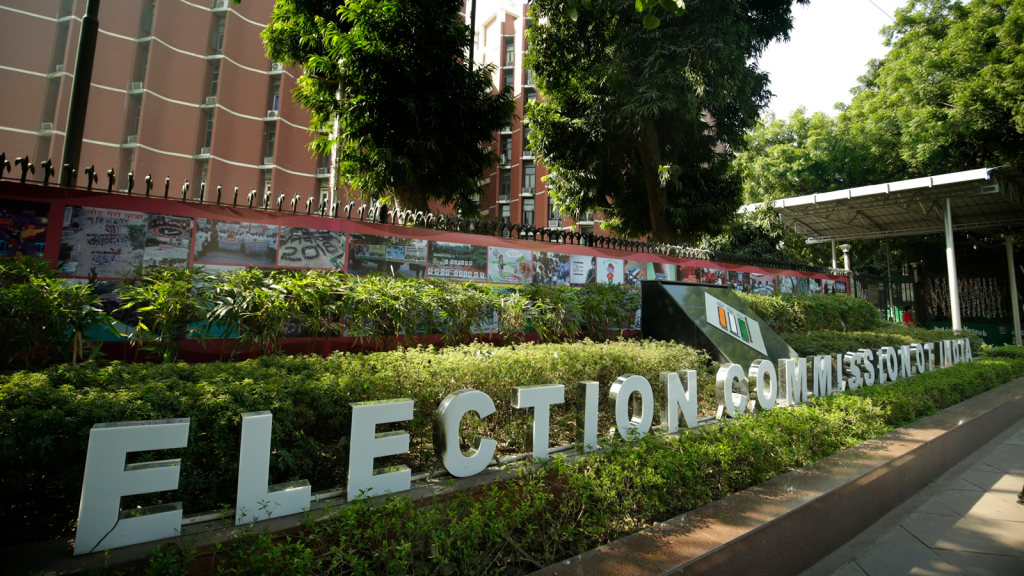
The Election Commission of India (ECI) has defended the unanimity of its decisions on the Special Intensive Revision (SIR) of Electoral Rolls in an affidavit filed before the Supreme Court. However, questions remain about whether all three members of the constitutional body were adequately informed and consulted before actions were carried out in its name.
The affidavit maintains that major decisions were taken collectively and argues that individual Commissioners’ notes recording suggestions, concerns or queries are part of the consultation process rather than formal decisions of the Commission. Yet several notes written by Election Commissioners Sukhbir Singh Sandhu and Vivek Joshi reportedly recorded concerns after decisions had already been implemented, orders issued or legal proceedings initiated.
The distinction is central to a petition that followed an investigation by The Indian Express. The issue raised was not simply whether the Commission eventually approved its decisions, but whether two of its three members were being informed about actions taken in the Commission’s name.
In its affidavit, the ECI has outlined its position on formal decision-making and described corrective measures in some areas. But the explanations do not fully address several questions recorded in the Commissioners’ notes about how decisions were implemented and how information moved within the institution.
Why the Election Commission’s Affidavit Matters
The Election Commission is responsible for administering elections and maintaining the integrity of electoral rolls. Its decisions and systems affect how citizens register as voters, how electoral records are updated and how statutory authorities carry out their responsibilities.
The affidavit responds to concerns about the Commission’s internal functioning during the SIR process. It emphasises that formal decisions belong to the Commission as a collective body, rather than to individual members expressing views through written notes.
That argument addresses the legal status of the notes. It does not necessarily resolve the separate question of whether Commissioners received information in time to participate meaningfully in decisions or to raise objections before changes took effect.
The notes described in the report concern several areas, including the online implementation of Form 6, the ECINet electoral technology platform, electoral-roll issues in Goa, appeals in West Bengal and an administrative order redistributing work among Commission officials.
Form 6 Dispute: Who Approved the Online Change?
Form 6 is the statutory application used by citizens seeking inclusion in the electoral roll. The dispute centres on a declaration associated with the Special Intensive Revision that appeared in the online version of the form.
In May, Joshi reportedly recorded that Form 6 could not be altered without an amendment to the Registration of Electors Rules, 1960. Sandhu agreed with that position.
Despite those notes, a change was made to the online version of Form 6 in July. Sandhu reportedly learnt about it through a newspaper report and described the declaration inserted into the online form as “unauthorised/illegal” in August.
In its affidavit, the ECI argues that the declaration introduced for the SIR was a separate document rather than an amendment to the statutory form. The Commission acknowledges, however, that the way it appeared online “could be construed as though an amendment of Form 6 had been made”. It also says certain steps taken by officials needed “to be corrected”.
The Commission’s Electoral Roll Division subsequently decided on October 21 to separate the statutory Form 6 from the SIR declaration in the online application process.
This provides the Commission’s explanation of the distinction between the statutory form and the additional declaration. However, it leaves a key implementation question: who authorised the declaration’s appearance on the online page in July, and how was the change carried out after two of the three Commissioners had recorded concerns about altering the form?
The affidavit says the declaration was “entered into the online page of Form 6”, but does not identify the person or authority responsible for that implementation.
ECINet: Questions About Electoral-Roll Software
The affidavit also addresses concerns about ECINet, the digital platform used for electoral-roll functions.
The ECI maintains that the Electoral Registration Officer (ERO) remains the statutory authority responsible for the electoral roll. According to the affidavit, “no entry is added or deleted or modified except by order of the Electoral Registration Officer”. It says the software is intended to enable the officer to exercise those legal powers.
The Commission has also outlined arrangements to review the platform’s compliance with the law. These include a committee involving experts from IIT Mumbai and the Indian Institute of Science (IISc), Bengaluru, as well as scrutiny of new information technology modules before they are approved.
Those measures closely resemble a proposal Joshi reportedly made on May 29. He had raised concerns about the “gradual centralisation of the electoral roll database” and suggested that an outside expert from the IITs should certify that “no one, except the concerned statutory authorities, has credentials to make any change in the database”.
Sandhu endorsed the proposal in July. On August 14, he recorded that the outcome of the two Commissioners’ notes was not known to him.
The affidavit presents the committee as a decision taken by the Commission on September 26 and 30 but does not refer to the May proposal.
Other notes concerned software modules that had reportedly already been developed. In April, Sandhu recorded that the IT division had developed “many new modules and portals” without bringing them before the Commission, adding that he had learnt about them “from media only”. In August, he noted reports from field officers that they could not use the system to carry out functions required by law.
The Commission’s statement that EROs retain statutory authority establishes its position on legal responsibility. However, it does not by itself explain whether the software enabled those officers to exercise every required power when the concerns were recorded.
Goa Electoral Rolls: Why Could Deletions Not Be Reversed?
The experience in Goa is another example cited in the dispute.
The ECI affidavit refers to 97 voters who were left off the final electoral roll. It says 88 of them have since applied through Form 6.
That figure records a subsequent development, but the affidavit does not explain why the software reportedly prevented Electoral Registration Officers in Goa from implementing decisions to reverse the deletions in February.
According to the account, the state’s election office made eight requests over seven days for the software to allow the officers to reverse the deletions. A Deputy Election Commissioner had also reportedly noted that the “IT system cannot block necessary action”.
The issue goes beyond whether affected voters later submitted fresh applications. It raises a question about whether the digital system allowed statutory officers to carry out decisions they were legally responsible for implementing at the time.
The affidavit’s account of the subsequent applications does not directly answer that question about the system’s earlier functioning.
West Bengal Appeals: Who Knew About the Proceedings?
The affidavit’s explanation of appeals against orders restoring voters to West Bengal’s electoral roll raises another set of questions.
The Commission says the appeals were filed by officers working in the office of West Bengal’s Chief Electoral Officer and that the matters had not been brought before the Commission. It also argues that the officers were authorised to file the appeals under the Supreme Court’s orders.
Joshi had sought information about the matter after a newspaper report on August 7. Five days later, Sandhu reportedly sent five questions to the officer responsible for the state, recording that Joshi had told him he did not have the details.
The affidavit answers whether the Commission itself filed the appeals and identifies who filed them. On the question of authorisation, it relies on the officers’ authority under the Supreme Court’s orders.
But Sandhu’s note reportedly records that West Bengal’s Chief Electoral Officer told him she also had no information about the details of the matter. The affidavit now says officers in her office filed the appeals, citing a letter from that office dated October 22.
The affidavit does not reconcile these two accounts. Nor does it explain how a large number of appeals came to be filed on near-identical grounds, whether individual cases were examined separately or how proceedings of this scale progressed without the Commission being informed.
The question is not merely who had the legal authority to file the appeals. It is also how an exercise involving a large number of voters was handled and communicated within the electoral administration.
Administrative Order Raises Questions About Internal Oversight
The dispute over an order redistributing work among Commission officials is the episode in which the two Commissioners reportedly took direct action rather than simply seeking explanations.
A senior officer issued the order within hours of being given temporary charge of the Commission’s administration. Joshi’s letter to the Cabinet Secretary reportedly stated that when he asked the Administration Division for the relevant file, it was not provided.
The ECI affidavit says the order was never implemented following a joint direction from the two Commissioners. It also says the letters they wrote concerned the order.
However, the affidavit does not explain why the order was issued without the Commission’s involvement, why the file was withheld from a member of the Commission or what action, if any, followed in relation to the unnamed officer.
The Commission also states that it neither released nor authorised the release of internal notes or files to a news agency. That statement addresses how the documents reached the public, rather than whether the concerns recorded in them are adequately explained.
What the Affidavit Answers and What Remains Unclear
The ECI’s affidavit sets out its position on the formal status of Commissioners’ notes, the statutory authority of Electoral Registration Officers and the procedures it says govern its decisions. It also describes corrective measures relating to the online Form 6 process and the review of electoral technology.
However, several questions raised by the record remain distinct from the Commission’s explanation of its formal decision-making process.
- Form 6: Who approved the online implementation of the SIR declaration in July, and how did it proceed after written concerns had been recorded?
- ECINet: Did the platform enable statutory officers to carry out their legal responsibilities when the Commissioners raised concerns about its modules and functionality?
- Goa: Why did the software reportedly prevent electoral officers from reversing deletions, despite repeated requests for the system to allow the action?
- West Bengal: How were the appeals initiated and processed, and why did the information appear to be unavailable to senior officials when questions were raised?
- Administrative order: Why was the redistribution of work ordered without the Commission’s involvement, and why was the file reportedly not provided to a Commissioner who requested it?
These questions do not, on their own, establish that the Commission’s decisions were invalid or that any individual acted unlawfully. They identify gaps between the affidavit’s account of formal procedures and the concerns reportedly documented by two Commissioners about implementation and internal communication.
Supreme Court to Consider the Commission’s Explanation
The affidavit is now the Election Commission’s collective response before the Supreme Court. The key issue will be whether its explanations and the corrective measures it describes adequately address the specific concerns raised by the petition and the Commissioners’ notes.
The Commission’s position is that its major decisions were taken collectively and that individual notes are part of consultation rather than decisions in themselves. The concerns recorded by Sandhu and Joshi, as described in the report, focus on actions that had already taken place before they learnt about them or received information about their implementation.
Resolving the dispute therefore requires more than establishing that formal decisions were ultimately approved. It also requires clarity about how the Commission was informed, how its statutory responsibilities were reflected in the systems used by election officials and how significant actions undertaken in its name were authorised and overseen.
The affidavit provides the ECI’s account of its procedures and some steps taken to address technical and administrative concerns. Whether that account resolves the questions about how the process worked in practice remains the central issue before the court.
For breaking news and live news updates, like us on Facebook or follow us on Twitter and Instagram. Read more on Latest India on thefoxdaily.com.






COMMENTS 0