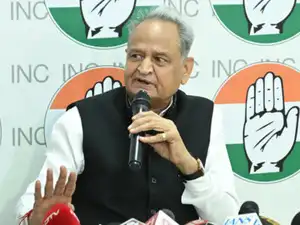
Former Rajasthan Chief Minister Ashok Gehlot has accused the Bharatiya Janata Party (BJP) of using electoral processes to strengthen its political position, raising concerns about ward delimitation, voter-list revisions and the treatment of opposition protests. His allegations have added to a wider political dispute over election integrity and the role of constitutional institutions ahead of the 2029 Lok Sabha elections.
Gehlot has argued that changes to electoral boundaries and voter rolls could affect the political balance in different constituencies. He has also criticised the BJP for organising rallies and demonstrations against opposition-led protests, saying a party in power should focus on responding to public concerns rather than mobilising against its political opponents.
These are allegations made by a senior Congress leader and should not be treated as established findings of electoral manipulation. However, they reflect growing political disagreements over how constituencies are organised, how electoral rolls are revised and how parties can ensure that voters have confidence in the election process.
Gehlot’s Allegations Over Ward Delimitation in Rajasthan
One of Gehlot’s central complaints concerns the delimitation of wards in Rajasthan’s urban local bodies. Delimitation involves reorganising geographical boundaries to determine which areas fall within particular electoral wards. The process can influence how votes are distributed among candidates and how political support translates into elected representatives.
In September 2026, as Rajasthan’s urban local body election process concluded, Gehlot alleged that the BJP government had manipulated ward boundaries to benefit its candidates. He claimed that areas supporting Congress, which previously formed three or four separate wards, had been merged into a single ward. By contrast, he alleged that BJP-supporting areas had been divided into two or three wards.
Gehlot also claimed that the boundary changes had separated voters from the same households, including husbands and wives, into different wards. According to him, the changes affected the way votes were translated into seats and disadvantaged Congress candidates in several locations.
He further alleged that Congress received more votes in certain areas but secured fewer councillor positions because of the way wards had been reorganised. He described the process as unfair and questioned whether the elections had provided a level playing field for political parties.
These allegations became part of a wider dispute over Rajasthan’s urban local body elections. The BJP government and its representatives have not accepted Gehlot’s characterisation of the delimitation exercise as electoral manipulation.
Why Ward Boundaries Can Influence Election Results
Ward delimitation is an important part of local electoral administration because it determines how voters are grouped into geographical constituencies. Even when the total number of votes received by political parties remains similar, different boundary arrangements can produce different seat outcomes.
For example, if voters supporting one party are concentrated in a small number of wards, that party could win those wards by large margins but receive fewer seats overall. If the same voters are distributed across more wards, their votes could translate into a larger number of victories, depending on the electoral pattern.
This distinction is relevant to Gehlot’s allegations. He argues that the reorganisation of Congress-supporting and BJP-supporting areas affected the conversion of votes into councillor seats.
An analysis of ward results in Jaipur, Jodhpur and Kota published by The Indian Express examined the relationship between vote share and seats won in the 2026 civic elections. Across 350 wards, Congress received approximately 10.35 lakh votes, compared with around 10.19 lakh for the BJP. However, Congress won 140 wards, while the BJP secured 180.
The analysis also found that Congress’s votes were more concentrated in fewer, more populous wards, while BJP support was distributed across a larger number of wards. This pattern helps explain how a party can receive slightly more votes overall but still win fewer constituencies.
However, differences in vote distribution do not independently establish that boundaries were deliberately manipulated. Assessing such an allegation requires examining the legal basis for the changes, population data, objections submitted by residents, the delimitation process and the decisions made by the relevant authorities.
Gehlot Also Raises Concerns About Electoral Roll Revisions
Beyond ward boundaries, Gehlot has questioned the revision of electoral rolls, particularly the Special Intensive Revision (SIR) process. Electoral roll revisions are intended to update voter lists by identifying eligible voters, removing entries that no longer qualify and correcting errors in existing records.
The process is politically sensitive because the inclusion or deletion of names can directly affect a person’s ability to vote. Parties across the political spectrum have a legitimate interest in ensuring that eligible voters are not excluded and that duplicate or otherwise invalid entries are addressed through established procedures.
Gehlot and other Congress leaders have alleged that the revision process is being used to target voters believed to support the opposition. In January 2026, Gehlot alleged that a coordinated attempt had been made in Rajasthan to remove names of voters with Congress leanings during the claims-and-objections stage.
He specifically referred to allegations involving pre-filled Form 7 submissions, which are used to request deletion of names from electoral rolls. Gehlot claimed that booth-level officers had faced pressure to process objections against voters and demanded action against those responsible.
These claims remain political allegations rather than proof that electoral rolls were systematically altered to favour one party. Establishing whether an individual entry has been wrongly removed requires examining the relevant application, supporting evidence, notices and decisions by electoral registration authorities.
Nevertheless, the controversy highlights the importance of transparency in voter-list revisions. Clear procedures, accessible objection mechanisms and timely appeals are essential to ensuring that eligible citizens can exercise their voting rights.
Why Delimitation Has Become a National Political Issue
Gehlot’s criticism also comes amid a broader national debate about delimitation. While the Rajasthan controversy concerns ward boundaries in urban local bodies, the proposed reorganisation of parliamentary constituencies is a separate issue with much wider implications.
Parliamentary delimitation determines the geographical boundaries of Lok Sabha constituencies and can affect the distribution of political representation. The process is particularly sensitive because changes in constituency boundaries and the allocation of seats can influence the balance of representation between states.
Gehlot has criticised the Centre over proposals relating to delimitation and women’s reservation, arguing that opposition parties should be consulted before major decisions are taken. In October 2026, he called for an all-party meeting and accused the government of attempting to advance significant changes without taking the opposition into confidence.
His concerns reflect a larger debate over how future constituency boundaries should be determined, what population data should be used and how the interests of different states should be protected.
It is important to distinguish parliamentary delimitation from the ward reorganisation criticised by Gehlot in Rajasthan. They operate at different levels of the electoral system and involve different administrative and constitutional arrangements. Allegations about municipal ward boundaries do not, by themselves, establish that parliamentary constituencies have been manipulated.
Why the 2029 Lok Sabha Elections Are Part of the Debate
The next general election is scheduled to take place in 2029, making electoral administration and constituency representation important subjects of political discussion. The controversy over delimitation and voter-list revisions has therefore become part of the wider debate about the conditions under which future national elections will be conducted.
For opposition parties, the central concern is whether electoral procedures will be applied fairly and consistently. They argue that decisions involving voter registration, constituency boundaries and election administration must be transparent and should not create an advantage for the ruling party.
The BJP, meanwhile, has not accepted the opposition’s broader accusations of electoral manipulation. Disputes over electoral procedures are ultimately matters that must be assessed through documentary evidence, statutory processes and decisions by the relevant authorities.
Gehlot’s warning about the future of elections is therefore a political assessment of what he believes could happen if concerns about electoral fairness remain unresolved. It is not evidence that the 2029 election has already been compromised or that its outcome has been predetermined.
The wider question is whether political parties and election authorities can establish confidence in the processes that determine who can vote, where they vote and how their votes are counted.
Gehlot Criticises BJP Rallies Against Opposition Protests
Another part of Gehlot’s criticism concerns the BJP’s response to opposition demonstrations. He has accused the ruling party of organising rallies and marches against protests led by opposition groups, arguing that a government should address public grievances instead of directing its political resources towards counter-demonstrations.
On November 4, 2026, Gehlot criticised BJP-led marches against the opposition and described the situation as an example of a “ruling opposition”. He argued that a party holding power at the Centre and in several states was behaving like an opposition movement by organising demonstrations against its political rivals.
Gehlot said people were raising concerns about inflation, unemployment and corruption, and argued that the government should respond to those issues. He also accused the BJP of attempting to divert attention from allegations of vote theft and irregularities in electoral roll revisions.
He described the INDIA bloc’s march and proposed public mobilisation as peaceful and disciplined. He also referred to Congress leader Rahul Gandhi’s repeated calls for political change through democratic means.
Gehlot’s comments form part of a wider disagreement over the role of protest in a democracy. Opposition parties argue that demonstrations are a legitimate way to question government decisions and demand accountability. BJP leaders, on the other hand, have criticised some opposition protests and questioned their political objectives.
In a separate exchange in October, Union Minister Rajnath Singh accused Congress and its allies of attempting to create disorder through political mobilisation. Gehlot rejected the suggestion that peaceful questioning of the government should be portrayed as an attempt to create anarchy.
What the Election Commission’s Role Means
The Election Commission of India plays a central role in administering elections to Parliament and state legislatures. Its responsibilities include supervising electoral rolls, conducting polls and ensuring that elections are held according to constitutional and legal requirements.
Electoral registration officers and other designated officials also have responsibilities in maintaining voter lists. Applications for adding, correcting or deleting entries are expected to follow established procedures, including the opportunity for affected individuals to raise objections where applicable.
These safeguards matter because electoral roll errors can have serious consequences. An eligible voter whose name is missing may be unable to cast a ballot, while incorrect or duplicate entries can undermine the accuracy of voter records.
For this reason, political parties and civil society groups have repeatedly called for transparency in revision exercises. Access to relevant records, clear communication with voters and effective grievance mechanisms can help address disputes before elections take place.
At the same time, allegations of political interference should be examined through evidence rather than assumed to be true simply because a party has raised them. Complaints need to be investigated through the appropriate legal and administrative channels.
Why Electoral Transparency Matters Beyond Political Parties
The controversy surrounding delimitation and voter-list revisions is not only a matter of competition between the BJP and Congress. It concerns the confidence ordinary citizens place in the democratic process.
Voters need to know that their names are correctly recorded, that constituency boundaries are determined through lawful procedures and that election officials can perform their responsibilities without improper pressure.
Transparency is especially important when constituency boundaries change. Residents should be able to understand why a particular area has been assigned to a ward or constituency and how objections to proposed boundaries are considered.
Similarly, voter-list revisions require reliable documentation and accessible correction procedures. People should be able to check their registration status and challenge errors before polling takes place.
Political parties also have a responsibility to present evidence when making allegations. Claims about deleted voters, manipulated boundaries or misuse of administrative machinery should be supported by records that can be examined independently.
What Happens Next in the Political Dispute?
The controversy is likely to remain part of the political debate as parties prepare for upcoming elections and the longer-term contest ahead of 2029. Congress has indicated that it will continue raising questions about electoral rolls, delimitation and the conduct of election-related administration.
In Rajasthan, the allegations surrounding urban local body elections have also created a political dispute over how ward boundaries were drawn and how the final results translated vote totals into elected positions. A detailed examination of delimitation records and election data would be necessary to assess the claims independently.
At the national level, discussions about parliamentary delimitation and women’s reservation are likely to require consultation among political parties and careful consideration of constitutional arrangements. The way these questions are handled could influence confidence in future electoral reforms.
The immediate challenge is to ensure that disagreements over election procedures are addressed through transparent institutions and established legal mechanisms. Political criticism and public protest are part of democratic life, but claims of manipulation require evidence and impartial examination.
Gehlot’s Warning Puts Electoral Fairness Back in Focus
Ashok Gehlot’s accusations against the BJP bring together several contentious issues: the reorganisation of local electoral wards, revisions to voter lists, proposed parliamentary delimitation and the political response to opposition protests.
His central argument is that electoral procedures must not be used to create an advantage for the party in power. He has warned that if questions about fairness and institutional accountability are ignored, public confidence in elections could suffer ahead of the 2029 general election.
The BJP has not accepted Gehlot’s allegations as a description of its conduct, and the claims should be distinguished from independently established findings. The available ward-level analysis offers context about how votes translated into seats in Rajasthan’s civic elections, but it does not by itself prove deliberate manipulation.
Ultimately, the credibility of future elections will depend on transparent voter registration, lawful constituency delimitation, impartial administration and the ability of citizens and political parties to challenge irregularities through effective procedures. The debate raised by Gehlot is therefore about more than the rivalry between two political parties: it concerns the standards of fairness and accountability expected from India’s electoral system.
For breaking news and live news updates, like us on Facebook or follow us on Twitter and Instagram. Read more on Latest India on thefoxdaily.com.






COMMENTS 0