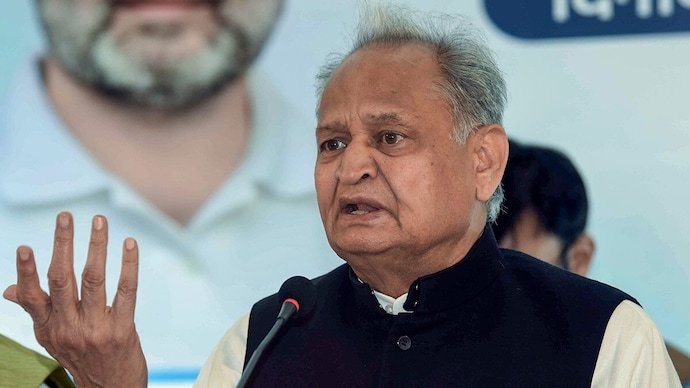
Former Rajasthan chief minister Ashok Gehlot has accused the BJP-led state government of using police, officials and administrative machinery to influence Elections for the heads of urban local bodies, including through alleged pressure on councillors and offers of money to switch sides.
Gehlot, a senior congress leader, made the allegations on Monday as political tensions surrounding the civic body elections intensified ahead of Rajasthan’s forthcoming panchayat polls. He claimed that councillors were offered as much as Rs 2 crore each during efforts to secure control of civic boards.
The BJP has rejected similar allegations, with Rajasthan BJP president Madan Rathore saying the party does not misuse government power and that elected councillors are free to vote according to their own choice.
The competing claims have put the spotlight on the process through which urban local body chairpersons are elected and on allegations of political pressure during the formation of civic boards. Gehlot has warned that the methods he alleges were used during the civic elections could become a concern during the upcoming panchayat elections.
What Ashok Gehlot alleged about the civic elections
In a post on X, Gehlot accused the Rajasthan government of using the police, administration and other government machinery to influence the formation of urban local body boards.
He alleged that the BJP government had violated democratic norms and established procedures while attempting to secure control of civic bodies.
Gehlot also alleged that financial inducements were offered to councillors, claiming that bids of up to Rs 2 crore per councillor were made during the process of forming civic boards.
Such an allegation, if established with evidence, would raise questions about the integrity of the process used to determine political control of local bodies. However, the claims made by Gehlot are allegations and have not been established as facts through the information provided.
Congress councillors allegedly faced pressure
Gehlot further alleged that Congress councillors faced multiple forms of pressure during the election process.
According to his claims, some councillors received notices questioning the legality of their houses, while others allegedly faced sealing action against their establishments. He also alleged that police cases were registered and notices were issued requiring councillors to appear for questioning.
Gehlot portrayed these actions as part of a wider effort to influence councillors before or during the elections for civic body chiefs.
He also claimed that police were sent to locations where councillors were staying in groups, commonly described as camps, and alleged that attempts were made to take some councillors away forcibly.
These claims would require investigation and supporting evidence to establish whether individual administrative or police actions were connected to political efforts to influence councillors.
Gehlot points to court proceedings
Gehlot also referred to court proceedings connected with the civic elections, saying the Rajasthan High Court had to hear election-related petitions late into Sunday night and issue directions in some cases.
His reference to the court proceedings was part of his broader argument that the electoral process had been affected by disputes serious enough to require judicial intervention.
Legal proceedings surrounding local elections can involve questions about nominations, procedures, election rules, administrative decisions or disputes concerning individual contests. The existence of court proceedings, by itself, does not establish Gehlot’s broader allegations of political interference.
The precise significance of individual court orders would depend on the cases involved and the findings or directions issued by the court.
Allegations involving police from other states
Gehlot made another serious allegation by claiming that police forces from Haryana and Uttar Pradesh were used to influence elected councillors from Rajasthan.
He did not merely frame the controversy as a dispute between political parties. His allegations extended to the involvement of police and administrative personnel and questioned whether state machinery was being used to affect the decisions of elected representatives.
Such claims are significant because local body elections are administered within the state’s constitutional and statutory framework, while police and civil administration are expected to perform their duties according to law rather than political considerations.
However, the allegation concerning personnel from other states would need independent evidence to establish what forces were deployed, under whose authority and for what purpose.
Several Rajasthan towns mentioned in Gehlot’s allegations
Gehlot cited incidents in Mathania, Paota, Tijara, Kuchera, Hanumangarh, Sriganganagar, Alwar and Nimbahera on the day of the civic chief elections.
He described the events he referred to as evidence of what he called unprecedented misuse of state machinery. The locations span different parts of Rajasthan, reinforcing his argument that the alleged pressure was not confined to one individual civic body.
At the same time, each allegation would need to be considered separately. A political claim covering multiple towns does not by itself establish that the same circumstances occurred in every location.
BJP rejects allegations of misuse of power
The BJP has rejected allegations that the state government misused its authority during the civic elections.
Rajasthan BJP president Madan Rathore has maintained that the party does not misuse government power and that councillors are free to vote according to their choice.
That position directly conflicts with Gehlot’s account of the election process. While Gehlot alleges that government institutions were used to pressure councillors, the BJP’s position is that elected councillors retained freedom to make their own voting decisions.
The competing accounts mean that allegations concerning individual incidents, police actions, administrative notices and alleged financial offers would need to be examined on the basis of documentary records, official orders, court proceedings and other independently verifiable evidence.
Why local body chief elections matter
Urban local bodies are an important level of government because they deal with issues that directly affect residents, including local Infrastructure, sanitation, civic services, planning and other municipal responsibilities.
The political control of a municipal or urban local body can therefore have consequences beyond the election of a chairperson. The leadership of a civic body can influence the functioning of its elected board and the political balance within local government.
That makes the formation of civic boards an important stage in Rajasthan’s local political system, particularly when no single party has an outright majority among councillors.
Where councillors can determine which political group controls a board, disputes over defections, inducements, pressure and administrative intervention can become particularly contentious. Allegations of this nature therefore tend to attract scrutiny because they concern the independence of elected representatives.
Gehlot raises concern over upcoming panchayat elections
The former chief minister has connected the civic election controversy to Rajasthan’s upcoming panchayat elections.
Gehlot expressed concern that the methods he alleges were used during the urban local body elections could be repeated when voters and elected representatives take part in the next round of rural local government elections.
Panchayati Raj institutions form another important layer of local Governance in Rajasthan, covering elected bodies at the village and higher rural levels. The elections therefore involve a large network of local representatives and can have substantial political significance for parties across the state.
Gehlot’s warning is consequently not limited to the immediate controversy. He is using the civic election dispute to raise broader questions about how local elections will be conducted and whether elected representatives will be able to make decisions without pressure.
Questions raised about bureaucracy and police
Gehlot also directed criticism toward sections of the state bureaucracy and police.
He alleged that some officials who had previously been regarded as politically neutral had become involved in actions that he attributed to the government.
He questioned whether public officials who have taken an oath to uphold the Constitution should participate in actions that could affect democratic processes.
His comments highlight a broader issue that arises during contentious elections: the obligation of government officials to implement laws and administrative decisions impartially while political parties compete for power.
Determining whether individual officials acted improperly, however, requires evidence concerning specific decisions and the authority under which those decisions were made. Political accusations alone do not establish misconduct by particular officers.
Horse-trading allegations remain disputed
The allegation of “horse-trading” refers in this context to claims that elected councillors were being persuaded, pressured or financially induced to support a particular political group in the formation of civic boards.
Gehlot’s claim of offers reaching Rs 2 crore per councillor is one of the most serious allegations in the dispute. Establishing such claims would require evidence such as communications, financial records, witness testimony or other material capable of demonstrating that an offer was actually made.
The BJP’s rejection of the allegations means there are currently competing political narratives about what happened during the civic board formation process.
The distinction between political allegation and established fact is particularly important in an election-related controversy. Claims concerning bribery, coercion or misuse of police powers can have serious consequences for individuals and institutions and therefore require evidence-based examination.
What the controversy means for Rajasthan’s local elections
The dispute has placed renewed attention on the integrity of local government elections in Rajasthan. While political parties routinely compete to secure control of municipal and panchayat institutions, allegations that administrative machinery is being used to influence elected representatives can undermine public confidence if they are not properly investigated.
For the administration, the challenge is to ensure that police and government officials operate according to established rules and that complaints involving councillors are handled through transparent and lawful procedures.
For political parties, the controversy is likely to remain part of the wider contest over the conduct of local elections. Congress has used Gehlot’s allegations to question the government’s approach, while the BJP has rejected the charges and maintained that councillors are free to vote as they choose.
As Rajasthan moves toward its next panchayat elections, attention is likely to remain focused on whether the concerns raised during the civic polls result in further legal challenges, administrative reviews or demands for greater safeguards around elected representatives.
Evidence and accountability will shape the next stage
The controversy over Rajasthan’s civic body elections now centers on competing claims: Gehlot alleges widespread misuse of government machinery, pressure on councillors and financial inducements, while the BJP denies abusing state power and says councillors are free to exercise their choice.
The allegations concerning specific incidents, police activity, administrative notices and alleged cash offers remain matters requiring evidence and, where appropriate, investigation or judicial scrutiny.
With panchayat elections ahead, the dispute has also shifted the focus toward the broader question of how local democratic institutions function when political control is closely contested.
Whether the current controversy leads to further legal proceedings or administrative action will depend on the evidence available and the findings of the relevant authorities and courts. For Rajasthan’s local political system, the central issue remains the credibility of the electoral process and the ability of elected representatives to participate without unlawful interference.
For breaking news and live news updates, like us on Facebook or follow us on Twitter and Instagram. Read more on Latest India on thefoxdaily.com.





COMMENTS 0