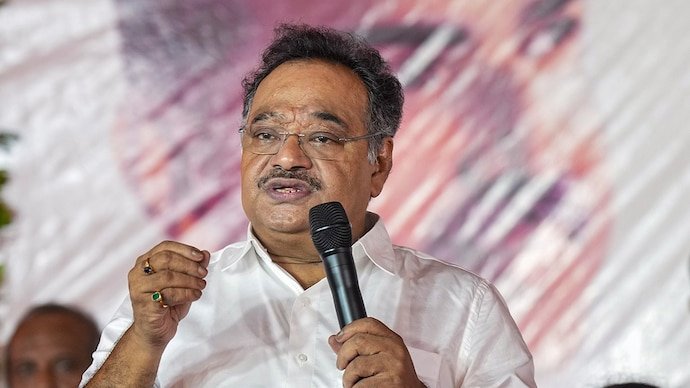
West Bengal BJP president Samik Bhattacharya has made a rare public admission that the state government has not yet succeeded in eliminating extortion and syndicate Culture despite the BJP coming to power only two months ago. Speaking at an industry-focused event near Kolkata, Bhattacharya said that while the administration has made progress in improving the Investment climate, deep-rooted problems built over decades cannot be resolved overnight.
His remarks stand out because they acknowledge that some individuals associated with the ruling party have also displayed the same tendencies the BJP has long criticized. At the same time, he stressed that the government is committed to creating a Business environment where investment decisions are driven by economic opportunity rather than political influence.
The comments came during the ‘Udyami Samagam’ event at the IIT Kharagpur Research Park in Rajarhat, where business leaders, entrepreneurs, academics and policymakers discussed West Bengal’s industrial future. Bhattacharya also announced that the state government would soon begin consultations with industry stakeholders before unveiling a new industrial policy.
Key Takeaways
- BJP state president Samik Bhattacharya admitted extortion has not been fully eliminated in West Bengal.
- He said the BJP government has been in office for only two months and inherited long-standing systemic challenges.
- The government plans to consult investors, entrepreneurs, academics and industrialists before introducing a new industrial policy.
- Bhattacharya urged party workers to avoid political intimidation and warned against targeting opposition leaders.
- He emphasized that attracting investment requires keeping partisan Politics away from business.
What Did Samik Bhattacharya Say?
Addressing entrepreneurs and business leaders, Bhattacharya acknowledged that claiming complete success against extortion would be inaccurate. According to him, certain practices associated with syndicate networks and easy-money systems continue to exist, and the government is actively working to address them.
He noted that a change in political leadership does not immediately transform institutional culture. Instead, he described the current administration as being in the early stages of Governance, suggesting that reforms require time, enforcement and administrative consistency.
Bhattacharya also admitted that some people who recently joined the ruling party or had previously remained inactive were now attempting to gain influence, creating fresh challenges for the leadership.
Why Extortion and Syndicate Culture Matter
Extortion and syndicate-related allegations have long featured in West Bengal’s political discourse. Business groups and developers have frequently argued that illegal demands, unauthorized intermediaries and political interference increase project costs, delay investments and discourage new enterprises.
While different political parties have exchanged allegations over the years, the issue remains economically significant because investor confidence depends heavily on transparent governance and predictable business conditions.
For entrepreneurs, reducing unofficial costs and ensuring legal protection can be just as important as tax incentives or infrastructure development.
Government Says Investment Climate Has Improved
Although Bhattacharya acknowledged that problems remain, he argued that the overall business environment has become more secure than before.
He claimed entrepreneurs are increasingly able to procure construction materials such as bricks, cement and sand without being forced to rely on politically connected suppliers. He further stated that businesses facing intimidation should immediately report incidents to law enforcement, indicating that the government intends to act against those involved.
The statement reflects the administration’s broader effort to reassure domestic and international investors that the rule of law will be strengthened.
Political Interference in Business: A Key Concern
One of the strongest themes in Bhattacharya’s speech was the need to separate politics from commerce.
He argued that political influence has expanded into nearly every sector of public life, including Education, healthcare and industry. According to him, sustainable economic development requires businesses to operate based on market principles rather than political affiliations.
He said West Bengal’s long-term economic revival depends on creating an ecosystem where entrepreneurs are free to invest, expand and innovate without political pressure.
Major Announcements Made During the Event
| Announcement | Purpose |
|---|---|
| Consultation on new industrial policy | Gather input from businesses, startups and experts before finalizing reforms. |
| Action against extortion | Improve investor confidence through stronger enforcement. |
| Keeping politics out of business | Create a neutral and competitive investment environment. |
| Engagement with industry stakeholders | Develop practical, business-focused policies. |
| Support for entrepreneurs | Encourage new investments and industrial growth. |
Warning to BJP Workers and New Party Members
Bhattacharya also used the platform to issue a message to his own party workers. He warned against confrontational political behavior, including throwing eggs at opposition leaders, saying such actions could eventually be directed back at those responsible.
His remarks suggested that political conduct should remain within democratic norms, regardless of which party is in power. He cautioned newly inducted leaders and workers seeking influence to avoid behavior that could damage both the party’s reputation and the government’s credibility.
The warning reflects an effort by the leadership to project administrative discipline while discouraging political excesses.
Industrial Policy Consultations to Begin Soon
A major policy announcement during the event was the government’s plan to begin extensive consultations before drafting a new industrial policy.
According to Bhattacharya, discussions will involve:
- Industrialists
- Domestic investors
- Startup founders
- University professors
- Business experts
- Other economic stakeholders
The consultative approach aims to ensure that the policy reflects practical industry needs while addressing long-standing investment challenges.
Urban Land Reforms and Investment Strategy
Bhattacharya also referred to the government’s decision to repeal the Urban Land Ceiling Act as part of its broader investment strategy.
Supporters of the move argue that removing restrictions on urban land availability could unlock opportunities for industrial projects, logistics hubs, commercial developments and large-scale real estate investments.
However, the long-term impact will depend on implementation, regulatory clarity and market response.
How Investment Climate Influences Economic Growth
Investment decisions are influenced by multiple factors beyond financial incentives. Businesses typically evaluate:
- Political stability.
- Law and order.
- Ease of obtaining approvals.
- Availability of infrastructure.
- Transparency in governance.
- Availability of skilled workers.
- Regulatory consistency.
Reducing unofficial barriers such as extortion can significantly improve a state’s competitiveness in attracting manufacturing, technology, logistics and service-sector investments.
Comparison: Challenges vs. Government’s Proposed Solutions
| Current Challenge | Government’s Response |
|---|---|
| Extortion and syndicate practices | Stronger law enforcement and public reporting mechanisms. |
| Political interference in business | Commitment to separating politics from commercial activity. |
| Declining investor confidence | Stakeholder consultations and a new industrial policy. |
| Limited industrial expansion | Land reforms and improved investment environment. |
| Administrative transition | Gradual institutional reforms under the new government. |
Why These Remarks Are Politically Significant
Public acknowledgments of governance challenges by senior ruling party leaders are relatively uncommon. Rather than presenting an entirely positive assessment, Bhattacharya admitted that systemic issues continue to exist while emphasizing that reforms are underway.
Such statements can be interpreted in two ways. Supporters may view them as an example of transparency and realistic governance, while critics may argue that they highlight the difficulty of delivering rapid change after assuming office.
Either way, the comments place measurable expectations on the government’s future performance regarding law enforcement, administrative reforms and industrial development.
What Businesses Will Watch Next
Investors are likely to monitor several developments over the coming months, including:
- Publication of the new industrial policy.
- Progress in reducing extortion-related complaints.
- Speed of regulatory approvals.
- Implementation of land reforms.
- Growth in domestic and private investment.
- Industrial project announcements.
The effectiveness of these measures will ultimately determine whether West Bengal succeeds in strengthening its position as an investment destination.
Future Outlook
The BJP government’s industrial agenda is entering an important phase. While early reforms have focused on improving investor confidence and addressing governance concerns, the next stage will depend on converting policy announcements into measurable economic outcomes.
If consultations result in a practical industrial policy backed by effective implementation, West Bengal could strengthen its competitiveness in manufacturing, startups, logistics and infrastructure investment. However, sustained success will require consistent enforcement, institutional transparency and continued efforts to eliminate political interference in commercial activities.
Conclusion
Samik Bhattacharya’s admission that extortion has not yet been fully eliminated reflects the complexity of transforming long-established governance systems. At the same time, his emphasis on political neutrality in business, internal party discipline and stakeholder-driven industrial reforms signals the government’s intention to create a more investor-friendly environment.
As consultations on the new industrial policy begin and administrative reforms continue, businesses will be looking beyond political rhetoric to tangible improvements in governance, ease of doing business and investment security. The coming months will be crucial in determining whether the government’s economic vision translates into sustained industrial growth and renewed investor confidence across West Bengal.
For breaking news and live news updates, like us on Facebook or follow us on Twitter and Instagram. Read more on Latest India on thefoxdaily.com.






COMMENTS 0