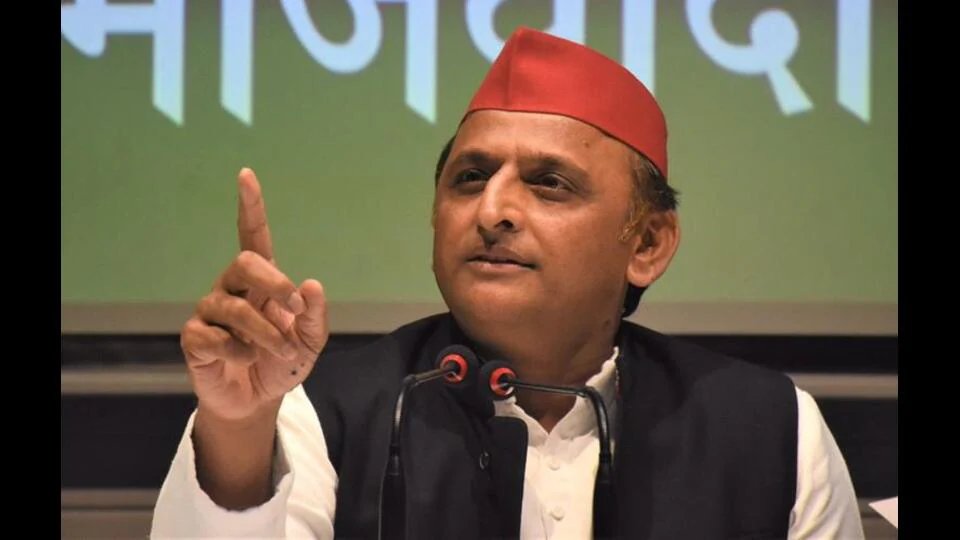
The upcoming visit of Samajwadi Party (SP) president and former Uttar Pradesh chief minister Akhilesh Yadav to the Ram Temple in Ayodhya has brought the politically sensitive temple issue back into focus ahead of the state’s next Assembly elections. The ruling Bharatiya Janata Party (BJP) plans to highlight the SP’s historical position on the Ram Temple movement and the police firing on Ram devotees in 1990, when Mulayam Singh Yadav was chief minister.
Akhilesh Yadav is scheduled to visit the Ram Temple with his family on December 12. The visit would be his first to the temple since its consecration in January 2024. The BJP has questioned the timing and political significance of the visit, arguing that the SP must account for its past position on the Ayodhya dispute before presenting itself as supportive of the temple.
The SP, meanwhile, has maintained that it supported resolving the dispute through dialogue or the judicial process. It has also attempted to shift the political debate towards alleged irregularities involving donations to the temple, an issue the Opposition raised in Parliament during the July-August monsoon session.
Why Akhilesh Yadav’s December 12 Visit Matters
Ayodhya remains one of the most politically significant locations in Uttar Pradesh. The Ram Temple’s construction followed a prolonged legal dispute over the site, with the Supreme Court’s 2019 verdict clearing the way for the project. The temple was consecrated in January 2024, giving the BJP a major political and symbolic milestone ahead of the general election that year.
Akhilesh Yadav’s planned visit is significant because the SP has often faced criticism from the BJP over its position during the Ram Janmabhoomi movement. The BJP argues that the party’s historical record is inconsistent with its present engagement with the temple. By visiting with his family, Yadav could seek to demonstrate that the SP respects the religious significance of Ayodhya while maintaining its own political position on the dispute.
For the BJP, however, the visit offers an opportunity to bring the events of 1990 back into the election debate. Party leaders intend to connect the SP’s current political messaging with the decisions taken by the government led by Mulayam Singh Yadav during the Ram Janmabhoomi movement.
The timing also matters because Uttar Pradesh is expected to head into Assembly elections early next year. Both parties are seeking to shape the political narrative in Ayodhya and across the state before the campaign intensifies.
BJP Targets SP Over the 1990 Police Firing
The 1990 police firing on volunteers associated with the Ram Janmabhoomi movement remains a major point of political contention between the BJP and the SP. Mulayam Singh Yadav was Uttar Pradesh chief minister when police opened fire on volunteers, commonly referred to as kar sevaks, who had gathered in Ayodhya during the movement to build a Ram Temple at the disputed site.
The BJP has repeatedly invoked the incident to accuse the SP of opposing the temple movement. Its leaders argue that the firing reflected the Mulayam Singh Yadav government’s approach to the agitation and should remain part of the political discussion whenever the SP speaks about Ayodhya.
Following the announcement of Akhilesh Yadav’s visit, BJP state unit president and Union minister Pankaj Chaudhary demanded that the SP leader apologise for the deaths of Ram devotees during his father’s tenure as chief minister.
Chaudhary also suggested that Yadav should visit Ayodhya on December 6, the anniversary of the Babri Masjid’s demolition, rather than December 12. He argued that a temple visit would not address the historical controversy unless the SP acknowledged the deaths of the volunteers.
His remarks indicate that the BJP intends to make the 1990 firing a central part of its political messaging against the SP. The party is likely to present the issue as a question of historical accountability, particularly among voters for whom the Ram Janmabhoomi movement carries religious and political significance.
SP Defends Its Position on the Ayodhya Dispute
The Samajwadi Party has maintained that it supported resolving the Ayodhya dispute either through dialogue or through the courts. This position differs from the BJP’s characterisation of the SP as a party that opposed the construction of the Ram Temple.
The distinction is important because the political debate is not limited to Akhilesh Yadav’s upcoming visit. It also concerns how the two parties interpret the history of the Ayodhya movement and the role played by successive governments before the temple’s construction.
For the SP, the challenge is to establish that its approach to the dispute should not prevent it from engaging with the religious and cultural significance of the temple today. The party is also attempting to raise questions about the management of donations and alleged financial irregularities connected with the temple.
Akhilesh Yadav has separately promised that, if the SP returns to power, his government will work to make Ayodhya the global capital of Sanatani pilgrimage. The statement suggests that the party wants to present an alternative development vision for the religious city rather than allow the BJP to dominate the political conversation around the temple.
Ram Temple Donation Theft Becomes an Opposition Issue
Alongside the debate over the 1990 firing, alleged irregularities involving temple donations have become another point of confrontation between the BJP and the Opposition. The SP and other Opposition parties have questioned the management of donations collected at the Ram Temple and sought accountability over the reported theft.
The issue gained political attention after allegations emerged that money had been taken from donation boxes during the cash-counting process. The Opposition used the matter to question the management and oversight arrangements at one of the country’s most prominent religious sites.
During Parliament’s July-August monsoon session, Opposition parties raised the alleged theft and staged a play inside the Parliament House complex to draw attention to the issue. Their objective was to put pressure on the government and challenge the BJP’s claims of effective administration in Ayodhya.
The Special Investigation Team (SIT) investigating the matter informed the Supreme Court this month that eight temple staff members had allegedly swindled ₹2.7 crore from donation boxes during cash-counting. The reported findings have given the Opposition a specific figure and investigation update to use in its criticism.
However, the BJP has argued that the government responded promptly after the alleged irregularities came to light. A BJP leader said an SIT was established and those allegedly involved were caught, describing the Opposition’s continued focus on the matter as an attempt to find political issues in the state.
The investigation’s findings are likely to remain part of the political debate, particularly because the temple is central to the BJP’s political narrative in Uttar Pradesh. The party will need to counter questions about financial oversight while highlighting the broader development of Ayodhya.
BJP Seeks to Shift Focus Towards Ayodhya’s Development
The BJP is also seeking to make infrastructure development and tourism the centre of its campaign in Ayodhya. Party leaders argue that the Ram Temple has helped transform the city into a major religious destination and created opportunities for businesses and employment.
A BJP leader cited Uttar Pradesh government data showing that the number of visitors to Ayodhya increased from six million in 2020 to 299 million in 2025. The figures reflect the scale of the reported rise in visitor numbers, although the total includes visitors to the wider city and does not necessarily represent the number of people entering the temple itself.
Party leaders have also pointed to improvements in road and rail connectivity, alongside the development of hotels, hospitals and educational facilities. They argue that growing investment and tourism could provide a stronger electoral message than the controversy over alleged donation theft.
Ayodhya’s development has become an important part of the BJP’s effort to demonstrate the economic and administrative benefits associated with the temple project. Increased visitor numbers can support hospitality, transport, retail and other local businesses, although the scale of long-term benefits will depend on how effectively the city manages tourism and infrastructure demands.
The BJP’s challenge is to convince voters that these changes have improved everyday life in the city and surrounding areas. The SP, in turn, may seek to question whether the development has benefited local residents sufficiently and whether the administration has handled the temple’s growing public importance responsibly.
Ayodhya’s Electoral Importance After BJP’s 2024 Lok Sabha Setback
The political contest in Ayodhya has gained additional significance since the BJP lost the Faizabad Lok Sabha constituency, which includes Ayodhya, in the 2024 general election. The result was a major setback for the party in a constituency closely associated with the Ram Temple movement.
The BJP has since stepped up efforts to strengthen its position across the five Assembly constituencies falling under the Faizabad parliamentary seat. In the 2022 Uttar Pradesh Assembly elections, the BJP won three of these five seats, while the SP secured two.
A BJP leader attributed the 2024 Lok Sabha defeat to local issues, organisational complacency and a failure to address concerns raised by voters. The leader said the party now intends to focus on winning all five Assembly seats, with development expected to be a major part of its campaign.
The result also demonstrated that the Ram Temple issue, despite its considerable political significance, does not automatically guarantee electoral success. Local grievances, candidate selection, governance and organisational performance can influence voting decisions even in constituencies closely associated with a major national political issue.
For the BJP, regaining ground in Faizabad is therefore more than a local electoral objective. It is also an opportunity to demonstrate that the party can convert the symbolic importance of the temple into broader political support.
Uttar Pradesh Election Battle Takes Shape After 2024 Results
The wider political situation in Uttar Pradesh has made the upcoming Assembly election particularly important for both the BJP and the Opposition. In the 2024 Lok Sabha election, the Congress-SP alliance won 43 of the state’s 80 parliamentary seats and secured 43.52% of the vote.
The BJP’s tally fell from 62 seats in 2019 to 33 in 2024. Its reduced numbers meant that it no longer had a parliamentary majority on its own, marking a significant change from its performance in the previous two general elections.
The outcome strengthened the Opposition’s position in Uttar Pradesh and gave the SP an opportunity to present itself as a major force capable of challenging the BJP in the state. The Congress-SP alliance’s performance also showed that coordinated opposition campaigning could produce a stronger result than either party might achieve independently.
The BJP is now seeking a third consecutive term in power in Uttar Pradesh. Its strategy in Ayodhya appears to combine the Ram Temple movement’s historical legacy with criticism of the SP’s record and an emphasis on development under the current government.
The SP, meanwhile, is attempting to challenge the BJP on governance and temple management while avoiding being confined to questions about its historical position on the Ayodhya dispute. Akhilesh Yadav’s December 12 visit will therefore be closely watched as both parties attempt to define the political meaning of the temple in the run-up to the election.
Can the Ram Temple Issue Shape the Next Uttar Pradesh Election?
The BJP’s decision to focus on the 1990 firing suggests that it sees the historical record of the Ayodhya movement as an important campaign issue. By linking Akhilesh Yadav’s visit to the decisions taken during Mulayam Singh Yadav’s tenure, the party hopes to challenge the SP’s credibility among voters who strongly identify with the Ram Temple movement.
At the same time, the SP’s emphasis on alleged donation irregularities highlights a different aspect of the temple’s public importance: accountability in the management of a major religious institution. The party is also trying to position Ayodhya as a destination for religious tourism and development under a possible SP government.
Neither issue is likely to operate in isolation. Voters will also consider local infrastructure, employment, public services, law and order, candidate credibility and the performance of the state government. The 2024 Faizabad result has already shown that political outcomes in Ayodhya cannot be understood through the temple issue alone.
Akhilesh Yadav’s planned visit on December 12 is therefore likely to become a test of political messaging for both sides. The BJP will seek to make the SP answer for the events of 1990, while the SP will attempt to demonstrate its engagement with Ayodhya’s religious identity and keep attention on questions surrounding temple donations and development.
As Uttar Pradesh moves towards another high-stakes Assembly election, Ayodhya is once again emerging as a key political battleground. The contest will not only concern the Ram Temple’s legacy but also which party can persuade voters that it has the stronger record and vision for the city’s future.
For breaking news and live news updates, like us on Facebook or follow us on Twitter and Instagram. Read more on Latest India on thefoxdaily.com.




COMMENTS 0