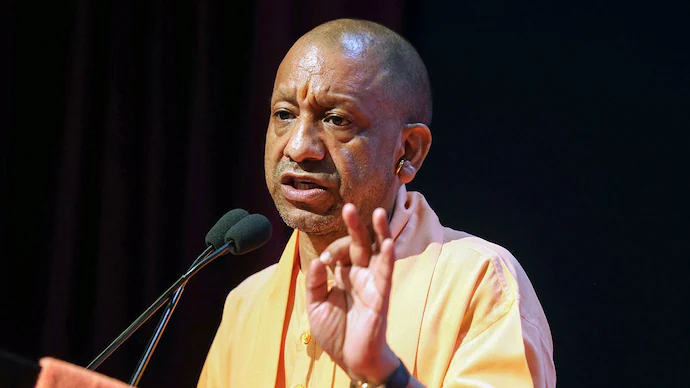
The Bharatiya Janata Party (BJP) is considering a strategy that could turn the 2027 Uttar Pradesh Assembly Elections into a direct test of its top state leadership. Chief Minister Yogi Adityanath and both Deputy Chief Ministers, Keshav Prasad Maurya and Brajesh Pathak, are among the leaders whose candidature is being discussed as the party prepares for a challenging electoral contest.
The reported plan comes at a time when the BJP is seeking to recover from its disappointing performance in Uttar Pradesh during the 2024 Lok Sabha elections. The party lost a significant number of parliamentary seats compared with 2019, while the Samajwadi Party (SP) emerged as the largest party in the state.
According to party sources, Adityanath and Pathak could contest from their existing Assembly constituencies, while the BJP is exploring possible seats for Maurya. The latter is currently a member of the Uttar Pradesh Legislative Council and would need to win an Assembly constituency if he is to enter the Legislative Assembly through the 2027 election.
The discussions suggest that the BJP wants its most recognisable state leaders to participate directly in the electoral battle rather than limit their roles to campaigning and organisational management. However, the reported choices are not final candidate announcements, and the party has yet to formally confirm the constituencies.
Why the BJP Is Considering Fielding Its Top State Leaders
The BJP’s possible decision to field Adityanath, Maurya and Pathak reflects the political importance of Uttar Pradesh in the party’s national strategy. The state sends 80 members to the Lok Sabha and has 403 Assembly constituencies, making its electoral performance important for both state and national politics.
In the 2024 Lok Sabha elections, the BJP won 33 seats in Uttar Pradesh, a substantial decline from the 62 it had secured in 2019. The SP won 37 seats, while its ally Congress secured six. The result gave the opposition alliance renewed confidence and demonstrated that the BJP could face a more competitive contest in the state.
The BJP’s leadership is therefore under pressure to understand the reasons behind the setback and rebuild support across different regions and communities. Fielding the chief minister and his two deputies could help the party make the state leadership more visible and establish clear political accountability ahead of the election.
It could also help the BJP communicate that its campaign is being led by leaders who are directly seeking voters’ support. Rather than presenting the election only as a contest between political parties, the strategy could make the performance and credibility of the state government central issues.
For Adityanath, Maurya and Pathak, contesting elections would also provide an opportunity to demonstrate their individual political strength. Their constituencies, social backgrounds and roles within the government give each candidature a different significance for the BJP.
Yogi Adityanath Could Contest Again From Gorakhpur Urban
Yogi Adityanath has been the face of the BJP government in Uttar Pradesh since 2017. His possible candidature in the 2027 Assembly elections is therefore central to the reported strategy.
Adityanath represents the Gorakhpur Urban Assembly constituency. He contested and won the seat in both the 2017 and 2022 elections. If he contests from the same constituency again, it would reinforce the BJP’s decision to place him at the centre of its state campaign.
His political influence in Uttar Pradesh extends beyond his constituency. Before becoming chief minister, Adityanath was a prominent political figure in eastern Uttar Pradesh and represented Gorakhpur in the Lok Sabha for several terms.
In 2017, the BJP appointed him chief minister after winning a large Assembly majority. He subsequently entered the state legislature through the Legislative Council. In the 2022 election, he contested directly from Gorakhpur Urban and secured another victory before beginning his second consecutive term.
At a recent BJP state executive meeting, party in-charge Vinod Tawde reiterated that Adityanath would lead the campaign. Tawde also set a target of winning 312 Assembly seats in the upcoming election, indicating the scale of the party’s electoral ambitions.
Fielding Adityanath could help the BJP connect its campaign to the performance of the state government. The party has highlighted infrastructure expansion, improvements in law and order and the delivery of welfare schemes as important achievements of its administration.
However, the opposition is expected to challenge the government’s record on unemployment, inflation, recruitment examinations, government job vacancies and the implementation of welfare promises. Adityanath’s candidature would put him directly in the electoral spotlight as these issues become part of the campaign.
Keshav Prasad Maurya’s Candidature Presents a Different Challenge
The BJP’s reported plan for Keshav Prasad Maurya is more complicated because he is currently an MLC rather than an elected member of the Legislative Assembly. The deputy chief minister would need to contest an Assembly seat if the party wants him to enter the House through the 2027 elections.
Maurya is one of the BJP’s prominent Other Backward Classes (OBC) leaders in Uttar Pradesh. He has played an important role in the party’s outreach to backward communities and has held several organisational and government responsibilities.
His electoral performance in 2022, however, created a difficult political situation. Maurya contested from Sirathu in Kaushambi district but lost to Pallavi Patel of the Apna Dal (Kamerawadi), who was then aligned with the Samajwadi Party.
The defeat attracted attention because Maurya was already serving as deputy chief minister and was one of the BJP’s most prominent OBC faces. It also demonstrated that seniority within the party does not automatically guarantee victory in an Assembly constituency.
According to BJP sources, Maurya is interested in contesting the 2027 elections but may prefer a constituency other than Sirathu. Prayagraj North and Phaphamau have emerged as possible options being discussed.
Both constituencies are currently represented by BJP MLAs, meaning that selecting either seat could involve organisational and political considerations. The party would have to assess the existing representatives, local support and the likely impact of changing its candidate.
Maurya’s candidature carries significance beyond the question of where he will contest. His position within the BJP’s OBC outreach makes his electoral performance important to the party’s efforts to maintain support among non-Yadav backward communities.
The BJP has traditionally sought to build a broad social coalition in Uttar Pradesh by combining support among upper castes with sections of OBC and Dalit voters. Maurya’s political profile has been an important part of that approach.
His relationship with the party’s state leadership has also attracted attention at different points, particularly following the BJP’s reduced parliamentary performance in 2024. A decision to field him from a carefully selected constituency could help the party underline his continuing importance within its state leadership.
Brajesh Pathak’s Candidature Could Strengthen the BJP’s Social Representation
Deputy Chief Minister Brajesh Pathak is another senior leader the BJP is reportedly considering for the 2027 Assembly elections. Pathak currently represents Lucknow Cantonment and could contest from the same constituency.
Pathak has served as deputy chief minister since 2022 and is an important part of the BJP’s leadership structure in Uttar Pradesh. His political background and social identity also give his candidature significance in the party’s effort to maintain representation across different communities.
A Brahmin leader, Pathak is among the prominent upper-caste faces in the state government. His presence alongside Adityanath and Maurya would allow the BJP to project a leadership team representing different political and social constituencies.
Unlike Maurya, Pathak does not face the same immediate constituency-selection question because he already represents Lucknow Cantonment. Contesting again from the seat would allow the party to retain continuity while keeping another senior government leader directly involved in the electoral contest.
His role could also be important in the BJP’s efforts to communicate its governance record in the state capital. Lucknow is politically significant as the administrative centre of Uttar Pradesh and a key location for the party’s state organisation.
What the 2024 Lok Sabha Results Mean for the BJP in Uttar Pradesh
The BJP’s performance in the 2024 general election is a major reason the party is reviewing its approach to the next Assembly contest. The results represented a substantial change from its strong showing in the state during the previous parliamentary election.
In 2019, the BJP won 62 of Uttar Pradesh’s 80 Lok Sabha seats. In 2024, its tally fell to 33. The SP increased its representation to 37 seats, while Congress won six as part of the opposition alliance.
The result gave the SP-Congress alliance a stronger position in the state and challenged the BJP’s earlier dominance. It also showed that the opposition could convert coordinated campaigning and voter support into parliamentary victories across multiple regions.
Another important aspect of the result was the distribution of support across Assembly segments. The SP-Congress alliance performed strongly in several constituencies that had previously been won by the BJP in the 2022 Assembly elections.
That development has implications for the BJP’s preparations because parliamentary and Assembly elections involve different political calculations. Local candidates, constituency-level issues, caste combinations and the performance of state representatives can influence Assembly voting in ways that differ from national elections.
The BJP will therefore need to address not only its statewide political messaging but also the reasons it lost support in particular regions and communities. The candidature of senior leaders could help focus attention on these organisational and electoral challenges.
Can the BJP Secure a Third Consecutive Assembly Term?
The 2027 election will be important because the BJP is seeking a third consecutive term in Uttar Pradesh. In the 2022 Assembly elections, the party won 255 of the 403 seats, securing a second term under Adityanath.
The SP won 111 seats, while its then allies also secured victories. The Rashtriya Lok Dal (RLD) won eight seats and the Suheldev Bharatiya Samaj Party (SBSP) won six. Congress was reduced to two seats, while the Bahujan Samaj Party (BSP) won only one constituency.
The 2022 result was significant because Adityanath became the first chief minister in Uttar Pradesh to return to office after completing a full five-year term since the state was established in its present form. The BJP’s current objective is to retain power and extend that record through another consecutive term.
However, the 2024 parliamentary results have changed the political environment. The SP believes its performance demonstrated that it can challenge the BJP across the state, while Congress will seek to build on its improved parliamentary representation.
For the ruling party, the central challenge will be to translate its previous Assembly majority into renewed support while addressing concerns raised by voters after the general election.
Opposition Strategy: Akhilesh Yadav Plans to Focus on the Wider Campaign
The BJP’s reported plan to field its senior state leaders contrasts with the reported decision of SP chief Akhilesh Yadav not to contest the 2027 Assembly elections.
Yadav’s decision would allow him to concentrate on the wider campaign, organisational planning and coordination with potential allies rather than focus on an individual constituency. As the principal opposition leader in the state, his role will be important in converting the SP’s 2024 parliamentary performance into Assembly-level support.
The SP’s immediate task is to maintain the coalition and voter mobilisation that helped it win 37 Lok Sabha seats. The party will also need to strengthen its organisation across constituencies where it has not performed as well and develop a strategy for regions where the BJP retains significant support.
The relationship between the SP and Congress will be another important factor. Both parties contested the 2024 general election together in Uttar Pradesh, but the terms of any seat-sharing arrangement for the 2027 Assembly polls will require further negotiations.
For the BJP, the contrast between Yadav’s reported decision and the possible candidatures of Adityanath, Maurya and Pathak could become a central feature of the campaign. The ruling party would have its leading state figures directly contesting elections, while the SP chief would focus on managing the wider opposition challenge.
Alliance Politics Will Shape the 2027 Uttar Pradesh Election
The 2027 Assembly election is also likely to be influenced by the alliances formed by the BJP and opposition parties. The BJP is preparing to fight with partners that include Apna Dal (Soneylal), the Nishad Party, SBSP and RLD, although the final seat-sharing arrangements will be important.
These regional parties have influence among particular social groups and in specific parts of Uttar Pradesh. Their electoral value depends on their local organisation, leadership networks and ability to transfer votes to alliance candidates.
The BJP’s relationship with these partners will therefore be an important part of its preparations. The party will have to balance its own candidates’ ambitions with the demands of allies seeking constituencies where they have established support.
On the opposition side, the SP is exploring cooperation with Congress. Their combined performance in 2024 gave the alliance a strong parliamentary position, but reproducing that coordination across 403 Assembly constituencies will involve a different set of negotiations.
The BSP, which won only one Assembly seat in 2022 and no Lok Sabha seats in Uttar Pradesh in 2024, also remains a factor in the state’s electoral calculations. Its performance and the distribution of votes among parties could influence contests in several constituencies.
What the BJP’s Reported Candidate Strategy Could Achieve
Fielding Adityanath, Maurya and Pathak could serve several political purposes for the BJP. First, it would make the state government’s leadership directly accountable to voters at the constituency level. Second, it would give the party a visible leadership team for its statewide campaign.
Third, the three candidatures could help the BJP communicate its political and social coalition. Adityanath is the chief minister and the party’s central face in the state, Maurya is a prominent non-Yadav OBC leader, and Pathak represents an influential upper-caste political constituency.
However, the strategy also carries risks. Senior leaders contesting elections can become directly exposed to local anti-incumbency, constituency-level dissatisfaction and criticism of the government’s record. A defeat by any prominent leader could create an additional political challenge for the party.
The choice of Maurya’s constituency is particularly important because both Prayagraj North and Phaphamau are already represented by BJP legislators. Any decision involving a change of candidate would require the party to manage local expectations and organisational interests.
Similarly, Adityanath and Pathak would have to defend their own constituencies while participating in the wider campaign. Their personal electoral performances could become important talking points during the election.
Final Candidate Decisions Will Determine the BJP’s Electoral Approach
The reported discussions about fielding Yogi Adityanath, Keshav Prasad Maurya and Brajesh Pathak indicate that the BJP is considering a more direct leadership-focused strategy for the 2027 Uttar Pradesh Assembly elections.
The party’s setback in the 2024 Lok Sabha polls has increased the importance of rebuilding support across the state. By putting its chief minister and both deputy chief ministers in the electoral contest, the BJP could seek to demonstrate leadership confidence, strengthen its social outreach and make its government record a central campaign issue.
But the proposal remains subject to final decisions by the party. Maurya’s constituency is still a key question, while the reported choices for Adityanath and Pathak have not been formally announced as final nominations.
The opposition’s ability to maintain its alliance, address local concerns and convert parliamentary gains into Assembly victories will also shape the contest. With the BJP seeking another term and the SP aiming to expand its 2024 gains, the 2027 election is likely to revolve around leadership, governance, caste representation, local candidates and alliance arithmetic.
Ultimately, the BJP’s decision to field its top state leaders will reveal how it intends to approach the election: whether it wants to make the contest a direct referendum on the Adityanath government and its leadership team, or rely on a broader campaign led by the party organisation and its national leadership.
For breaking news and live news updates, like us on Facebook or follow us on Twitter and Instagram. Read more on Latest India on thefoxdaily.com.





COMMENTS 0