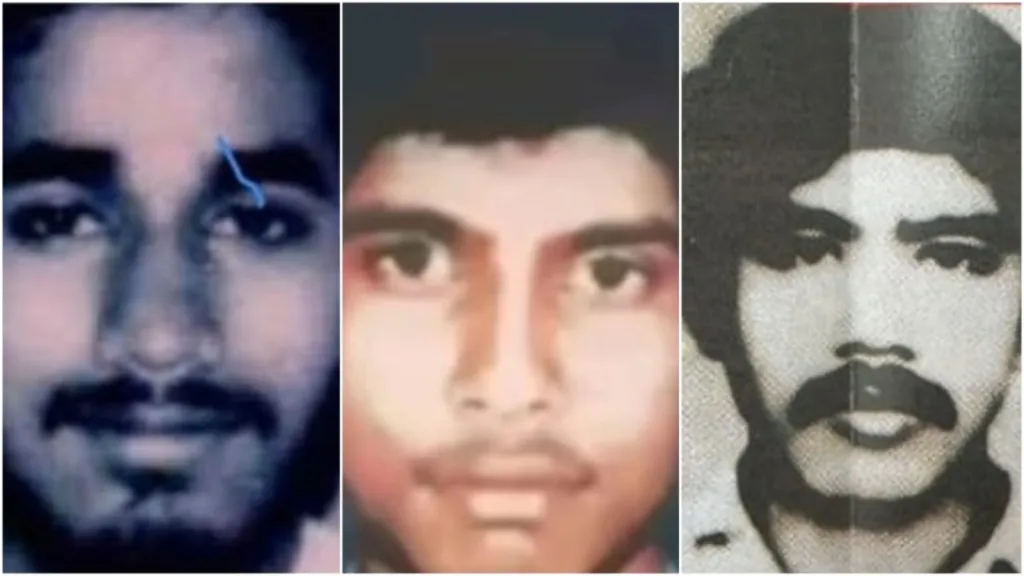
The Tamil Nadu government’s decision to grant 60 days of parole to five convicts serving life sentences in the 1998 Coimbatore serial bombings has sparked a political confrontation, with the Bharatiya Janata Party (BJP) accusing the administration of being soft on convicted terrorists and practising minority appeasement.
The five prisoners were convicted in connection with the coordinated explosions that struck Coimbatore on February 14, 1998, killing 58 people and injuring more than 200 others. The attacks took place ahead of an election meeting that senior BJP leader L K Advani was scheduled to address. Advani escaped the blasts because he had not yet arrived at the venue.
The decision has placed the government led by Tamilaga Vettri Kazhagam (TVK) chief Vijay under political scrutiny. The BJP has questioned whether the parole decision was influenced by political considerations, particularly the support extended to the government by the Indian Union Muslim League (IUML).
The government, however, has maintained that the parole falls within the regular process available to prisoners and is consistent with concessions granted in other cases. Prison officials have said the five men sought temporary release citing personal circumstances and health-related concerns.
The controversy brings together several sensitive issues: the severity of a deadly terrorist attack, the legal framework governing parole, the treatment of long-serving prisoners and the political implications of the state’s decision. Understanding the dispute requires separating the allegations made by political parties from the administrative and legal circumstances surrounding the release.
Why Has the BJP Opposed Parole for the Five Convicts?
The BJP has strongly criticised the decision to grant temporary release to the five men, arguing that the seriousness of the Coimbatore bombings should be given particular weight when considering their applications.
State BJP chief spokesperson Narayanan Thirupathy criticised the move in a post on X, stating that personal grounds should not override the gravity of an attack that remains one of the darkest chapters in Tamil Nadu’s history.
The party has described the decision as selective leniency towards convicted terrorists. It has also alleged that the TVK government is seeking to appease minority voters or political organisations to strengthen its position in the state.
These allegations are part of the BJP’s political response to the parole decision. The government has offered a different explanation, arguing that the release is part of the established process and takes into account the prisoners’ long periods in custody and the circumstances cited in their applications.
The dispute therefore centres on two distinct questions. The first is whether the parole applications satisfy the applicable legal and administrative requirements. The second is whether the decision was influenced by political considerations. The BJP has questioned the government’s motives, but the allegations of political appeasement should not be treated as established facts without supporting evidence.
The distinction matters because parole does not, by itself, cancel a conviction or reduce a life sentence. It allows a prisoner to leave prison temporarily under specified conditions, subject to the rules and restrictions governing the release.
For the BJP, the case also provides an opportunity to highlight its longstanding emphasis on national security and counterterrorism. The party has argued that a temporary release in a case involving mass casualties requires particular scrutiny, especially given the historical significance of the attack.
Five Life Convicts Granted 60 Days of Parole
The five prisoners granted parole are Mohammed Ansari, Mohammed Ali, Monappa, also known as Mohammed Hassan, Mohammed Ajam and Nawab Khan. They are between 46 and 55 years old and are lodged at Coimbatore Central Prison.
According to prison officials, the men submitted applications seeking temporary release on personal and health-related grounds. A senior official said their petitions had been cleared earlier in the year but that their release was put on hold during the Assembly elections. Their fresh applications have now been approved.
The timing has become an important part of the political debate. The BJP has questioned the decision against the background of the government’s political relationships, while the authorities’ explanation points to the processing of the prisoners’ applications and the circumstances cited in them.
Further details about the specific conditions attached to each prisoner’s release, including any individual restrictions, would be needed to assess the full administrative basis of the decision. The supplied information does not establish that the five applications were approved because of political pressure.
TVK MLA V M S Mustafa publicly thanked Vijay for granting the parole, adding another political dimension to the controversy. The statement has drawn attention because it links the decision to the government leadership at a time when the BJP is questioning the administration’s motives.
Nevertheless, public statements by political representatives and the formal grounds for a parole order are not necessarily the same. The legal basis for temporary release must be assessed through the applicable rules, the prisoners’ individual circumstances and the relevant administrative decisions.
What Happened in the 1998 Coimbatore Serial Bombings?
The Coimbatore serial bombings took place on February 14, 1998, when a series of coordinated explosions struck the city ahead of an election meeting that L K Advani was expected to address.
The attacks occurred in a city already affected by communal tension. The explosions killed 58 people and injured more than 200, making the incident one of the most serious episodes of mass violence in Tamil Nadu’s recent history.
Advani was not present at the meeting venue when the explosions occurred and escaped the attack. The fact that the bombings took place shortly before his scheduled appearance contributed to the belief that he was among the intended targets.
The violence unfolded against the background of earlier communal clashes. The Justice P R Gokulakrishnan Commission, established by the then DMK government to investigate the bombings, traced the events to the killing of 18 Muslims in police firing and communal violence in late 1997.
The commission also criticised the police for failing to prevent the explosions. Its findings placed the bombings within a broader sequence of communal tension and raised questions about the authorities’ ability to anticipate and prevent the coordinated attacks.
The history is relevant to the present controversy because the parole decision concerns individuals convicted in a case associated with substantial loss of life. For the families of victims and those affected by the explosions, the events remain a painful part of Coimbatore’s history.
At the same time, the circumstances surrounding the original violence do not remove the need to examine the current parole decision according to the law. The gravity of an offence and the legal standards governing a prisoner’s temporary release are related considerations, but they are not identical questions.
How the Investigation and Trial Unfolded
Following the bombings, police arrested 168 people in connection with the case. One of those arrested died, while another became an approver, leaving 166 people to stand trial.
In 2007, 158 of the accused were convicted. Of those convicted, 43 received life sentences, according to the supplied account of the case.
The radical organisation Al-Umma was accused of organising the bombings. Its founder, S A Basha, and general secretary Mohammed Ansari were convicted of conspiracy in connection with the attacks.
The case involved extensive legal proceedings and resulted in substantial prison sentences for numerous defendants. The subsequent legal history has included appeals, applications for bail and requests for temporary leave on medical or other grounds.
These proceedings are important when examining the distinction between a prisoner’s conviction and later decisions concerning custody. A person serving a life sentence remains subject to that sentence unless it is changed through a lawful process. Parole or temporary leave, where granted, does not amount to an acquittal.
The current controversy also highlights how cases involving mass-casualty attacks can remain politically sensitive decades after the original incident. Decisions affecting convicted prisoners may attract public attention because they are assessed not only through prison administration and legal procedure but also through the memories of victims and the wider community.
BJP Invokes the Supreme Court’s 2023 Decision
In criticising the parole decision, Narayanan Thirupathy referred to the Supreme Court’s October 4, 2023, decision refusing bail to some life convicts in the Coimbatore serial blasts case while their appeals against conviction and sentence were pending.
The BJP’s reference to the Supreme Court ruling forms part of its argument that the seriousness of the case warrants caution when considering relief for those convicted. The party has questioned the consistency between the court’s decision and the state government’s decision to grant temporary release to five prisoners.
However, bail and parole are distinct legal mechanisms. Bail generally concerns release from custody while criminal proceedings or appeals remain pending, subject to applicable conditions. Parole or other forms of temporary prison leave concern a person already serving a sentence and are governed by relevant legal and administrative rules.
Consequently, a court’s refusal to grant bail does not automatically determine whether a separate parole application must be approved or rejected. The legal basis, procedural stage and conditions of each form of release must be examined independently.
The Supreme Court’s decision is therefore relevant background, but it does not by itself establish whether the current parole orders are lawful or unlawful. That assessment would require examining the orders, the applicable rules and any relevant judicial directions.
The distinction is important in politically charged cases, where references to earlier court decisions can become central to public arguments even when the legal questions are not identical.
Earlier Medical Leave and Court-Granted Relief
The parole decision is not the first instance in which convicts in the Coimbatore bombings case have received temporary leave or other concessions.
In January 2023, nine convicts received interim leave on health grounds, with extensions considered periodically by the Madras High Court. Later that year, the High Court granted three months of ordinary leave to another life convict, Abdul Hakeem, after his wife approached the court citing a brain tumour and symptoms of cancer.
These earlier cases demonstrate that requests for temporary release can involve medical and family circumstances even when the underlying offences are serious. Courts and prison authorities may need to consider the circumstances of individual prisoners within the applicable legal framework.
The earlier decisions do not automatically determine the outcome of the five latest applications. Each request may involve different medical evidence, personal circumstances, procedural requirements and conditions. However, they provide context for the government’s argument that temporary leave has been granted to other convicts in the same case.
The history also illustrates why the term parole should not be used interchangeably with a reduction in sentence. Temporary leave is different from remission, which can reduce the period of a sentence under applicable legal provisions, and from a pardon or an acquittal.
For public discussion, the key questions include whether the prisoners meet the relevant eligibility requirements, whether their reasons have been adequately assessed and whether the authorities have followed the correct procedure.
Those questions can be examined without minimising the seriousness of the 1998 attacks or assuming that every decision granting temporary leave is politically motivated.
The Late S A Basha’s Requests for Time With Family
The legal history of the case also includes the circumstances of S A Basha, the founder of Al-Umma who was convicted in connection with the bombings and died in December 2024 at the age of 84.
Supreme Court lawyer Prabhu Balasubramanian, who knew Basha, previously spoke about Basha’s regret over the time he had lost with his family, particularly his grandchildren. According to Balasubramanian, Basha had said he wanted to spend at least a few days each year with his family.
Balasubramanian also claimed that this concern was why Basha did not appeal against his life sentence. The account reflects a personal perspective on imprisonment and family separation, rather than a general legal explanation for the treatment of other prisoners.
The circumstances surrounding Basha’s requests for family time illustrate one of the difficult questions in long-term imprisonment: how to balance the consequences of serious criminal convictions with the personal and family circumstances of those serving sentences.
That question can be especially sensitive in cases involving mass casualties. Victims and their families may view temporary release through the lasting harm caused by the original offence, while prisoners’ families may emphasise health conditions, ageing and the loss of time with loved ones.
Legal systems address such situations through rules governing custody, parole, medical leave and other forms of relief. The availability of those mechanisms does not erase the conviction, and their application must depend on the law and the circumstances of each case.
What Legal Experts Say About Parole
While lawyers representing the five prisoners declined to comment, other legal experts cited in the source material said parole is a normal right or legal avenue available to prisoners and should not automatically be interpreted as reducing the seriousness of a sentence.
The precise entitlement to parole depends on the applicable law and rules. Temporary release is not necessarily automatic, and prisoners may have to satisfy eligibility requirements or provide grounds that authorities consider sufficient.
Personal circumstances, medical conditions and family emergencies can be relevant to decisions about temporary leave. The seriousness of the offence may also form part of the assessment, depending on the governing framework and the conditions that can be imposed.
The legal distinction is significant because parole generally does not overturn a conviction or cancel a sentence. A prisoner remains subject to the sentence and the conditions governing release, including any requirement to return to custody at the end of the approved period.
In a case involving a major terrorist attack, authorities may face intense public scrutiny regardless of the legal basis for a decision. That scrutiny does not replace the need to establish what rules apply and whether the decision was made according to them.
To determine whether the current orders comply with the law, relevant information would include the official parole orders, the rules governing temporary release in Tamil Nadu, the grounds submitted by each prisoner and any conditions attached to their release.
IUML’s Support for the TVK Government Adds a Political Dimension
The BJP has linked the parole decision to the TVK government’s political relationship with the Indian Union Muslim League. According to the supplied report, the IUML ended its nearly six-decade alliance with the DMK in Tamil Nadu in June 2026 and extended unconditional support to the government led by Vijay.
The political timing has become central to the BJP’s criticism. The party has alleged that the government is showing leniency towards the convicts to secure or maintain the IUML’s support.
However, the existence of a political alliance does not, by itself, prove that a particular administrative decision was taken to satisfy an ally. Establishing such a connection would require evidence showing that political considerations influenced the parole approvals.
The government has argued that the releases form part of the regular process and that the prisoners’ applications had been considered in light of their circumstances and time spent in prison. The two positions therefore represent competing explanations of the decision.
The controversy also reflects the wider role of coalition and support arrangements in state politics. When a government relies on support from political organisations with different constituencies and priorities, decisions involving law enforcement, prisoner welfare and public order can become subjects of intense political debate.
In such circumstances, transparency about the grounds for administrative decisions can help separate questions of law and procedure from allegations of political favouritism.
Why the Parole Controversy Matters for Tamil Nadu
The dispute has reopened debate about how authorities should handle requests for temporary release from prisoners convicted in serious criminal cases. It also highlights the tension between public expectations of accountability and the legal mechanisms available to people serving sentences.
The Coimbatore bombings remain a significant event in Tamil Nadu’s history because of the number of people killed and injured and the communal tensions surrounding the attacks. Decisions concerning those convicted are therefore likely to attract greater scrutiny than routine prison administration matters.
For the BJP, the case raises questions about the government’s approach to national security and the political implications of granting parole. For the TVK government, the central issue is whether the decision can be justified through the applicable rules and the individual circumstances of the prisoners.
The controversy also demonstrates why precise terminology matters. Parole is not the same as acquittal, remission or a pardon. Nor does a previous refusal of bail necessarily settle the outcome of a separate parole application.
A clear assessment requires examining the official decision, the legal framework and the evidence supporting the grounds for release. Political criticism can draw attention to legitimate questions, but allegations of motive must remain distinguished from verified facts.
Conclusion
The decision to grant 60 days of parole to five life convicts in the 1998 Coimbatore serial bombings case has triggered a political dispute between the BJP and Tamil Nadu’s TVK government. The BJP has accused the administration of being soft on convicted terrorists and alleged that the move is linked to the government’s relationship with the IUML.
The government has defended the decision as part of the regular process, pointing to the prisoners’ applications and the time they have spent in custody. Earlier instances of temporary leave granted to other convicts in the case provide context, although they do not independently determine whether the latest approvals meet all applicable requirements.
The case remains especially sensitive because the original bombings killed 58 people and injured more than 200. That history explains the intensity of the public response, but the current decision must still be assessed through the legal rules governing parole and the specific grounds for release.
The key unresolved questions concern the basis of the five approvals, the conditions attached to the temporary release and whether the authorities followed the relevant procedures. The BJP’s allegations of political appeasement remain claims rather than established facts in the information provided.
Ultimately, the controversy highlights the challenge of balancing the gravity of a historic terrorist attack, the legal rights and circumstances of prisoners, and public confidence in government decisions. Transparent explanations and a clear distinction between legal procedure and political accusation will be central to understanding the dispute.
For breaking news and live news updates, like us on Facebook or follow us on Twitter and Instagram. Read more on Latest India on thefoxdaily.com.




COMMENTS 0