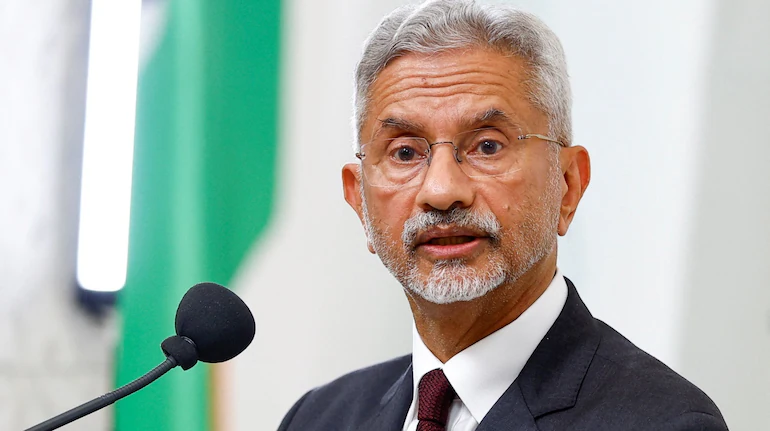
India’s border with China has become “more alive” and requires a much greater commitment of troops on a sustained basis, External Affairs Minister S Jaishankar said on Saturday. Highlighting the government’s approach to frontier security, he pointed to improvements in roads, tunnels, bridges and airfields that have strengthened India’s ability to deploy personnel along the Line of Actual Control (LAC).
Speaking at an interactive session at the HT Leadership Summit, Jaishankar said India’s military capabilities along the China border had improved considerably since the deadly clashes in eastern Ladakh’s Galwan Valley in June 2020. He argued that infrastructure development over the past decade had helped the country maintain a stronger military presence in strategically important areas.
His remarks come as India and China continue efforts to stabilise bilateral relations following the prolonged military standoff in eastern Ladakh. Although diplomatic engagement has resumed, the border remains a major factor shaping relations between the two Asian powers.
Why Jaishankar Says the China Border Has Become ‘More Alive’
Jaishankar used the phrase “more alive” to describe the changing security environment along India’s frontier with China. According to him, the border now requires a larger and more sustained deployment of troops than in the past.
The minister said India’s ability to maintain such a presence has been supported by improvements in infrastructure and military preparedness. He pointed to the increasing frequency of announcements about newly constructed tunnels, bridges and commissioned airfields in border regions.
“Just think about the last few years. How often do you now read – a new tunnel has been built, some new bridge has been built, another airfield has been commissioned. You’re getting this news with greater and greater frequency,” Jaishankar said.
He added that the changing situation along the frontier had required India to commit significantly more troops on a sustained basis.
“The fact is that the work we had already done allowed that kind of numbers to be deployed out there, and the work we continue to do will maintain those numbers,” he said.
The remarks underline the importance of logistics in managing a long and difficult mountain frontier. Roads, bridges and tunnels help military personnel reach forward areas, move equipment and supplies, and maintain access during challenging weather conditions.
India Has Accelerated Border Infrastructure Development
Jaishankar said India’s border infrastructure had remained neglected for decades despite repeated discussions and planning. He argued that the situation began changing more substantially over the past decade, with greater political attention, funding and policy support for construction in frontier regions.
He said the difference could be seen by examining the development of roads, tunnels and other facilities over successive years.
“I would say when it comes to the border, I would honestly make this point, and I think there’s a lot of data and evidence to back it up, which is that the border infrastructure was really neglected till about a decade ago,” he said.
Jaishankar added that although plans had existed earlier, implementation and infrastructure development had not received the same level of attention and resources.
“It’s really been in the last decade that that kind of attention, resources, policy push has been given,” he said.
How Roads and Tunnels Strengthen Military Preparedness
Infrastructure is particularly important along the India-China border because much of the frontier runs through high-altitude and mountainous terrain. Difficult geography, extreme temperatures and heavy snowfall can make transportation and military logistics challenging.
Better roads can reduce the time needed to move troops, vehicles, ammunition, food and other essential supplies. Bridges improve connectivity across rivers and difficult terrain, while tunnels can provide more dependable routes through mountain ranges.
Airfields and advanced landing facilities also support military logistics by allowing aircraft to transport personnel and supplies closer to remote areas.
These facilities are important not only during periods of tension but also for maintaining regular patrols and ensuring that forces can respond quickly to changing circumstances.
Jaishankar said India’s capability to deploy troops along the border had improved markedly. His comments suggest that infrastructure development is now an important part of the country’s broader approach to frontier security.
Galwan Clashes Changed India’s Border Security Priorities
The 2020 clashes in the Galwan Valley marked a major turning point in India-China relations. The confrontation in eastern Ladakh resulted in the deaths of 20 Indian Army personnel, while China also acknowledged casualties among its soldiers.
The incident triggered a prolonged military standoff, with both countries deploying additional troops and equipment along the LAC. Several rounds of military and diplomatic discussions followed as the two sides attempted to reduce tensions and resolve outstanding issues.
The confrontation exposed the importance of rapid mobilisation, reliable supply routes and the ability to sustain military deployments in remote border areas.
Since then, infrastructure and military preparedness have remained central to India’s approach to the frontier. The government has continued to focus on improving connectivity and supporting forces stationed in high-altitude locations.
Jaishankar’s remarks reflect this shift, particularly his emphasis on maintaining troop numbers over an extended period rather than treating border deployment as a temporary response to a crisis.
India-China Relations Gradually Improved After the 2024 Modi-Xi Meeting
Relations between India and China began showing signs of improvement after Prime Minister Narendra Modi met Chinese President Xi Jinping in Kazan, Russia, in October 2024.
The meeting followed an understanding between the two countries on patrolling arrangements in parts of eastern Ladakh, helping address some of the immediate issues linked to the prolonged military standoff.
The discussions between Modi and Xi covered several aspects of bilateral relations, including trade, economic cooperation and regional and international issues.
However, efforts to improve diplomatic relations have not removed the strategic importance of the border dispute. Both countries continue to face the challenge of building trust while managing competing security and territorial concerns.
India’s emphasis on infrastructure development and sustained troop deployment indicates that it intends to maintain its defensive capabilities even as diplomatic engagement continues.
Jaishankar Addresses India’s Economic Asymmetry With China
During the interaction, Jaishankar also discussed the widening economic gap between India and China. He said the two countries had economies of broadly comparable size around the time of former Prime Minister Rajiv Gandhi’s visit to China in 1988.
According to the minister, China’s strong push towards modernisation and industrialisation during the 1980s helped it build a substantial economic advantage over the following decades.
He argued that India missed important opportunities during that period and did not carry out reforms consistently across different sectors during the years that followed.
“The fact was that China, in the 1980s particularly, made a huge push towards modernisation and industrialisation. I’m sorry to say India in the 1980s simply missed the bus,” Jaishankar said.
He acknowledged that India introduced economic corrections and reforms during the 1990s but argued that these changes were not sustained and expanded sector by sector at the pace required.
Jaishankar said India now needs to accelerate its development and strengthen areas where it can build competitive advantages instead of attempting to match China in every economic sector.
India’s Strategy: Build Strengths Rather Than Compete on Every Front
Addressing the economic imbalance, Jaishankar said India cannot close the gap simply by following the same development path as China. Instead, it needs to identify sectors where it can make significant progress through industrial expansion, manufacturing and technological development.
He described this approach as leapfrogging, or using newer opportunities and capabilities to move ahead rather than repeating every stage of another country’s industrial development.
“You have to do leap-frogging. We’ll have to build up our particular strengths to deal with this asymmetry issue,” he said.
Jaishankar also argued that countries facing economic asymmetry should not attempt to compete equally in every area. They should identify sectors where they have the potential to create a meaningful difference.
“In asymmetry, you don’t go toe-to-toe on every issue. You pick the issues where you feel you have the ability to make a big change. That’s really what we think we’re doing right now,” he said.
His comments highlighted the connection between India’s security and economic strategies. Stronger manufacturing, industrial capacity and technological capabilities can help reduce vulnerabilities while supporting the country’s broader strategic ambitions.
Why Border Infrastructure Matters Beyond Military Security
Infrastructure development along the China frontier has implications beyond military preparedness. Better connectivity can also improve access to remote communities, support tourism and strengthen economic activity in border districts.
Roads and bridges can help residents reach healthcare facilities, educational institutions and markets. Improved transport links can also make it easier to deliver essential supplies to villages that remain isolated during difficult weather conditions.
However, construction in fragile mountain environments requires careful planning. Roads, tunnels and other projects must account for difficult geology, landslide risks, extreme weather and environmental considerations.
For India, the challenge is to maintain a balance between strategic requirements, local development and environmental sustainability.
What Jaishankar’s Remarks Mean for India-China Relations
Jaishankar’s comments underline that India is pursuing diplomatic engagement with China while continuing to strengthen its military and infrastructure capabilities along the border.
The improvement in bilateral communication following the 2024 Modi-Xi meeting has created opportunities to address tensions, but the long-term relationship will depend heavily on stability along the LAC and progress on outstanding border issues.
India’s focus on roads, tunnels, bridges, airfields and sustained troop deployment reflects the importance it places on maintaining access and readiness in strategically sensitive areas.
At the same time, Jaishankar’s comments on economic asymmetry show that New Delhi sees industrialisation, manufacturing and sector-specific strengths as important parts of its long-term approach to China.
The broader message is that India intends to strengthen its position through infrastructure, military preparedness and economic development while continuing diplomatic efforts to manage relations with Beijing.
For breaking news and live news updates, like us on Facebook or follow us on Twitter and Instagram. Read more on Latest India on thefoxdaily.com.





COMMENTS 0