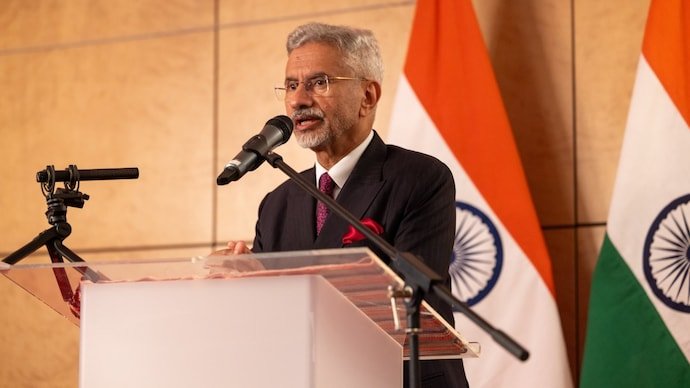
Jaishankar Qatar visit marks an important chapter in India‘s expanding diplomatic engagement with the Gulf region. During talks with Qatar’s Prime Minister and Foreign Minister Sheikh Mohammed bin Abdulrahman Al-Thani, External Affairs Minister S. Jaishankar reviewed bilateral cooperation across strategic sectors while exchanging views on the evolving security landscape in West Asia. The visit comes at a time when regional diplomacy is undergoing rapid transformation following recent efforts to reduce tensions involving Iran and the United States. Beyond bilateral relations, the discussions reflect India’s broader strategy of strengthening partnerships with Gulf nations that have become increasingly important for Energy Security, trade, investment, maritime connectivity, and the welfare of millions of Indians living and working in the region.
WHO met in Doha? External Affairs Minister S. Jaishankar and Qatar Prime Minister Sheikh Mohammed bin Abdulrahman Al-Thani. What was discussed? Energy, trade, investment, connectivity, security cooperation, people-to-people ties, and regional developments. When? During Jaishankar’s Gulf tour from July 5 to July 10. Where? Qatar, the first stop of a four-country Gulf visit covering Bahrain, Kuwait, and Oman. Why is the visit significant? It reinforces India’s strategic partnerships with key Gulf countries amid evolving geopolitical developments in West Asia. How does it benefit India? By strengthening economic cooperation, safeguarding energy supplies, supporting the Indian Diaspora, and expanding diplomatic engagement across the region.
India and Qatar Review Expanding Strategic Partnership
During the high-level meeting, both leaders reviewed the broad spectrum of India-Qatar relations, emphasizing cooperation that has steadily expanded over the past decade.
The discussions covered several priority sectors:
- Energy security.
- Trade and commerce.
- Investment opportunities.
- Infrastructure connectivity.
- Maritime cooperation.
- Security collaboration.
- People-to-people exchanges.
Both sides also explored new opportunities for strengthening their long-term strategic partnership.
Why Qatar Matters to India
Qatar occupies a central position in India’s Gulf policy due to its strategic location, abundant energy resources, and strong economic ties.
The country is among India’s important partners for liquefied natural gas (LNG), helping meet the country’s growing energy requirements.
In addition, Qatar has emerged as an increasingly important investor in infrastructure, technology, logistics, and financial sectors.
Energy Security Remains the Cornerstone
Energy cooperation continues to form one of the strongest pillars of India-Qatar relations.
India is one of the world’s fastest-growing energy consumers, making long-term partnerships with reliable suppliers particularly important.
Qatar remains one of the world’s leading exporters of:
- Liquefied Natural Gas (LNG).
- Natural gas.
- Petrochemical products.
- Energy-related investments.
Stable energy cooperation contributes directly to India’s industrial growth, electricity generation, fertilizer production, and broader economic development.
Growing Trade and Investment Opportunities
Trade between India and Gulf countries has diversified significantly beyond hydrocarbons.
Key sectors attracting attention include:
- Digital economy.
- Renewable energy.
- Financial services.
- Infrastructure development.
- Food security.
- Technology partnerships.
- Manufacturing.
As Gulf economies pursue diversification strategies, opportunities for Indian businesses continue to expand.
Protecting the Indian Community Abroad
One important aspect of Jaishankar’s discussions involved the welfare of the Indian community living in Qatar.
Millions of Indians reside across Gulf countries, contributing to sectors such as:
- Construction.
- Healthcare.
- Engineering.
- Education.
- Hospitality.
- Information technology.
- Financial services.
Ensuring their safety and well-being remains a consistent priority in India’s diplomatic engagement with Gulf partners.
West Asia’s Changing Geopolitical Landscape
The visit takes place during a period of significant diplomatic activity across West Asia.
Recent efforts aimed at reducing regional tensions have increased the importance of dialogue among major regional stakeholders.
Countries such as Qatar and Oman have played visible diplomatic roles in facilitating communication channels during periods of heightened tension.
These mediation efforts highlight the growing importance of Gulf states as regional diplomatic actors.
India’s Balanced West Asia Policy
India has steadily pursued a balanced and multi-dimensional approach toward West Asia.
Rather than aligning exclusively with any one regional bloc, New Delhi maintains constructive Relationships with:
- Gulf Cooperation Council (GCC) countries.
- Iran.
- Israel.
- Jordan.
- Egypt.
This balanced diplomacy enables India to protect its strategic, economic, and energy interests while maintaining credibility across the region.
Four-Nation Gulf Tour Reflects Regional Importance
Qatar is only the first stop of Jaishankar’s broader diplomatic mission.
| Country | Key Focus Areas | Strategic Importance |
|---|---|---|
| Qatar | Energy, investment, security | Major LNG supplier |
| Bahrain | Trade, financial cooperation | Regional financial hub |
| Kuwait | Energy, workforce cooperation | Important oil partner |
| Oman | Maritime security, connectivity | Strategic Indian Ocean partner |
Maritime Connectivity Gains Importance
Connectivity featured prominently during the discussions because maritime trade remains essential to India’s economy.
The Gulf region lies along critical sea lanes linking:
- Asia.
- Europe.
- Africa.
Improved port connectivity, shipping infrastructure, and logistics cooperation can reduce transportation costs while strengthening supply chain resilience.
Security Cooperation Beyond Traditional Defense
Modern security cooperation extends well beyond military collaboration.
India and Gulf countries increasingly cooperate in areas including:
- Counter-terrorism.
- Cybersecurity.
- Maritime safety.
- Intelligence sharing.
- Financial crime prevention.
- Critical infrastructure protection.
Such cooperation contributes to regional stability and safeguards international trade routes.
India’s Expanding Global Diplomatic Calendar
Following the Gulf tour, Jaishankar’s schedule reflects India’s increasingly active international diplomacy.
Upcoming engagements include:
| Destination | Purpose | Strategic Significance |
|---|---|---|
| New York | UN Security Council campaign | Global governance |
| Brussels | India-EU Trade and Technology Council | Economic cooperation |
| European Union | Bilateral consultations | Technology and trade |
These engagements illustrate India’s effort to simultaneously strengthen partnerships across multiple regions.
Comparison: Traditional Energy Partnership vs Emerging Strategic Partnership
| Traditional Relationship | Emerging Partnership |
|---|---|
| Oil and gas imports. | Technology collaboration. |
| Labor mobility. | Investment partnerships. |
| Trade in commodities. | Innovation and digital economy. |
| Commercial exchanges. | Strategic security cooperation. |
| Limited diplomatic engagement. | Comprehensive strategic dialogue. |
Why Gulf Partnerships Matter More Than Ever
The Gulf region has evolved from being primarily an energy supplier into one of India’s most important strategic partners.
Today, Gulf countries play crucial roles in:
- Energy security.
- Food security.
- Investment flows.
- Maritime trade.
- Regional diplomacy.
- Technology investment.
- Global financial markets.
This broader relationship reflects changing global economic realities and the diversification of Gulf economies.
A Unique Insight: India’s West Asia Strategy Is Becoming Increasingly Multi-Dimensional
One of the most notable developments in India’s foreign policy is the transformation of its Gulf engagement from a predominantly energy-focused relationship into a comprehensive strategic partnership.
Rather than viewing the region solely through the lens of oil imports, India increasingly engages Gulf countries across investment, innovation, logistics, defense, digital infrastructure, clean energy, and geopolitical dialogue. This diversification strengthens India’s resilience while offering Gulf partners opportunities beyond traditional hydrocarbon trade.
Future Outlook
India’s engagement with Qatar and other Gulf countries is expected to deepen further as economic diversification accelerates across the region. Greater collaboration in renewable energy, hydrogen, Artificial Intelligence, digital infrastructure, logistics, and advanced manufacturing could define the next phase of India-Gulf relations.
Meanwhile, evolving geopolitical developments in West Asia will likely keep diplomatic dialogue active. India’s balanced approach, combined with its strong relationships across the region, positions it to remain an important partner for stability, economic cooperation, and regional development.
Conclusion
The Jaishankar Qatar visit highlights India’s commitment to strengthening strategic partnerships with Gulf nations at a time of significant regional transformation. Discussions on energy, trade, investment, security, connectivity, and regional developments demonstrate how bilateral relations have expanded well beyond traditional economic cooperation.
As India continues building stronger ties with Qatar, Bahrain, Kuwait, and Oman, the Gulf region is becoming an increasingly important pillar of New Delhi’s foreign policy. The growing partnership reflects shared economic interests, expanding diplomatic engagement, and a common commitment to stability and prosperity across one of the world’s most strategically significant regions.
For breaking news and live news updates, like us on Facebook or follow us on Twitter and Instagram. Read more on Latest World on thefoxdaily.com.






COMMENTS 0