- What Happened to the JV Innovation?
- Why the Strait of Hormuz Matters So Much
- Why the Chinese Connection Changes the Situation
- How the US-Iran Conflict Reached This Point
- The Hidden Economic Shock Already Underway
- Commercial Shipping Is Becoming a Modern Battlefield
- Could Oil Prices Surge Again?
- China’s Quiet Diplomacy Could Become More Important
- The US Strategy Faces Growing Risks
- A Unique Insight Competitors Often Miss: The Insurance Industry May Decide the Crisis Timeline
- Can Diplomacy Prevent a Wider Regional Crisis?
- What Happens Next?
- Conclusion
The attack on a Chinese-owned Oil Tanker near the Strait of Hormuz has intensified fears that the escalating US-Iran conflict is entering a more dangerous and economically disruptive phase. The tanker, identified as JV Innovation, reportedly caught fire after coming under attack while navigating one of the world’s most strategically vital shipping corridors.
The incident is particularly significant because it marks the first reported assault on a Chinese-linked oil tanker since tensions between Iran and the United States spiraled into open confrontation earlier this year. While attacks on merchant vessels in the region are not new, the involvement of a Chinese-owned ship introduces fresh geopolitical complications into an already volatile crisis.
The Strait of Hormuz is not just another shipping route. It is the artery through which nearly one-fifth of global oil and gas supplies pass every day. Any prolonged disruption in the waterway has the potential to shake Energy Markets, increase inflationary pressure worldwide, disrupt supply chains, and deepen political instability across multiple regions.
What Happened to the JV Innovation?
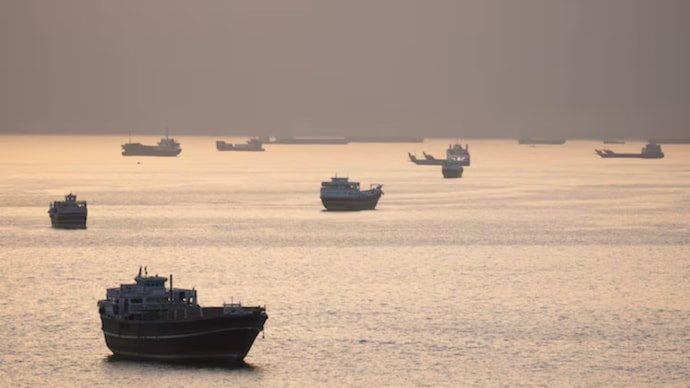
According to maritime security reports and Chinese media outlet Caixin, the Marshall Islands-flagged tanker JV Innovation was attacked near Mina Saqr, close to the coast of the United Arab Emirates. Images reportedly showed flames erupting from the deck alongside markings that read “china OWNER & CREW.”
The vessel allegedly issued distress alerts after a fire broke out onboard while transiting waters near the Strait of Hormuz. There has been no official confirmation regarding casualties or injuries among crew members.
The attack occurred amid rapidly escalating maritime tensions following the intensification of hostilities between Iran and the United States. Commercial shipping companies operating in the Gulf region have already been facing growing security risks, with several vessels reporting drone threats, missile activity, electronic interference, and suspicious maritime encounters.
The timing of the incident has amplified concerns that commercial vessels are increasingly becoming indirect pressure points in the broader geopolitical confrontation.
Why the Strait of Hormuz Matters So Much
The Strait of Hormuz is one of the most strategically important waterways on Earth. It connects the Persian Gulf with the Gulf of Oman and the Arabian Sea, serving as the primary export route for oil producers across the Middle East.
Every day, massive quantities of crude oil, liquefied natural gas, and petroleum products pass through the narrow corridor.
| Why Strait of Hormuz Is Critical | Global Importance |
|---|---|
| Handles nearly 20% of global oil shipments | Impacts worldwide energy prices |
| Primary route for Gulf oil exports | Essential for Asian economies |
| Narrow shipping lane | Highly vulnerable to disruption |
| Strategic military chokepoint | Central to US-Iran tensions |
Countries including China, India, Japan, and South Korea depend heavily on energy supplies moving through the strait. Even temporary disruptions can immediately affect global oil prices and shipping insurance costs.
That is why attacks on vessels in the region often trigger international alarm far beyond the Middle East.
Why the Chinese Connection Changes the Situation
The attack on a Chinese-linked tanker introduces a new diplomatic dimension into the crisis.
China is one of the world’s largest importers of crude oil and remains a major buyer of Iranian oil despite sanctions and pressure from Western governments. Beijing has carefully balanced its regional strategy by maintaining economic ties with Iran while also protecting its broader commercial relationships with Gulf nations and global markets.
Until now, China had largely avoided direct exposure to attacks linked to the current conflict.
The targeting of a Chinese-associated vessel could create several complications:
- Increased Chinese diplomatic involvement in Gulf security
- Pressure on Beijing to respond more publicly
- Higher insurance and shipping costs for Chinese firms
- Potential recalculation of Chinese energy security policies
- Greater international pressure for maritime protection agreements
Notably, Beijing has remained cautious in its public response. Chinese authorities have not officially accused any party of responsibility, reflecting China’s broader strategy of avoiding direct military entanglement while prioritizing economic stability.
How the US-Iran Conflict Reached This Point
The current maritime crisis emerged after tensions between the United States, Israel, and Iran escalated sharply earlier this year. The conflict intensified following strikes targeting Iranian-linked infrastructure and military assets.
Since then, the Gulf region has experienced:
- Drone and missile incidents
- Attacks on commercial vessels
- Electronic navigation interference
- Military deployments near shipping lanes
- Rising threats against oil infrastructure
While both Washington and Tehran have publicly signaled interest in preventing a full-scale regional war, events on the ground have repeatedly pushed the situation closer to wider confrontation.
A temporary ceasefire arrangement reportedly remains in place, but the reality is far more fragile than official statements suggest.
The Hidden Economic Shock Already Underway
One major angle often overlooked in breaking news coverage is that the economic impact of maritime instability begins long before shipping routes fully close.
Even limited attacks can trigger:
- Higher shipping insurance premiums
- Longer transit routes
- Increased fuel costs
- Port congestion
- Supply chain delays
- Higher energy market volatility
In practical terms, global businesses start paying more almost immediately.
Insurance companies classify dangerous shipping zones based on risk assessments. Once attacks increase, insurers charge higher premiums or require additional security measures. Some shipping operators may even temporarily avoid the route altogether.
This creates a ripple effect across global trade.
Consumers thousands of miles away often feel the consequences later through rising fuel prices, higher transportation costs, and inflationary pressure on goods.
Commercial Shipping Is Becoming a Modern Battlefield
The attack on JV Innovation reflects a broader transformation in modern geopolitical conflict: commercial shipping routes are increasingly being used as pressure points.
Rather than direct state-on-state naval warfare, modern maritime conflicts often involve:
- Drone attacks
- Proxy groups
- Missile threats
- Electronic warfare
- Economic disruption tactics
This creates uncertainty without necessarily triggering formal declarations of war.
The result is a “gray zone” conflict environment where shipping companies, insurers, and civilian crews become trapped between geopolitical rivals.
For seafarers working aboard commercial vessels, the risks are increasingly severe. Reports suggest that nearly 20,000 sailors have faced delays, uncertainty, or dangerous operating conditions inside Gulf waters since tensions escalated.
Could Oil Prices Surge Again?
Energy traders and governments are now closely watching whether the Hormuz situation deteriorates further.
Historically, oil markets react strongly to instability in the Gulf because there are limited alternatives capable of replacing Hormuz shipping volumes quickly.
Several factors influence whether prices could spike sharply:
| Factor | Potential Impact on Oil Prices |
|---|---|
| Major shipping disruption | Sharp price increase |
| Successful ceasefire negotiations | Market stabilization |
| Expanded attacks on tankers | Higher volatility |
| Military escalation involving Gulf states | Severe supply fears |
Even rumors of disruption can influence trading behavior because energy markets are heavily driven by future expectations rather than current supply alone.
That explains why geopolitical headlines in the Gulf often trigger immediate movements in global Financial Markets.
China’s Quiet Diplomacy Could Become More Important
An important but underreported development is China’s increasing role as a diplomatic actor in Middle East stability discussions.
Chinese Foreign Minister Wang Yi reportedly met Iranian Foreign Minister Abbas Araghchi to discuss reopening secure shipping routes through Hormuz. This reflects Beijing’s growing recognition that its economic interests are directly tied to Gulf stability.
China traditionally avoids taking overt military positions in regional conflicts. Instead, it often emphasizes economic partnerships, trade continuity, and diplomatic engagement.
However, attacks affecting Chinese-linked commercial assets may gradually push Beijing toward a more active regional security role.
That does not necessarily mean military involvement. More likely, China could expand:
- Diplomatic mediation efforts
- Shipping coordination agreements
- Regional energy partnerships
- Naval escort cooperation discussions
This shift could reshape Middle Eastern Geopolitics over the next decade.
The US Strategy Faces Growing Risks
The United States has attempted to reassure global shipping operators by discussing escort initiatives and maritime protection mechanisms. However, implementing such strategies is extraordinarily difficult in an environment filled with drones, missiles, and asymmetric warfare tactics.
The challenge is that even limited protection failures can have outsized political and economic consequences.
If attacks continue despite military patrols, confidence in maritime security arrangements weakens rapidly.
At the same time, stronger military involvement risks further escalation with Iran.
This creates a strategic dilemma:
The more aggressively shipping lanes are protected, the greater the chance of direct confrontation.
That tension explains why diplomatic negotiations remain essential despite continued military posturing.
A Unique Insight Competitors Often Miss: The Insurance Industry May Decide the Crisis Timeline
Most public attention focuses on governments and militaries, but the global insurance industry could quietly become one of the most important players in the Hormuz crisis.
Why?
Because commercial shipping only functions efficiently when insurers are willing to cover voyages at manageable costs.
If insurers classify Hormuz transit as excessively dangerous, shipping costs could rise dramatically regardless of whether governments officially declare the route “open.”
In extreme cases, some operators may suspend voyages voluntarily because the financial risk becomes too high.
That means the future of Global Energy trade may depend not only on diplomacy or military deterrence, but also on how private insurers assess ongoing risk.
Can Diplomacy Prevent a Wider Regional Crisis?
There are growing indications that both Washington and Tehran are exploring limited arrangements aimed at reducing immediate tensions. However, core disagreements remain unresolved.
The major obstacles include:
- Sanctions
- Regional military influence
- Shipping security guarantees
- Energy exports
- Proxy group activity
Even if temporary agreements emerge, the underlying strategic rivalry is unlikely to disappear quickly.
The danger is that repeated smaller incidents like tanker attacks could eventually trigger unintended escalation.
Modern conflicts often expand not through one dramatic decision, but through accumulated retaliation cycles.
What Happens Next?
Several scenarios are now possible in the coming weeks:
- Limited de-escalation through diplomatic backchannels
- Expanded naval escorts for commercial shipping
- Higher energy market volatility
- Additional attacks on merchant vessels
- Broader international involvement in Gulf security
Much will depend on whether both sides view continued escalation as strategically beneficial or economically unsustainable.
For now, global markets remain highly sensitive to developments in Hormuz because the world economy still depends heavily on uninterrupted Gulf energy exports.
Conclusion
The attack on the Chinese-owned tanker JV Innovation marks a critical moment in the growing Hormuz crisis. What initially appeared to be a regional confrontation between Iran and the United States is now increasingly affecting global trade, energy security, and international diplomacy.
The involvement of a Chinese-linked vessel raises the stakes significantly, adding another major global power to a conflict already carrying serious economic and geopolitical consequences.
More importantly, the incident highlights how modern conflicts are no longer confined to battlefields alone. Commercial shipping routes, energy infrastructure, financial markets, and civilian supply chains have all become interconnected fronts in geopolitical competition.
Whether diplomacy can stabilize the region before further escalation occurs may determine not only the future of Middle East security, but also the stability of the global economy itself.
For breaking news and live news updates, like us on Facebook or follow us on Twitter and Instagram. Read more on Latest World on thefoxdaily.com.




COMMENTS 0